From beginner to results: 4 steps to start training with method
A straight-to-the-point guide for anyone starting at the gym who wants to progress with clarity, consistency and intelligent training.

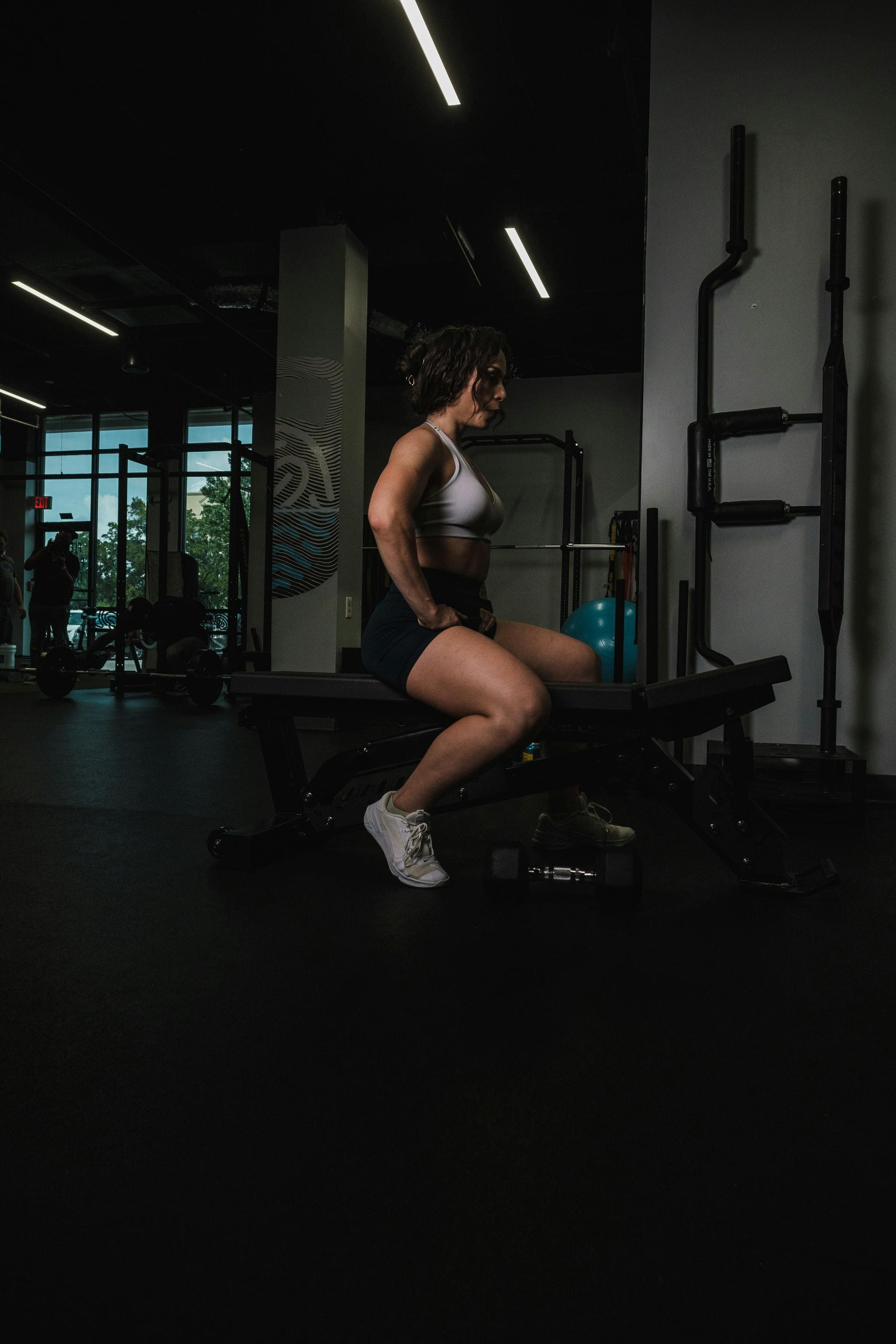
Almost everyone starting at the gym gets stuck at the same point: too much information, too little method and anxiety to see fast results. You watch videos, copy a random routine and try to solve everything at once. Two weeks later, you no longer know whether you are training right, whether the split makes sense or whether you are just stacking fatigue.
The good news is that starting well does not require complexity. It requires sequence. Beginner results are born when training, effort, execution and routine start talking to each other. If you want to see how that logic leaves improvisation behind and becomes a system, it is worth exploring AI training later.
This guide organizes that beginning into four steps. Not to sell the idea of a magical transformation, but to show how to leave guesswork behind and enter a process that fits real life. That is exactly the space SelfShapeAI occupies: turning trial and error into practical clarity.
Contents
- 1. The short answer
- 2. Step 1: start from context, not from the pretty routine
- 3. Step 2: learn to measure effort before chasing load
- 4. Step 3: technique and consistency beat excitement
- 5. Step 4: track the trend, not one isolated workout
- 6. The mistakes that slow beginners down the most
- 7. How to turn this beginning into results in the coming weeks
- 8. Frequently asked questions
- 9. Results are not luck — they are method!
The short answer
When starting at the gym, first understand your real context, learn to gauge effort before chasing load, prioritize technique and repeatable weeks over maximal intensity, and track trends instead of judging one session. The ACSM's 2026 update reinforces that different prescriptions can work; training should be progressive and goal-appropriate, not complicated to look advanced.
- Step 1: start from your real scenario, not from the prettiest routine on the internet. If you still do not know which structure matches your frequency, see Full body vs. split training.
- Step 2: learn to read effort before trying to add load every week. The most useful companion here is the practical RPE and RIR guide.
- Step 3: treat consistency and execution as the base of the process. If you keep starting over, focus on weeks you can actually repeat.
- Step 4: track what is changing across the weeks, not just today's workout. If you want to see that logic inside the product, visit AI training.
| Step | Practical decision | Sign you can progress |
|---|---|---|
| Context | Define days, time, equipment and goal | The week fits your schedule without improvisation |
| Effort | Choose a load that preserves consistent reps | Planned RIR matches what you felt |
| Technique | Repeat exercises and learn the pattern | Range and control remain stable between sets |
| Tracking | Log load, reps and perceived effort | A readable trend guides the next adjustment |
Turn understanding into a workout you can follow
SelfShapeAI uses your routine and goal to build an explained plan, log every session and guide the next adjustment.




Download for free. Annual: R$ 299,90/year, equivalent to about R$ 25/month; monthly: R$ 39,90/month. See how AI training works.
Step 1: start from context, not from the pretty routine
The beginner's first mistake is not technical. It is strategic. People try to choose exercises, split and volume before answering the basics: how many days they can train, how much time they have per session, what equipment they use, how their sleep is and which goal to prioritize now. Without that context, even a good routine becomes a bad plan.
That is why the beginning needs to be simpler and more honest. Someone who trains three times a week, for example, should not build a routine designed for six. Someone still consolidating movement patterns does not need to start with an excess of variations either. When the plan talks to your routine, it becomes repeatable. If you want to see how that appears inside the platform, check our features and then compare with the AI training flow.
This initial framing also clears up a classic doubt: should a beginner train full body, upper/lower or a split? The answer depends on your real frequency, not on what looks more advanced. To decide with criteria, use the decision map in Full body vs. split training.
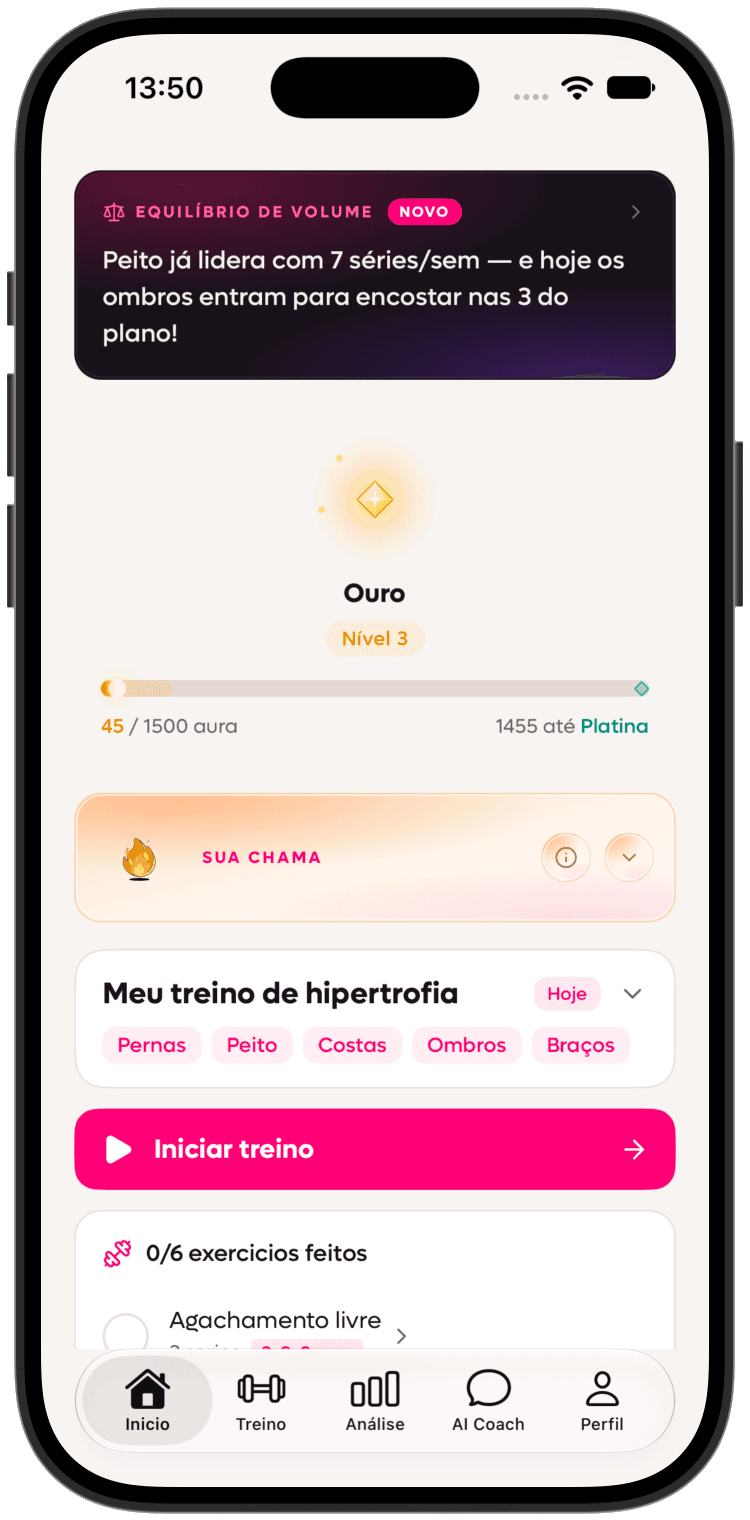
Step 2: learn to measure effort before chasing load
The beginner's second mistake is confusing progress with weight on the bar. People who are starting usually fall into one of two extremes: training too light out of insecurity or trying to prove themselves by adding load too early. Both paths delay results. What really unlocks progress is learning to read effort honestly.
RPE and RIR become practical tools: an estimated rep margin supports sufficient effort without requiring failure every set. If technique breaks down or each rep changes, load has outpaced control. See the Practical RPE/RIR guide for the scale and its limits.
From there, progression becomes much more coherent. Instead of adding weight on impulse, you push reps, consolidate execution and only then increase load. That logic connects directly with Simple progression: when to add weight and with the goal of anyone chasing hypertrophy.
- If technique got worse to hit the number, that was not progress; it was compensation.
- If the load goes up but range shrinks and control disappears, the muscle does not receive a better signal.
- If you can repeat good weeks with calibrated effort, that is when progress starts to stack.
Step 3: technique and consistency beat excitement
Beginners often overestimate one hard session and underestimate consistent weeks. Repeated quality stimuli matter more than bursts of motivation. Technique, rest and adherence sustain the process.
That changes how you think about training. Instead of chasing the most painful workout, the beginner needs the most executable one. Instead of wanting to leave destroyed, you need to leave knowing what to repeat and how to adjust in the next session. That kind of consistency matters even more when the week gets busy — the routine that survives a bad week is the one that builds results.
Recovery matters too: sleep, nutrition and hydration affect your ability to repeat good sessions. Review Real nutrition: demystifying fat if needed, remembering that the app does not prescribe diets and clinical needs belong with qualified professionals.
Step 4: track the trend, not one isolated workout
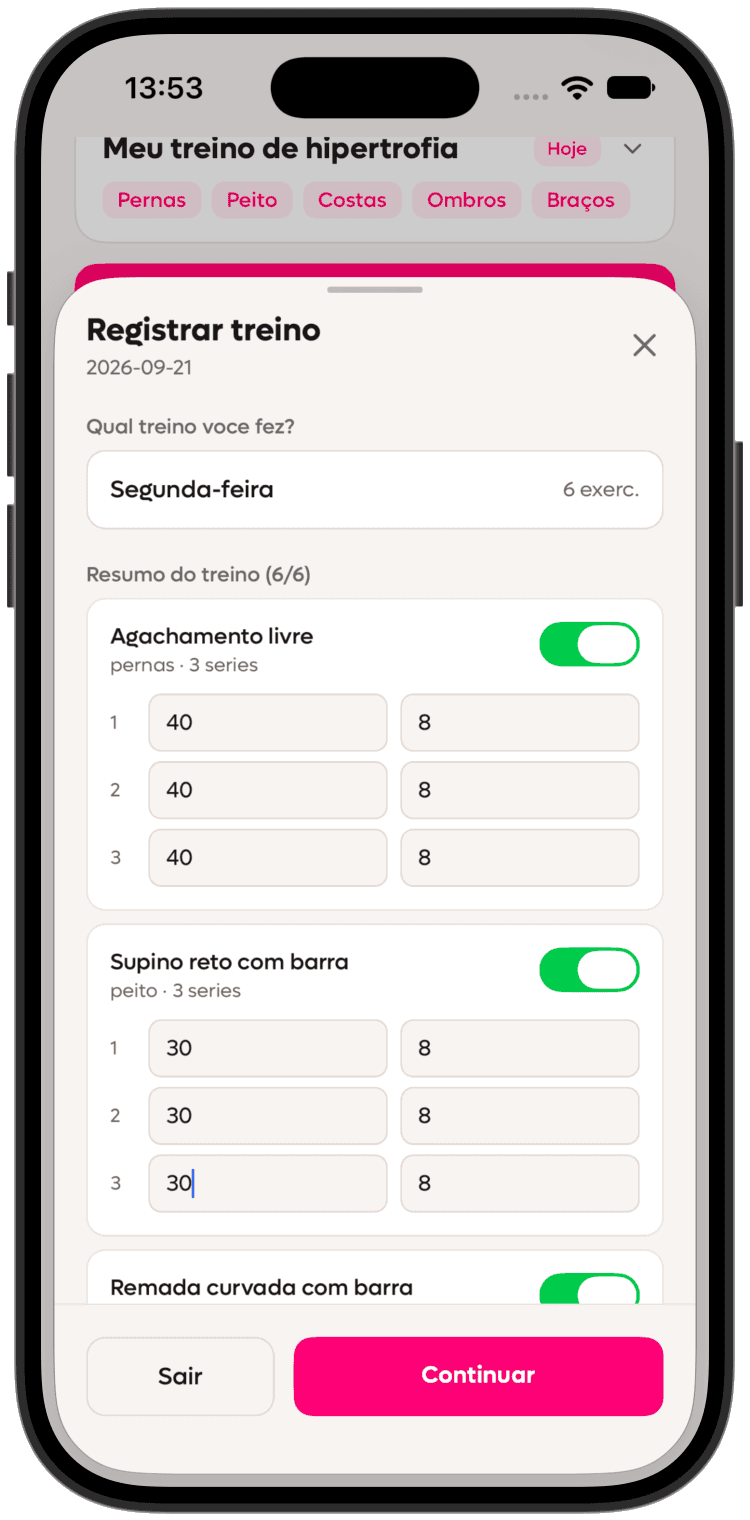
The fourth step is what turns a beginning into results: logging, interpreting and adjusting. Without history, the beginner depends on memory and on the emotion of the day. With history, patterns appear. You discover what is improving, where you stalled, which exercises deliver the most and when you need to step back a little to keep moving forward.
That tracking is what separates random training from a journey. When you can see consistency, effort, feedback and progress trend in the same place, motivation stops depending on empty enthusiasm. That is why well-built tools make such a difference. If you want to compare this kind of experience with other approaches, see Best workout tracking app in 2026.
SelfShapeAI brings this together: the active plan organizes work; logs preserve load, reps, RIR/RPE and notes; progress shows volume, muscle groups, PRs and exercise loads; AI Coach responds using available context. This does not guarantee results, but reduces reliance on memory and clarifies decisions. Explore features and Pricing.
The mistakes that slow beginners down the most
- Wanting to train like someone more advanced before consolidating your technical base.
- Changing routines all the time without letting the body respond to the current plan.
- Using soreness as proof of efficiency instead of tracking effort and execution.
- Ignoring recovery and assuming training alone determines the result.
- Depending on the day's motivation instead of building a system and consistency.
Notice that almost all of these mistakes share the same root: lack of method. When the beginner understands context, effort, technique and tracking, they stop spinning in place. That is when progress stops looking like luck.
How to turn this beginning into results in the coming weeks
- Set a frequency that truly fits your schedule, not just your enthusiasm.
- Choose a simple, repeatable structure. If you are still unsure, go back to Full body vs. split training.
- Log effort and execution every week to adjust load and volume with criteria. The best starting point is the practical RPE and RIR guide.
- Treat the process as the construction of good weeks, not a hunt for the perfect workout. If you want to understand the platform's logic, start at the home page and then see how it connects with AI training.
Frequently asked questions
- What is the first step for a gym beginner?The first step is understanding your real routine before building the plan. Frequency, time per session, goal and technical level matter more than copying the most famous workout of the moment.
- Do beginners need to train heavy to see results?You need not start with maximal loads. Use enough resistance to progress, repeatable technique and well-judged effort. Heavier loads become more important for maximal-strength goals; see the Practical RPE/RIR guide.
- How do I know if my routine is working?When you can repeat good weeks and improve execution, effort and progression without depending on improvisation. Simple progression: when to add weight helps you see this more clearly.
- Is AI worth it even for beginners?Yes, especially when the AI helps organize context, adjust effort and keep the plan coherent across the weeks. To see that flow in practice, start with AI training.
Results are not luck — they are method!
People who are starting do not need more noise. They need direction. When you understand your own context, learn to measure effort, respect technique and track progress as a trend, training stops feeling confusing and starts making sense. That is how a beginner becomes a consistent lifter. And that is how results show up.
To move beyond guesswork with a plan that follows your routine, start your training plan.
Sources and references
- Source: Currier BS et al. ACSM Position Stand: Resistance Training Prescription for Muscle Function, Hypertrophy, and Physical Performance in Healthy Adults. Med Sci Sports Exerc, 2026. — ACSM (PubMed)
- Source: Plotkin DL et al. Progressive overload without progressing load? The effects of load or repetition progression on muscular adaptations. PeerJ, 2022. — PeerJ (PubMed)
- Source: Grgic J et al. Effects of resistance training performed to repetition failure or non-failure on muscular strength and hypertrophy: a systematic review and meta-analysis. J Sport Health Sci, 2022. — Journal of Sport and Health Science (PubMed)
Reviewed by the SelfShapeAI research team using strength-training guidelines and studies.
Take this method to the app

Create your plan with AI, log check-ins and use the AI Coach to adjust training with context.
Share
SelfShapeAI Team
SelfShapeAI technical and editorial team.
Keep learning
Recommended next article
SelfShapeAI community: how Reddit, Instagram and user-to-user feedback speed up progress
Understand how the SelfShapeAI community strengthens feedback, brings users closer and creates an ecosystem where progress happens together.
Continue →