Simple progression: when to add weight in training without losing technique
Combine rep range, effort and execution to decide whether to maintain, repeat or increase load.

There is a moment in every session that defines whether the training is moving forward or just repeating itself: the moment of choosing the weight. And that is where most people get it wrong — in both directions. Some raise the load too early and break their technique to hit the number. And some repeat the same 20 kilos for six months, waiting for a confidence that never arrives on its own.
The progression that works is not heroism. It is reading. The right weight is the one that talks to your execution, your effort and your real week. When that logic enters the training, the question changes: instead of "how much can I load on the bar?", you start asking "what is the next lever that makes sense now?".
In this guide, you will see the signals that indicate the time to go up, the scenarios where reps or time under tension deliver more than weight, and how much to increase when the time comes. To calibrate effort inside that decision, this article's best pair is the practical RPE and RIR guide.
Contents
- 1. The decision in one table
- 2. When to actually add weight
- 3. When it is not yet time to increase the weight
- 4. When reps deliver more than load
- 5. When the next load increase is too large
- 6. The mistakes that most stall progression
- 7. Where SelfShapeAI takes this decision out of the dark
- 8. How to apply this in your very next session
- 9. Frequently asked questions
- 10. Progressing better is deciding better
The decision in one table
| What happened in the set | What it means | Next step |
|---|---|---|
| Hit the top of the range with clean technique and 2 reps still left | The current load has been assimilated | Raise the weight and rebuild the range from fewer reps |
| Closed the reps, but stealing range or tempo | The progression came early | Keep the load and consolidate the execution |
| Stayed at the bottom of the range with room to spare | There is still space within the range | Push reps before thinking about weight |
| The same load swings a lot between sessions | Sleep, stress or unstable recovery | Stabilize the routine before touching the plan |
| The exercise got light, but the next available weight breaks technique | The load jump is too big | Widen the rep range, use a smaller increment or keep the load |
Turn understanding into a workout you can follow
SelfShapeAI uses your routine and goal to build an explained plan, log every session and guide the next adjustment.




Download for free. Annual: R$ 299,90/year, equivalent to about R$ 25/month; monthly: R$ 39,90/month. See how AI training works.
When to actually add weight
A useful criterion combines comparable execution, reaching the range's top and effort margin at or above target—for example, 2 RIR. This is not universal: exercises, goals and phases need different ranges. One easy workout is insufficient; look for repeatability across sessions.
Earlier ACSM guidelines popularized 2–10% increases, but this is a historical reference rather than an automatic prescription. Use the smallest available step preserving range, execution and planned effort. Two kilograms can be huge for lateral raises and barely noticeable on leg press. Apply Progressive overload to the actual exercise, not an isolated percentage.
Suppose your bench-press target is 8–12 reps. Across sessions, you reach the top with Consistent range of motion and planned RIR. Double progression fits: reps rise first, then weight increases and reps return toward the bottom. Studies found similar hypertrophy with load and rep progression, with some strength specificity. See How to build more muscle.
When it is not yet time to increase the weight
Not every workout that feels heavy calls for more load. Sometimes the body is saying exactly the opposite. The signals that the time has not arrived yet:
- Technique falls apart before the end of the set.
- You need to steal range to hit the target.
- Effort explodes, but performance does not follow.
- The same load swings too much because sleep, stress or recovery got worse.
In those scenarios, the answer is rarely a drastic step back. Most of the time, it is keeping the load and improving execution — or holding the progression until the pattern stabilizes. Whoever learns to read this stops treating the weight on the bar as the only thermometer of progress. And gains something more valuable: consistent weeks, which is where results actually live.
When reps deliver more than load
Adding reps before weight is useful while technique consolidates, when the next increment is large or when maintaining a broad range. It is not inferior: both strategies work when effort and the rest of the program remain comparable.
If you finished at the bottom of the range with room to spare — 8 of 12 reps, say, and the feeling that several good ones were left — there is no reason to run to the next plate. The logical path is 9, then 10, then 11. Every extra rep with the same load is already progression, and one of the safest kinds. For anyone building that base now, From beginner to results organizes the whole process, and How many sets to build muscle closes the volume math.
When the next load increase is too large
Dumbbells and machines may lack small increments. If the current weight reaches the range's top but the next takes you below it, you need not force the switch. Options include:
- Temporarily widening the rep range before trying the next weight.
- Using fractional plates or equipment with smaller increments.
- Keeping the load for more sessions and consolidating execution without a progression deadline.
- Choosing an equivalent variation easier to load progressively if equipment is the limiter.
Tempo and pauses can serve technical purposes but need not artificially make every week harder. The latest ACSM position found no consistent time-under-tension effect on outcomes. See Lifting tempo. Keep the exercise measurable and challenging without trading quality for a larger number.
The mistakes that most stall progression
- Raising the load just because today's workout felt easy, without looking at technique or effort margin.
- Ignoring that sleep, stress and recovery change the session's reading.
- Switching exercises every week and losing the reference for progress.
- Believing only sets taken to Muscular failure count. Training to muscular failure explains why proximity and failure differ.
- Excessively shortening Rest between sets and reading the performance drop as insufficient strength.
- Training without records and deciding everything from memory.
Notice that all these mistakes share the same root: lack of criteria. When progression stops talking to execution and history, the load becomes a symbol — and symbols do not build muscle. That is how many people enter a plateau feeling productive, stacking bad training with a sense of advance.
The scenario gets worse when the week's structure no longer holds. If the plan does not fit your real frequency, not even the best progression strategy saves the result. In that case, review Full body vs. split training.
Where SelfShapeAI takes this decision out of the dark
Every criterion in this guide depends on one thing: knowing what happened in the last sessions. And that is exactly what memory does not deliver. What was the squat load three weeks ago? Did the set close with room or at the limit? The notebook writes it down, but crosses nothing.
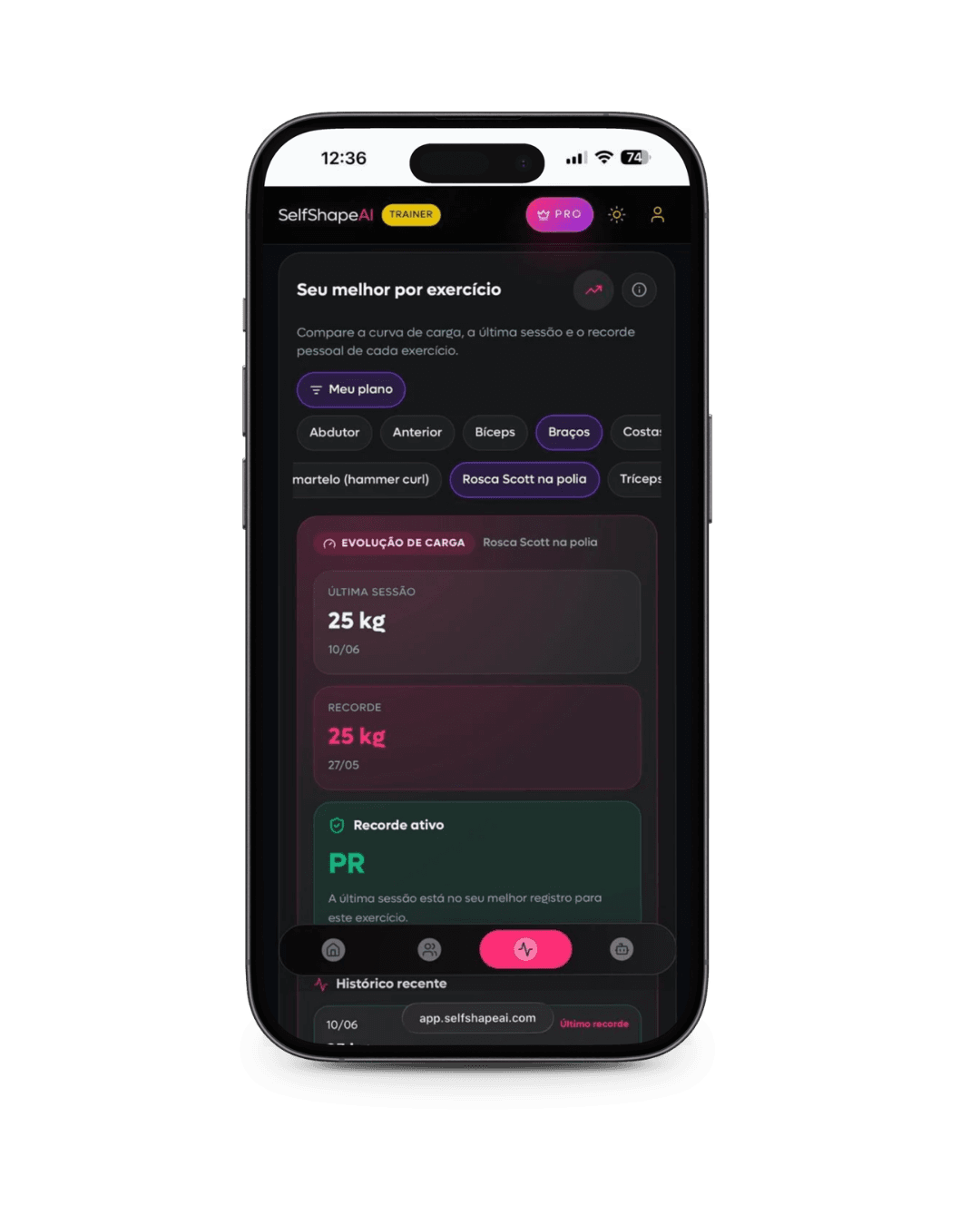
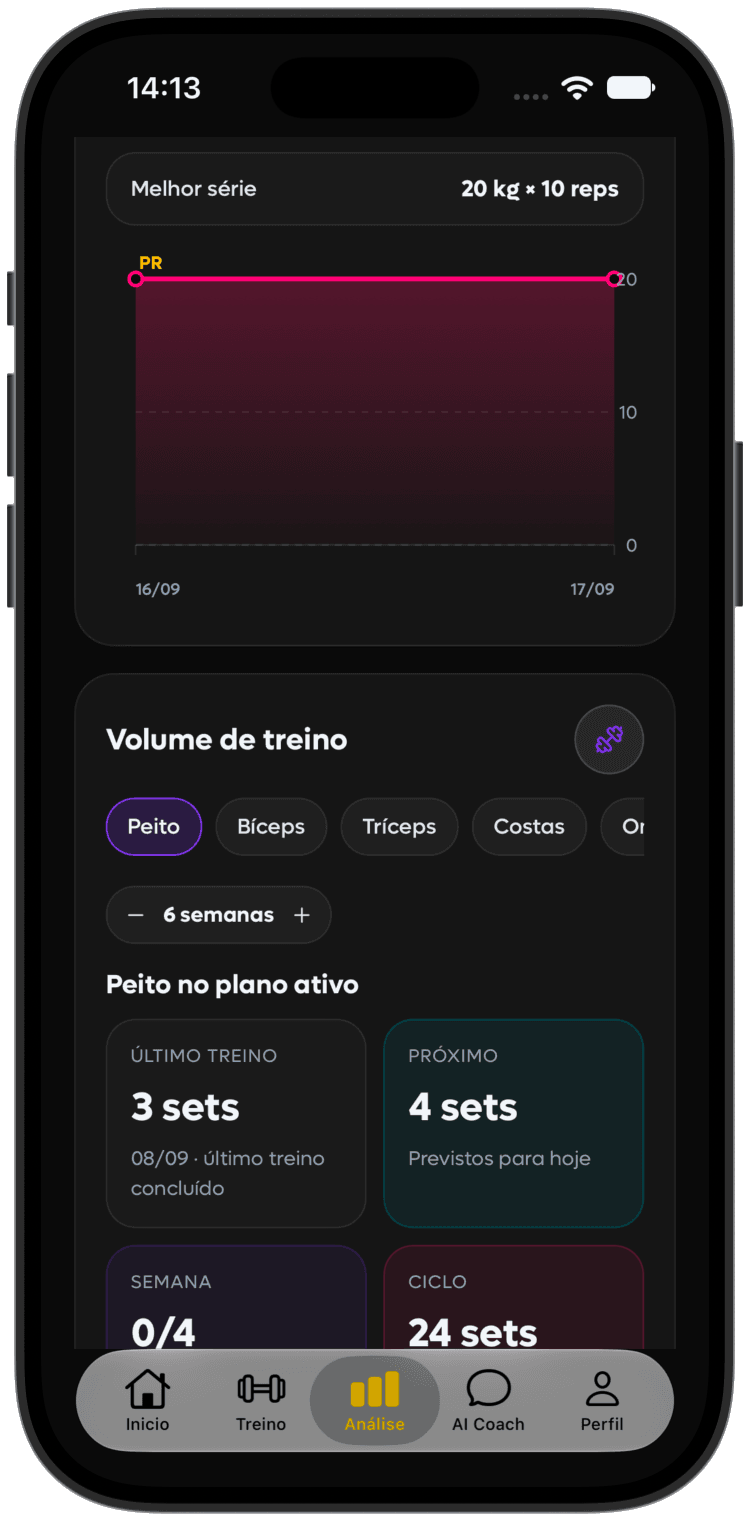
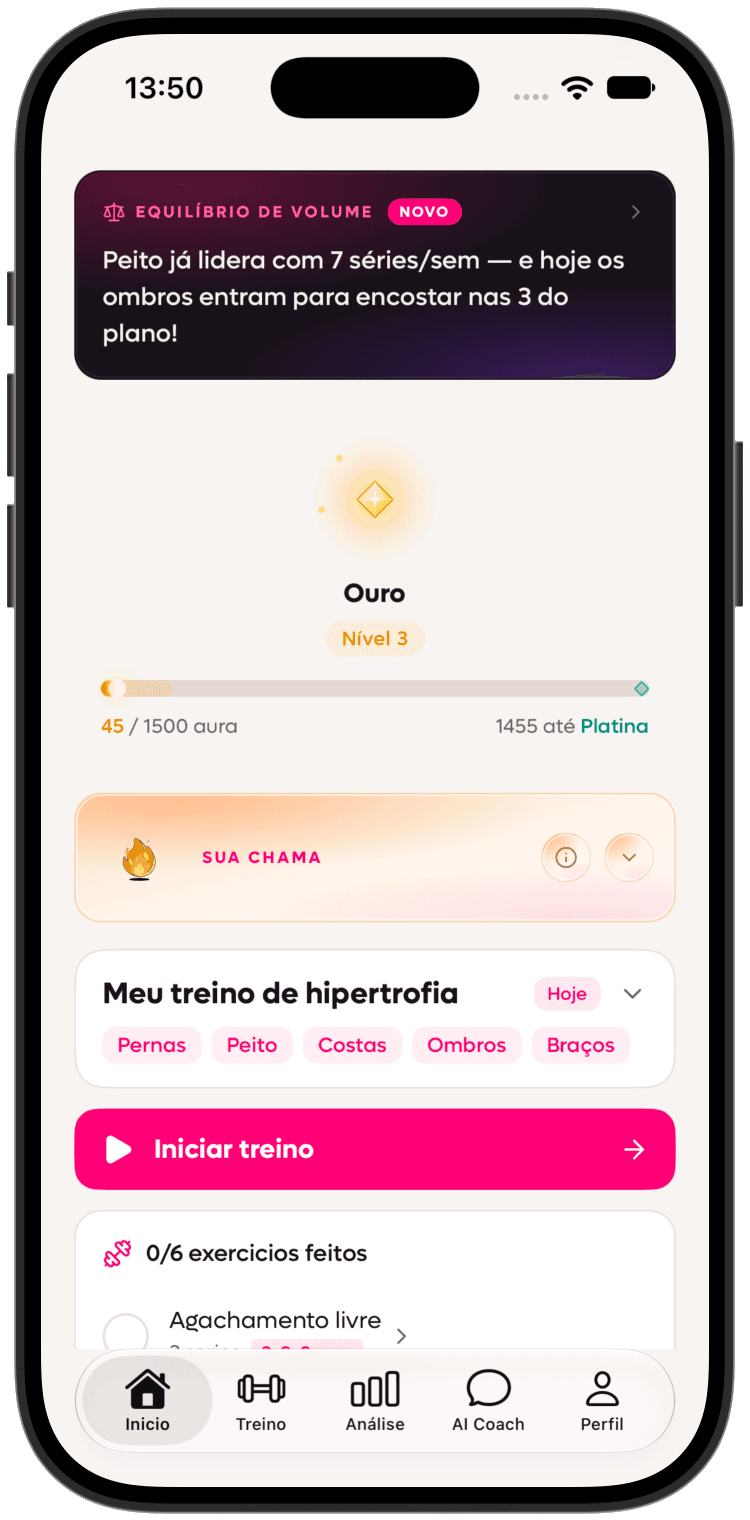
SelfShapeAI check-ins record load, reps and perceived effort. History shows exercise-load progression and records; progress tracks volume and trained groups. AI Coach answers in active-plan context. This makes the process reviewable, as discussed in Intelligent AI workouts and AI training.
How to apply this in your very next session
- Set a clear rep range for the main exercises.
- At the end of each set, record how much was still left with good technique — the ruler is in the practical RPE and RIR guide.
- Far from the top of the range and with real margin? Push reps.
- At the range's top with consistent execution and RIR across consecutive sessions? Use the smallest increase and return toward the range's bottom.
- Changed technique or shorter range? Maintain load and make subsequent sets comparable before deciding.
Frequently asked questions
- When is the right time to add weight in training?When stable technique, the top of the rep range and effort margin align in more than one session. One workout that felt easy, on its own, is not enough of a signal.
- How much weight should I add each time?Use the smallest available increment keeping you within planned reps and effort. The older 2–10% reference illustrates scale but cannot replace each exercise's actual response.
- Can I progress without adding weight every week?Yes. Increasing reps within a range is valid, and not every week must surpass the previous one. Improving inconsistent technique also makes training more comparable, though it is not automatically progressive overload.
- How do I know if I am pushing too hard?When technique falls apart, range disappears and effort explodes without performance following. To calibrate that with clarity, use the ruler in the practical RPE and RIR guide.
Progressing better is deciding better
Increasing load means choosing the right variable at the right time—weight, reps or sometimes planned volume. Comparable criteria between sessions reveal progress.
SelfShapeAI keeps those criteria from depending on memory: the plan explains the range, check-in records effort and history helps inform increases. Create your AI workout—download for free and track progression with clarity.
Sources and references
- Source: Currier BS et al. American College of Sports Medicine Position Stand. Resistance Training Prescription for Muscle Function, Hypertrophy, and Physical Performance in Healthy Adults. Med Sci Sports Exerc, 2026. — ACSM (PubMed)
- Source: Plotkin DL et al. Progressive overload without progressing load? The effects of load or repetition progression on muscular adaptations. PeerJ, 2022. — PeerJ (PubMed)
- Source: Rodrigues CEA et al. Effects of Resistance Training Overload Progression Protocols on Strength and Muscle Mass. Int J Sports Med, 2024. — International Journal of Sports Medicine (PubMed)
Reviewed by the SelfShapeAI research team using strength-training guidelines and studies.
Take this method to the app

Create your plan with AI, log check-ins and use the AI Coach to adjust training with context.
Share
SelfShapeAI Team
SelfShapeAI technical and editorial team.
Keep learning
Recommended next article
Practical RPE and RIR guide: how to measure training effort without overcomplicating
Understand what RPE and RIR are, see the conversion table and learn to use this ruler to add weight at the right time, without training in the dark.
Continue →