Shoulder workout: how to build strong, complete and well-balanced delts
Understand how to balance front, side and rear delts, which exercises actually matter and how SelfShapeAI helps you fit this workout to your context.


Shoulders strongly influence the appearance of the physique. They give the torso presence, contribute to chest and back movements and appear in nearly every upper-body structure. Because they work in so many sessions, direct volume must account for the week's indirect work.
The common mistake is repeating similar movements unknowingly: overhead presses, bench presses and front raises concentrate demand anteriorly while lateral and rear regions receive little direct work. The opposite occurs when a session becomes a collection of raises without comparable progression.
A shoulder workout depends on the deltoid's role throughout the week, recoverable volume and regional priorities. Compare upper-body exercises, push/pull/legs, upper/lower and full body versus splits to choose its place.
SelfShapeAI starts with goals, frequency, equipment and plan history rather than a generic sheet. The logic is explained and sessions record load, reps, effort and notes. See AI training, what SelfShapeAI is and how to use it.
Contents
- 1. What your shoulder is actually doing
- 2. Front delt
- 3. Side delt
- 4. Rear delt
- 5. More mobility also calls for more control
- 6. Why training shoulders well changes the workout so much
- 7. Exercises that make sense
- 8. 1. Dumbbell, barbell or machine overhead press
- 9. 2. Lateral raise
- 10. 3. Reverse fly or reverse pec deck
- 11. 4. Face pull
- 12. 5. Front raise, when appropriate
- 13. 6. Upright row, with context and tolerance
- 14. How to build a real shoulder workout
- 15. Frequency: how often should you train shoulders?
- 16. Mistakes that most stall shoulder training
- 17. 1. Training only the front shoulder
- 18. 2. Treating side and rear as a detail
- 19. 3. Using too much load and too little control
- 20. 4. Fitting the shoulder workout badly into the week
- 21. 5. No progression for weeks
- 22. Where SelfShapeAI comes into this
- 23. Frequently asked questions
What your shoulder is actually doing
Shoulder training mainly focuses on the deltoid, usually divided into three portions. This basic distinction can substantially improve programming.
- Front delt.
- Side delt.
- Rear delt.
Turn understanding into a workout you can follow
SelfShapeAI uses your routine and goal to build an explained plan, log every session and guide the next adjustment.




Download for free. Annual: R$ 299,90/year, equivalent to about R$ 25/month; monthly: R$ 39,90/month. See how AI training works.
Front delt
The front shoulder already works in bench presses, overhead presses and chest machines. For many people, it is not the region most in need of extra direct volume.
Side delt
This portion is most associated with broader-looking shoulders. It usually needs direct work because pressing stimulates it less than the front portion.
Rear delt
The rear deltoid assists pulling and can receive direct work from reverse flyes, reverse pec deck or face pulls. Training it can complete deltoid stimulation, but should not be presented as automatic posture correction or protection against pain.
More mobility also calls for more control
The shoulder allows many movement paths. Technique, range and exercise selection should make reps comparable and tolerable, without promising one perfect form for every anatomy. Review the RPE and RIR guide and range of motion.
Why training shoulders well changes the workout so much
Deltoid training can support hypertrophy and pressing strength. Its effect depends on the whole program rather than one exercise.
- Gives the torso more presence.
- Talk to pushing and pulling.
- Help distribute upper-body work better.
- Changes the physique's appearance when training is more balanced.
More shoulder exercises are not always the answer. Chest work already stimulates the front deltoid; pulls and rows involve the rear portion to some extent, though direct work may help when it is a priority. See how many sets to perform, building muscle and getting stronger with SelfShapeAI.

Exercises that make sense
1. Dumbbell, barbell or machine overhead press
A traditional overhead pushing movement that recruits the front deltoid, triceps and lateral portion. Standing free-weight versions demand more trunk coordination.
Overhead pressing need not anchor every workout. Goals, technique, equipment and tolerance determine its role. With substantial pressing volume already, it may take less space or be omitted during a lateral- and rear-deltoid-focused phase.
- Dumbbells allow you to adjust the path freely.
- Machines offer more external stability.
- Barbells simplify standardized progression once technique is established.
2. Lateral raise
Lateral raises directly train the lateral deltoid, which shows less excitation in bench pressing than in overhead pressing or raises. Cables, dumbbells and machines are viable; an eight-week study found similar hypertrophy with cables and dumbbells when range and effort were standardized.
- Load that is too heavy.
- Swinging the torso.
- Any random range.
- Very little tension where it matters.
The load should permit repeatable range and appropriate proximity to failure. Some body movement does not automatically invalidate a set, but increasingly swinging each week makes progression hard to interpret. See lifting tempo.
3. Reverse fly or reverse pec deck
This directly trains the rear deltoid, especially useful when presses dominate the week and rows do not fully meet its hypertrophy priority.
Dumbbell or cable reverse flyes and reverse pec deck are alternatives. Choose stable range and progression rather than assuming one equipment type always wins.
4. Face pull
Face pulls are an option for rear deltoids and upper back. They are neither a magical shoulder-health exercise nor compulsory: reverse flyes, reverse pec deck and other horizontal-opening movements can fill that role.
- Moderate load.
- Unhurried execution.
- Good reading of the cable path.
- Attention to the movement path and repeatable range.
5. Front raise, when appropriate
Front raises need not be a priority for most people, a nuance often missing from generic articles.
The front deltoid already works in bench presses, overhead presses and other pushes. Front raises can supplement a priority region, but are not universally required.
6. Upright row, with context and tolerance
Upright rows can complement shoulder and trapezius training. They are optional, and range, grip and equipment substantially affect individual tolerance.
Use them when the path is comfortable and execution stable. Otherwise choose another abduction exercise. Persistent or intense pain warrants professional assessment.
How to build a real shoulder workout
Order should reflect the cycle's priority. Exercises performed first tend to gain more strength; hypertrophy evidence does not consistently favor always starting with compounds or isolation work.
- If overhead-press strength is the priority, put it first.
- If lateral or rear deltoids are the focus, start with that region in one session.
- Avoid duplicating anterior volume when chest and pressing already dominate the week.
- Stop when additional sets persistently lose execution quality or performance.
A practical example:
- Dumbbell or machine press: two to three sets if strength or front deltoids are the priority.
- Lateral raise: two to four sets in a range that allows controlled near-failure effort.
- Reverse fly, reverse pec deck or face pull: two to four sets, choosing one main option.
- Front raise: optional and usually unnecessary with substantial existing pushing volume.
This is not a fixed prescription. A dedicated shoulder day can fit some contexts; others distribute work better through PPL, upper/lower or a four-day split. Shoulders must fit the whole week.
Frequency: how often should you train shoulders?
One or two weekly exposures are practical ways to distribute work, not a universally superior frequency. With equal weekly volume, frequency mainly organizes work and preserves set quality.
If you already train chest and upper body heavily, the front shoulder likely gets substantial work. Direct training can then prioritize lateral and rear portions instead of adding more presses.
With limited time, a small block may work better than a large shoulder session. More available days allow distributing volume. Compare full body, five-day splits and three-day training.
Mistakes that most stall shoulder training
1. Training only the front shoulder
Bench presses, overhead presses and front raises concentrate anterior demand. That is not equivalent to training every deltoid region.
2. Treating side and rear as a detail
Lateral and rear portions may need direct attention when prioritized. Account for existing row and press volume.
3. Using too much load and too little control
This often appears in lateral raises and accessories. If range shrinks and momentum increases every rep, the set stops being comparable to the previous one.
4. Fitting the shoulder workout badly into the week
Weekly placement can be the issue. A demanding chest session the day before may reduce pressing performance. See warm-up sets and rest between sets.
5. No progression for weeks
Progress can mean more load or reps with comparable exercise, range and effort. Improving inconsistent technique helps measure training, but need not automatically be called progressive overload.
If nothing changes, training may tire you without showing a progress trend. Review when to increase load.
Where SelfShapeAI comes into this
First, SelfShapeAI builds training with context. Frequency, goals and equipment guide the plan instead of improvised shoulder-exercise counts.
The plan explains its logic: why front deltoids may get less direct volume, lateral deltoids appear in several sessions or rear deltoids become a priority.
SelfShapeAI records load, reps, effort and notes. Record when the trapezius limited a raise, a press did not fit or less weight made a set more stable.
These notes and check-ins make adjustments less random. Compare what actually happened instead of changing exercises every week.
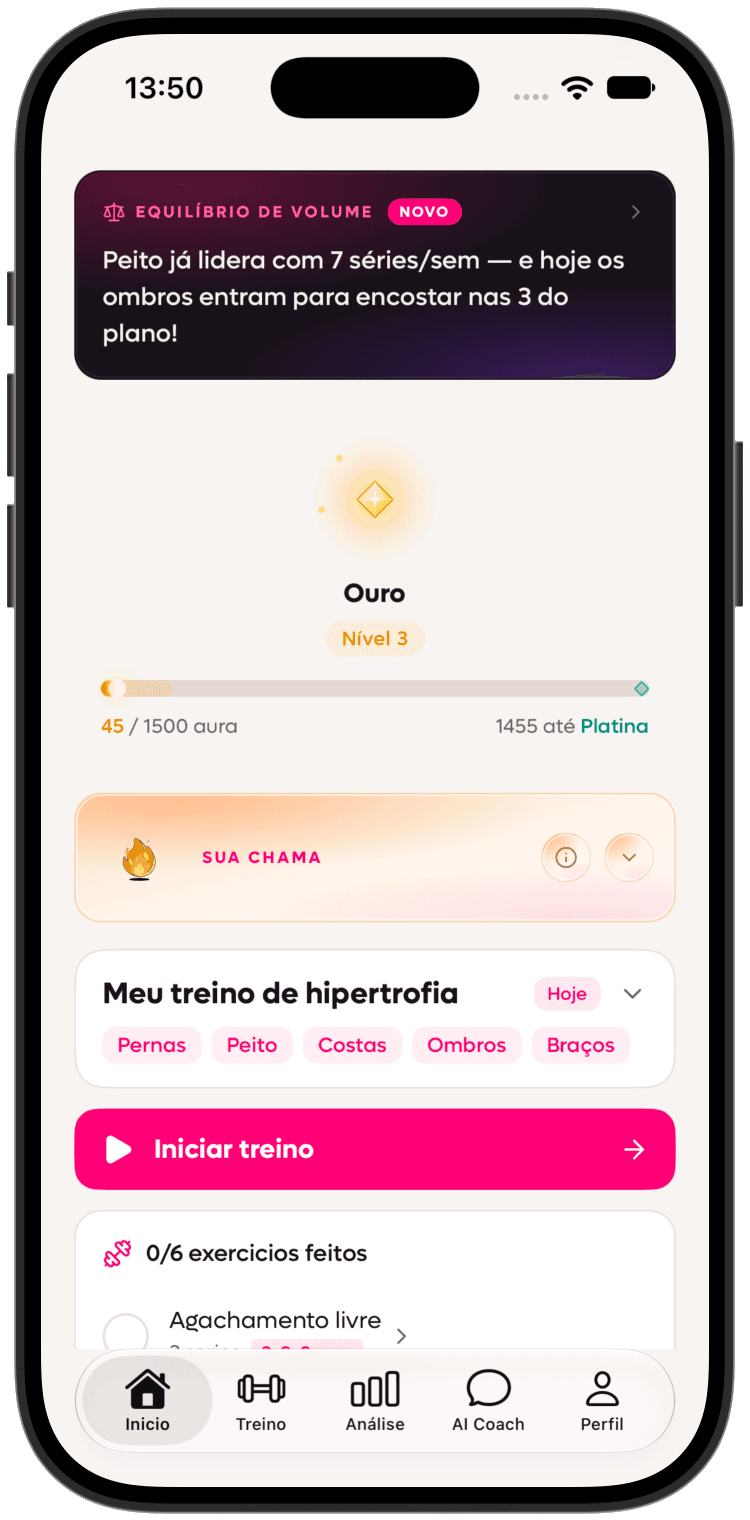
SelfShapeAI shows volume, muscle groups, records and load per exercise. Check whether presses and raises progress and shoulder volume fits the week.
AI Coach can discuss alternatives in the active plan when equipment is missing or a path does not fit. It does not diagnose pain: persistent, intense or function-limiting symptoms require professional assessment. Explore AI training, features and pricing.
Frequently asked questions
- Do I need a dedicated shoulder day to progress?Not necessarily. Many people progress with shoulder work distributed across push, upper or other splits. Total volume and weekly placement matter.
- Are front raises worthwhile for everyone?No. The front shoulder already works substantially in pushes, so many people need not prioritize them.
- Does bench pressing already train shoulders?Yes. The front delt especially tends to take part a lot in pushing movements.
- How many times a week does it make sense to focus on the side delt?One or two exposures are practical volume-distribution options, not a rule. Account for indirect pressing work and weekly totals.
- If my shoulder bothers me, what should I adjust first?Pause progression and review load, range and exercise. Persistent, intense or function-limiting pain requires professional assessment; the app does not replace diagnosis.
- Does SelfShapeAI help organize this focus?It does, because a shoulder workout depends a lot on context. The app helps build, explain, adjust, log and track this volume with more clarity.
Good shoulder training distributes stimulus, chooses movements for your context and checks whether work becomes progress. Explore AI training, features, pricing and SelfShapeAI to put it into practice.
Sources and references
- Source: Campos YAC et al. Different shoulder exercises affect the activation of deltoid portions in resistance-trained individuals. J Hum Kinet, 2020. — Journal of Human Kinetics (PubMed)
- Source: Larsen S et al. Dumbbell versus cable lateral raises for lateral deltoid hypertrophy: an experimental study. Front Physiol, 2025. — Frontiers in Physiology (PubMed)
- Source: Currier BS et al. American College of Sports Medicine Position Stand. Resistance Training Prescription for Muscle Function, Hypertrophy, and Physical Performance in Healthy Adults. Med Sci Sports Exerc, 2026. — ACSM (PubMed)
Reviewed by the SelfShapeAI research team using strength-training guidelines and studies.
Take this method to the app

Create your plan with AI, log check-ins and use the AI Coach to adjust training with context.
Share
SelfShapeAI Team
SelfShapeAI technical and editorial team.
Keep learning

Recommended next article
Full body vs. split training: which routine makes more sense for your goal?
Find out when full body or a split makes more sense for hypertrophy, a busy schedule and muscle focus.
Continue →