5x5 workout: what it is, how it works and when the method makes sense
Understand the A/B structure, how to choose loads, how long to rest, when to add weight and which phases the 5x5 tends to fit best.

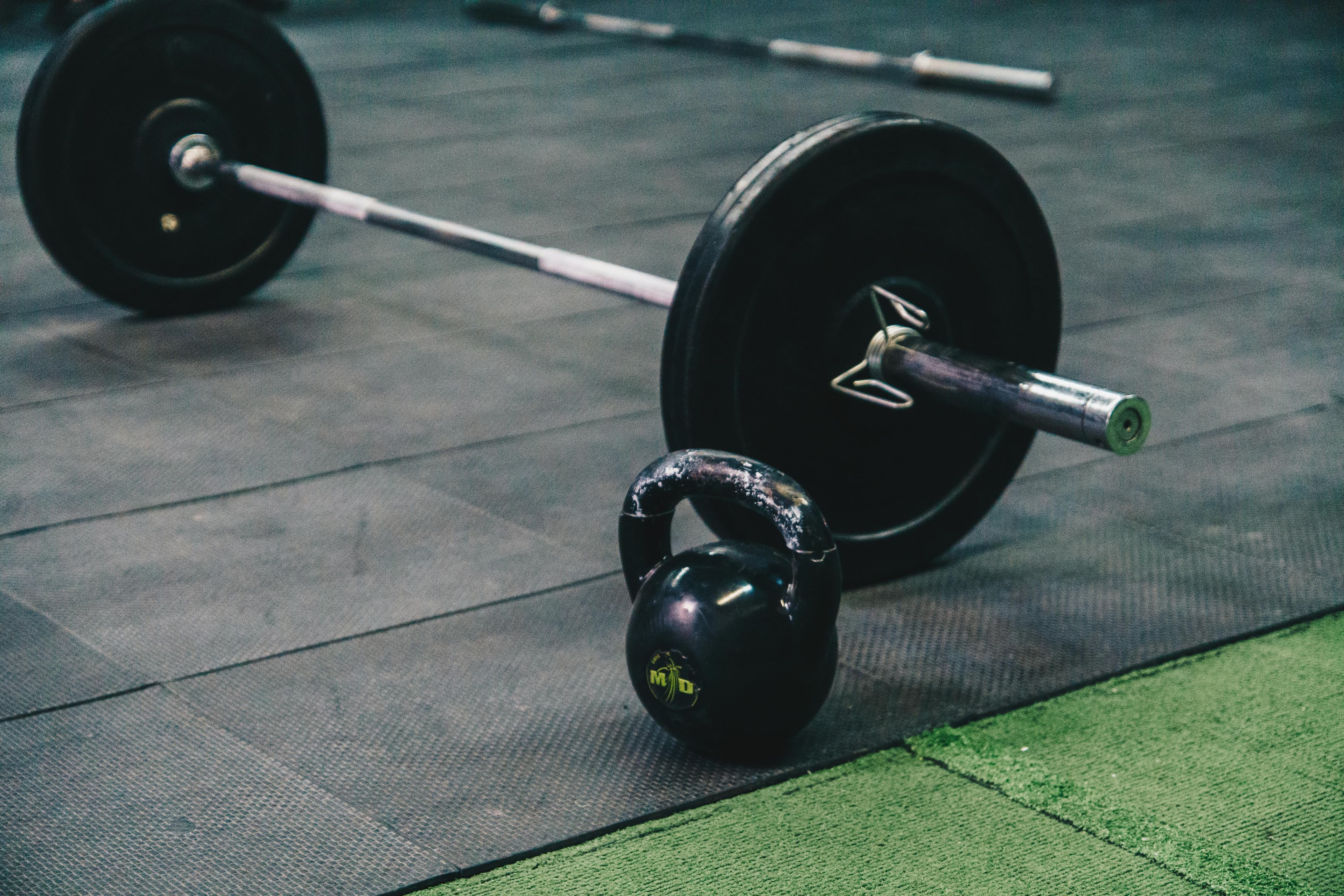
The 5x5 is a classic strength method that still makes sense in many contexts. It takes a few big lifts, organizes everything into a repeatable structure and makes progression far easier to see.
But it is important to start with the point that most often sinks this method in practice: the 5x5 does not fail because it "stopped working". It usually fails because someone starts too heavy, rests poorly, ignores the warm-up or treats the spreadsheet as if simply showing up and surviving the sets were enough. If you are still comparing paths to build strength, pair this with Full body vs. split training and the 3-day workout split.
In SelfShapeAI, the value of the 5x5 is not in "modernizing" a classic. It is in applying the method with more reading: a plan coherent with your routine, an explanation of the structure, load logging, check-ins, progress analysis and a cycle review when training starts to stall — the logic behind AI training.
Contents
- 1. What the 5x5 workout is
- 2. How the A/B routine works
- 3. Workout A
- 4. Workout B
- 5. How to choose the starting load
- 6. How to warm up before the working sets
- 7. How long to rest between sets
- 8. How progression works in the 5x5
- 9. Why so many people use the 5x5
- 10. The main lifts and what each one teaches
- 11. Who the 5x5 makes the most sense for
- 12. Where the 5x5 tends to stall
- 13. StrongLifts, Madcow and the comparison with other splits
- 14. How to apply the 5x5 with more clarity in SelfShapeAI
- 15. How to know your 5x5 is working
- 16. Frequently asked questions
What the 5x5 workout is
5x5 describes five sets of five repetitions in main exercises, but there is no universal routine. Programs differ in exercise selection, set count—especially for deadlifts—load distribution and progression rules. They share repeated practice of movements in a strength-oriented rep range, with progress tracked over time.
Popular versions typically revolve around squats, bench presses, rows, overhead presses and deadlifts. A short exercise list makes it easier to practice and track loads, but these five movements are not mandatory for everyone. Limitations, equipment and goals may call for substitutions. For a clearer view of effort, use the Practical RPE and RIR guide.
Turn understanding into a workout you can follow
SelfShapeAI uses your routine and goal to build an explained plan, log every session and guide the next adjustment.




Download for free. Annual: R$ 299,90/year, equivalent to about R$ 25/month; monthly: R$ 39,90/month. See how AI training works.
How the A/B routine works
The best-known 5x5 format uses two workouts, A and B, alternated through the week.
| Workout A | Workout B |
|---|---|
| Squat — 5x5 | Squat — 5x5 |
| Bench press — 5x5 | Overhead press — 5x5 |
| Bent-over row — 5x5 | Deadlift — volume depends on the version |
Workout A
- Squat: 5x5.
- Bench press: 5x5.
- Bent-over row: 5x5.
Workout B
- Squat: 5x5.
- Overhead press: 5x5.
- Deadlift: one or more working sets, depending on the version and recovery.
One weekly example alternates `A`, `B` and `A`, reversing the order the following week. This offers three practice opportunities, but spacing and volume must fit recovery. The point is not memorizing an “official” version: understand which movements you will practice, the training dose and how progression will be decided. Compare Upper/lower split, Full-body training and Bro split.
How to choose the starting load
Your starting load should allow all five sets with stable technique and clear reps in reserve. Percentages of `1RM` can guide you, but no single value is safe for everyone: experience, exercise, recent training and program volume affect the dose. Start conservatively and adjust based on execution and observed effort.
- Technique should remain consistent from the first set to the last.
- Leave room to progress without turning every session into a maximum-effort test.
- Pain, a long training break or uncertainty about technique call for assessment and an even more gradual start.
In practice, many people wreck their own cycle by trying to start at the limit. The result is predictable: technique worsens, confidence drops and progression dies fast.
How to warm up before the working sets
The 5x5 does not pair with arriving cold and simply attacking the working load. Because the method uses big movements and relatively high loads, the warm-up is part of the workout, not an optional detail.
- Start with the empty bar.
- Do a few light reps to organize the movement pattern.
- Add weight in small steps.
- Reach the working load without spending too much energy too soon.
The goal of the warm-up is not to tire you out before the main work. It is to prepare joints, coordination and load sense so the working sets come out with more quality. To go deeper, see warm-up sets in the glossary.
How long to rest between sets
In the 5x5, resting too little almost always hurts more than it helps. Because the sets are heavy and the method depends on repeating good execution across five sets, rest needs to be enough to keep performance up.
In practice, the interval usually sits between 2 and 5 minutes, depending on the exercise, the load and your level. When in doubt, the cheaper mistake is usually resting a bit longer and executing well, rather than rushing to finish and losing reps to poor recovery. If you like reading effort and recovery with more criteria, cross this with the RPE scale and rest between sets.
How progression works in the 5x5
5x5 progression is simple to understand and, for that very reason, very easy to mess up when ego steps in front.
- Complete the prescription, then check technique, perceived speed and effort before increasing the load.
- After failure, deteriorating technique or much higher effort than planned, repeat or reduce the load according to your program.
- When session-to-session progression no longer fits, use smaller increments, reduce the dose or switch to weekly progression.
The increment depends on the exercise, current load and smallest available plates. `2.5 kg` may be a small squat increase and a large overhead-press increase; microloading or repeating the load may make more sense. Adding weight is one progression option, not an obligation after every completed session. See Simple progression: when to increase weight.
Why so many people use the 5x5
The method remains popular because it combines frequent practice of selected lifts, simple structure and an easy-to-track goal. That simplicity helps reveal changes between sessions, but effort and recovery still need managing.
- You practice the main lifts several times through the week.
- The more you repeat an important exercise well, the more competent you tend to get at it.
- The method does not ask for twenty decisions per session. It asks you to do the basics heavy, well-executed and with progression.
Five reps can also contribute to hypertrophy, but 5x5 tends to emphasize strength through the specificity of heavier loads and fewer movements. Hypertrophy can occur across load ranges when effort and volume are appropriate, so do not add accessories automatically. First check weekly volume per muscle, session length and recovery. Explore How to build more muscle and How many sets to build muscle.
The main lifts and what each one teaches
- Squat: builds global strength, lower-body technique and effort tolerance.
- Bench press: develops pushing strength, torso coordination and upper-body stability.
- Bent-over row: balances the pulling work and helps build a strong back and bar control.
- Overhead press: improves shoulder strength and the vertical pushing pattern.
- Deadlift: one of the most demanding movements in the method, it demands respect in technique, rest and progression.
Who the 5x5 makes the most sense for
- People who want to practice and track a small number of main lifts.
- People tired of random training.
- Anyone who wants to get stronger without a complicated split.
- Anyone who likes easy-to-read progression.
- Lifters whose technique, availability and recovery fit the selected frequency.
Experience level alone does not decide. A beginner may benefit from simplicity but still needs to learn technique; an experienced lifter may use 5x5 for a particular block without expecting indefinite linear progression. Other structures may fit goals requiring more variety or muscle-group volume. Compare From beginner to results, Three-day training split, Upper/lower split and Full body or split.
Where the 5x5 tends to stall
The 5x5 should not be treated as an eternal solution. It is a useful method, but it has a limit.
- The load stops climbing easily.
- Fatigue from the recurring squat weighs more.
- The session starts to feel too demanding for the week's recovery.
- The structure gets too simple for the current goal.
- Technique starts to suffer because the rush to progress grew bigger than execution quality.
When that happens, the most common mistake is reacting badly. Some people insist on the same format for too long. Others abandon everything at the first plateau. A more useful path is another: read the moment, review the cycle and decide whether linear progression still pays off or whether it makes sense to move to another phase.
StrongLifts, Madcow and the comparison with other splits
StrongLifts and Madcow are well-known examples, but neither is synonymous with every 5x5 routine. Each has its own load, volume and progression rules. Before copying a name, check the complete prescription against your experience, equipment and recovery.
Compare variables. A 5x5 routine usually repeats selected lifts more often; a Bro split organizes training by muscle; an Upper/lower split separates upper and lower body. No label wins by itself. Compare frequency, volume, specificity and adherence; for a larger schedule, see the Five-day training split.
How to apply the 5x5 with more clarity in SelfShapeAI
This is where the method stops being just a famous sheet and becomes a process that is easier to track. First, SelfShapeAI helps you build a plan more coherent with your frequency, your equipment and your goal. That matters because liking the idea of the 5x5 does not mean everyone should simply copy a ready-made table from the internet.
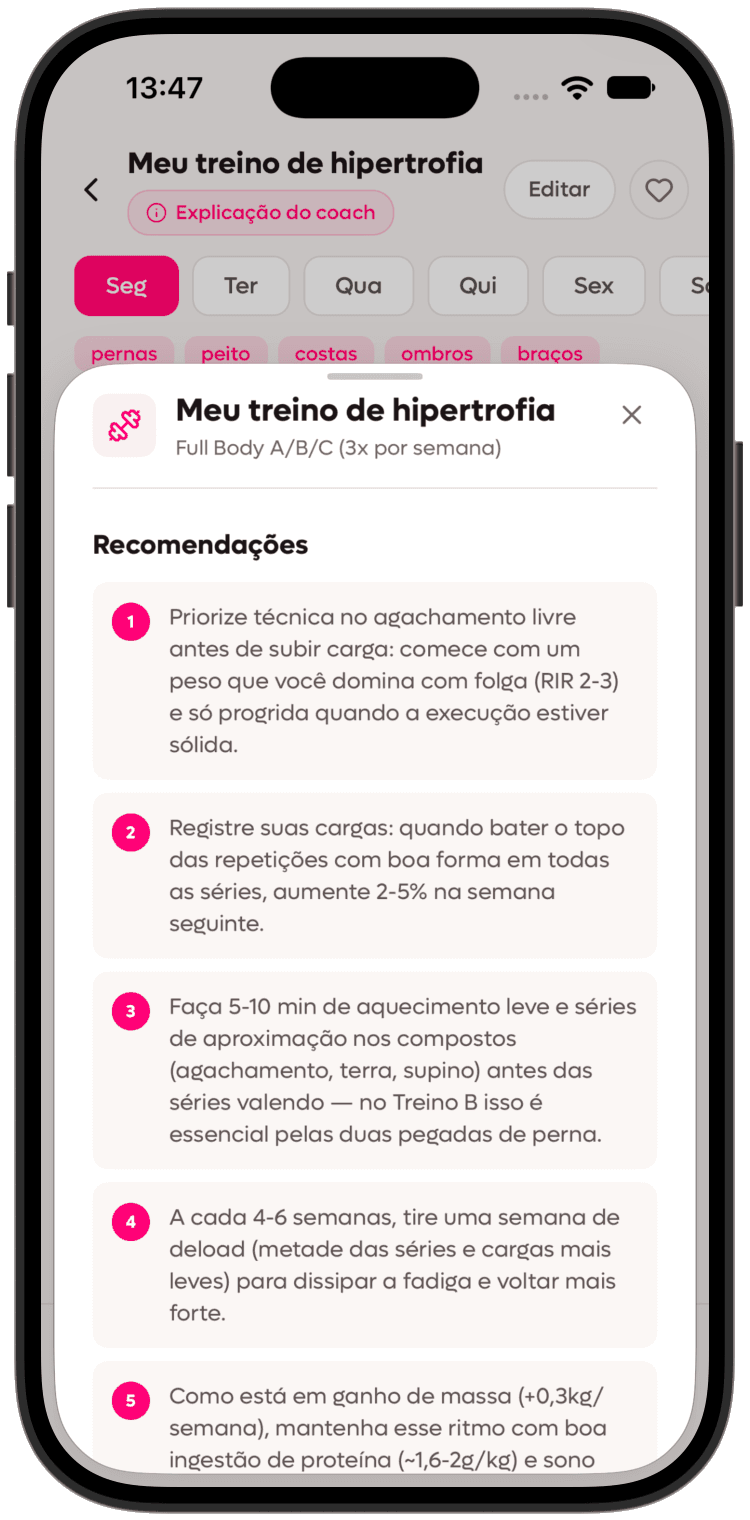
Then comes the plan explanation. This point makes a difference because many people follow the 5x5 without understanding why the plan was built that way. When the structure gets clear, it is easier to know why the squat shows up so often, why rest matters and when it makes sense to insist or review.
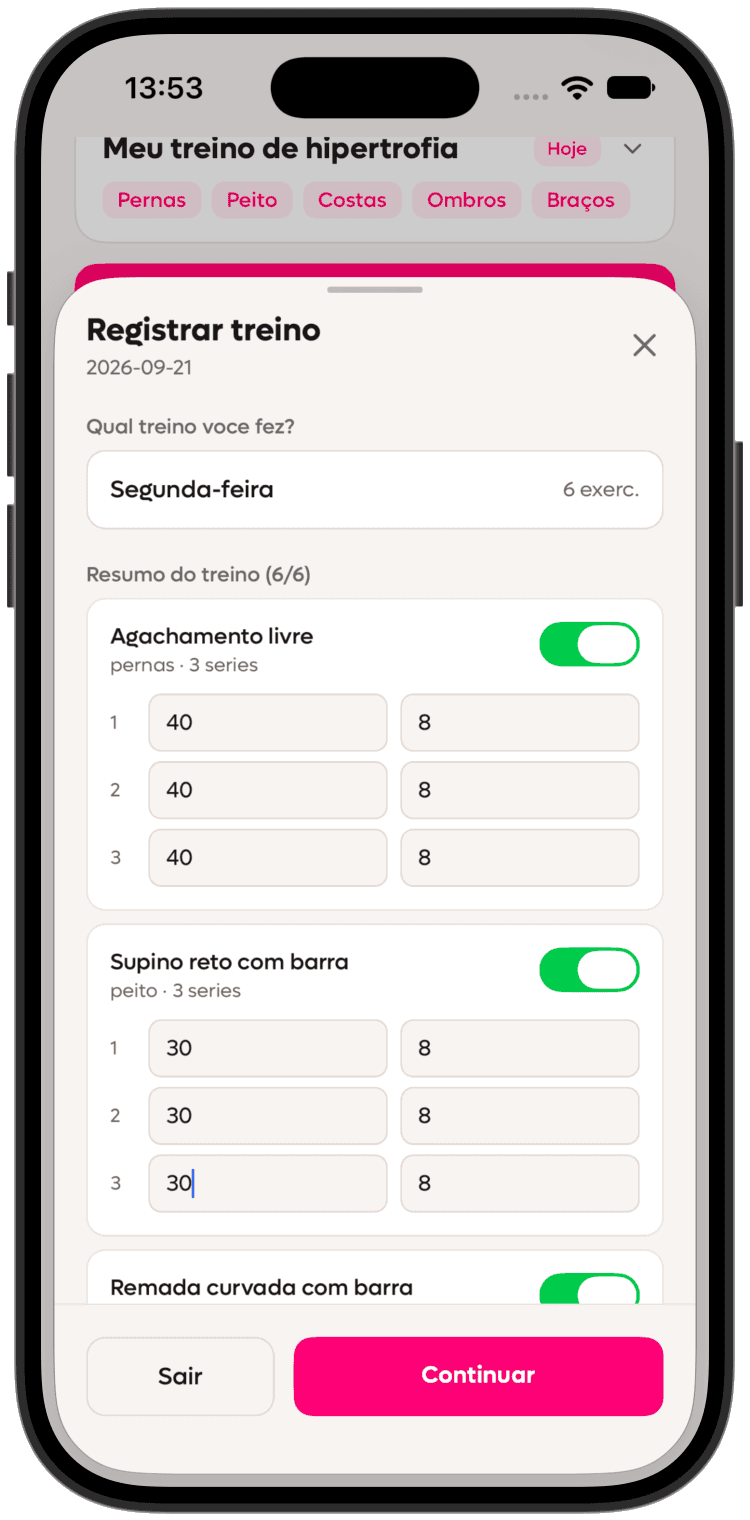
In the session itself, logging changes the game. You can save load, reps and real execution notes. That makes the method much more honest. A heavy workout is not just the number on the bar. Sometimes the load stayed the same but the technique was better. Sometimes training stalled because the week's recovery was poor. Sometimes you simply did not rest enough between sets. Check-ins also help a lot because the 5x5 is context-sensitive.
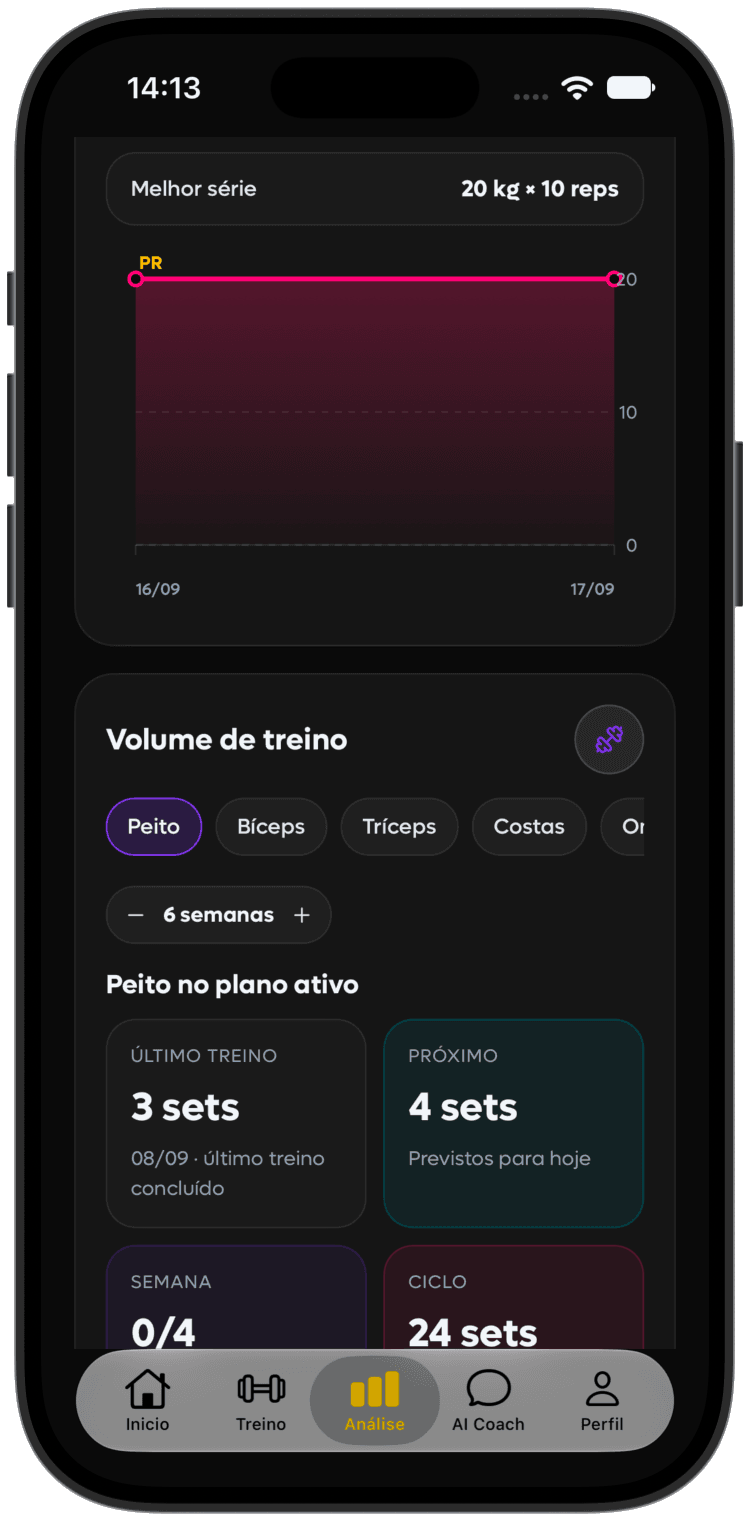
In the analysis, SelfShapeAI helps you see load progress, max weight per session, most-trained muscle groups and planned versus performed sets. For a method like the 5x5, that is very useful because it separates feeling from evidence. Everything that supports this reading lives in features.
The AI Coach also steps in well when the method starts to demand adaptation. If the deadlift does not fit your context, if the gym lacks the ideal setup, if you missed a session or progression got stuck, it becomes much easier to review the plan without dismantling everything on impulse. To see this broader proposal, also visit AI training and Pricing.
Finally, the plan library helps when it is time to leave the 5x5 and enter another phase. That matters because the method is great for a base, but it does not have to be your only structure forever.
How to know your 5x5 is working
- The technique on the main lifts is more solid.
- The load climbs across the weeks without destroying form.
- Training stays demanding but not disorganized.
- You are keeping real frequency.
- The planned sets are turning into executed training.
- The analysis shows progress, not just isolated enthusiasm.
This kind of reading matters because the 5x5 is simple, but not automatic. When you cross execution, load, rest, session context and weekly consistency, the decision to keep, adjust or review the method improves a lot.
Frequently asked questions
- Is the 5x5 only for strength?It is strength-oriented, but its sets can also contribute to hypertrophy. Muscle growth depends on total volume, effort and recovery, not just the 5x5 label. See How to build more muscle.
- Do I need to start heavy for the method to work?No. In fact, starting conservatively usually increases your chances of progressing for longer.
- If I did not complete 5x5, do I add load anyway?Do not increase automatically. Follow the version's rules, review technique, effort and recovery, then decide whether to repeat, reduce or adjust the dose. See Simple progression: when to increase weight.
- What is the most common 5x5 mistake?Starting too heavy and trying to compensate with brute force. Right after come poor warm-ups and insufficient rest.
- Does the 5x5 work for anyone?No. It works very well for many people, but it is neither mandatory nor eternal. As goal and level change, other structures may fit better.
- Does SelfShapeAI replace the method's logic?No. It helps you apply that logic with more clarity, logging and context.
5x5 can be a useful way to organize a strength block when it fits your phase and routine. It works best as a process with realistic progression, enough rest, sound technique and an honest session review. To apply it with more clarity, explore AI training, see the features, compare Pricing and open SelfShapeAI when you are ready.
Sources and references
- Source: Currier BS et al. American College of Sports Medicine Position Stand: Resistance Training Prescription for Muscle Function, Hypertrophy, and Physical Performance in Healthy Adults. Med Sci Sports Exerc, 2026. — ACSM (PubMed)
- Source: Currier BS et al. Resistance training prescription for muscle strength and hypertrophy in healthy adults: a systematic review and Bayesian network meta-analysis. Br J Sports Med, 2023. — British Journal of Sports Medicine (PubMed)
- Source: Lopez P et al. Resistance Training Load Effects on Muscle Hypertrophy and Strength Gain: Systematic Review and Network Meta-analysis. Med Sci Sports Exerc, 2021. — Medicine & Science in Sports & Exercise (PubMed)
Reviewed by the SelfShapeAI research team using strength-training guidelines and studies.
Take this method to the app

Create your plan with AI, log check-ins and use the AI Coach to adjust training with context.
Share
SelfShapeAI Team
SelfShapeAI technical and editorial team.
Keep learning

Recommended next article
Supersets: what they are, how to use them and when they make sense in training
Learn what supersets are, how to use them intelligently and when they make sense for hypertrophy, a busy routine and well-structured training.
Continue →