Real nutrition: demystifying fat in the diet of people who train
Understand why fat is not the enemy, how it enters performance and what actually matters on the plate of someone who trains.


For a long time, fat became the official villain of the plate. Egg without the yolk, zero-fat yogurt, a "fat free" label treated as an automatic health seal. The problem is that this speech oversimplified something that was never simple. For someone who trains, cutting fat without criteria can worsen satiety, scramble energy and even hurt recovery.
The right discussion is not whether fat makes you gain or lose weight on its own. The right discussion is: which fat is entering the diet, in what context, with what goal and how does it talk to the rest of the routine? When that conversation gets more mature, food stops being nutritional panic and becomes a training tool. And that gets even clearer when training is also designed with method, as we show in From beginner to results: 4 steps to start training with method.
This article exists to clear the noise. The idea here is to show why fat does not need to be treated as an enemy, which differences actually matter and how to think about it within a gym routine. If you want to connect this nutritional base with building muscle, follow up with How to build more muscle.
Contents
- 1. What matters to understand about fat for someone who trains
- 2. Why fat was demonized for so long
- 3. What fat does in the body of someone who trains
- 4. Not all fat is the same
- 5. Fat, performance and recovery
- 6. The most common mistakes when dealing with fat in the diet
- 7. Simple swaps that improve the real routine
- 8. How SelfShapeAI enters this conversation without turning food into a soap opera
- 9. Frequently asked questions
- 10. Good nutrition does not create villains. It creates structure.
What matters to understand about fat for someone who trains
- Fat is not an automatic enemy. It takes part in satiety, hormone production, vitamin absorption and recovery.
- The problem rarely lies in the isolated nutrient and more in the complete dietary pattern, the context and the quality of the choices.
- Not all fat is the same. Different types have different impacts on the plate and the routine.
- Someone who trains needs to think about fat alongside energy, digestion, session timing and adherence. That connects well with From beginner to results: 4 steps to start training with method.
- If food and training need to work together in real life, it also makes sense to understand what we show in AI training.
Turn understanding into a workout you can follow
SelfShapeAI uses your routine and goal to build an explained plan, log every session and guide the next adjustment.




Download for free. Annual: R$ 299,90/year, equivalent to about R$ 25/month; monthly: R$ 39,90/month. See how AI training works.
Why fat was demonized for so long
Part of that comes from a culture of oversimplified diets. When the goal was creating a fast rule, fat became an easy target: more calories per gram, associated with ultra-processed foods and frequently confused with overeating as a whole. But the conclusion was badly drawn. The fat in the food ended up carrying the blame that belonged to entire dietary patterns.
The practical result was a generation of meals that were "clean" on paper and bad in the real experience. Plates with little satiety, hunger reappearing fast, sweet cravings at the end of the day and unstable energy. For someone who trains, that is especially problematic, because an exercise routine asks for consistency and recovery, not a constant war against your own hunger.
What fat does in the body of someone who trains
Fats take part in functions that make a big difference in training. They enter hormone production, help form cell membranes and facilitate the absorption of fat-soluble vitamins, like A, D, E and K. In practical terms, that means support for overall health, immune function and more organized recovery. For anyone also refining execution, load and training dose, it makes sense to connect this conversation with Simple progression: when to add weight.
Another important point is satiety. When the meal has some good-quality fat, digestion tends to be more sustained and hunger usually comes back less aggressively. For many people, that reduces the sense of snacking all day and helps keep the food plan more stable without having to live in restriction mode.
That stability matters because training does not depend only on what happens at the gym. It depends on how much your routine can keep working outside of it. If food becomes a system of peaks, valleys and compensatory bingeing, adherence suffers. And when adherence drops, training also loses quality. For this broader reasoning about consistency, connect with 13 tips to get back to training.

Not all fat is the same
One of the biggest confusions about the topic is talking about fat as if everything were the same thing. It is not. Thinking that way hurts both nutritional education and everyday decision-making.
- Unsaturated: olive oil, avocado, nuts, seeds, olives, peanuts, sardines and other fatty fish. They usually make a lot of sense as the base of the routine.
- Saturated: they show up in eggs, dairy, meats and coconut. They do not need to be treated as an automatic demon, but they ask for context and balance within the dietary pattern.
- Industrial trans fats: present in many ultra-processed foods and hydrogenated fats. Here the logic is simpler: the less, the better.
For someone who trains, this distinction is important because the body does not respond only to the macro total, but to the dietary pattern repeated over time. Instead of asking "can I eat fat?", it is worth asking "where does this fat come from, how often and within what routine?". This kind of routine connects directly with training consistency, well-dosed effort and adherence, as shown in the practical RPE and RIR guide.
Fat, performance and recovery
Fat is not the star of the immediate pre-workout in most cases, but that does not mean it hurts performance by definition. What changes is the timing. A lot of fat right before the session can sit heavy and slow digestion. At other times of the day, it can help a lot to sustain energy and improve the food experience.
Post-workout and in the rest of the routine, the focus is usually much more about the overall quality of the diet than about demonizing a nutrient. Including adequate fat sources in balanced meals helps sustain recovery, appetite organization and continuity of the plan. That is worth even more when the goal is growing with consistency, something we explain better in How to build more muscle.
If training is demanding and recovery is going badly, maybe the problem is not lack of willpower. It can be an overly unstable food routine, with meals that sustain neither energy nor satiety. That is exactly when a more intelligent reading of the context starts to matter. If you want to see how different tools handle this in practice, compare with Best workout tracking app in 2026.
The most common mistakes when dealing with fat in the diet
- Cutting fat without criteria thinking that automatically improves your physique.
- Confusing natural food with ultra-processed just because both have fat.
- Living on dry meals with no satiety, and then losing control of your eating for the rest of the day.
- Ignoring the meal's timing and blaming fat for a discomfort that came from the wrong context.
- Looking only at calories and forgetting food experience, adherence and recovery.
Notice that almost all these mistakes share the same root: binary thinking. Either fat becomes a villain, or it becomes an excuse for excess. Neither path helps anyone who wants to train better. What helps is learning to think about quality, dose, context and repetition of the routine.
Simple swaps that improve the real routine
- Swapping bland, unsatisfying snacks for combinations with protein and good fat, like full-fat yogurt with nuts.
- Bringing back the whole egg instead of treating the yolk as an automatic enemy.
- Using olive oil, avocado or seeds more intelligently in main meals.
- Reducing "zero fat" ultra-processed foods that compensate texture and flavor with sugar, additives and low satiety.
- Thinking about the meal by what it sustains across the day, not just by the nutrient label.
None of these swaps is revolutionary on its own. The effect shows up when they stop being the exception and start structuring the routine. Real nutrition rarely changes your life in one dramatic gesture. It changes when small decisions start working in your favor every day. That is the same principle behind 13 tips to get back to training: consistency is born more from structure than from excitement.
How SelfShapeAI enters this conversation without turning food into a soap opera
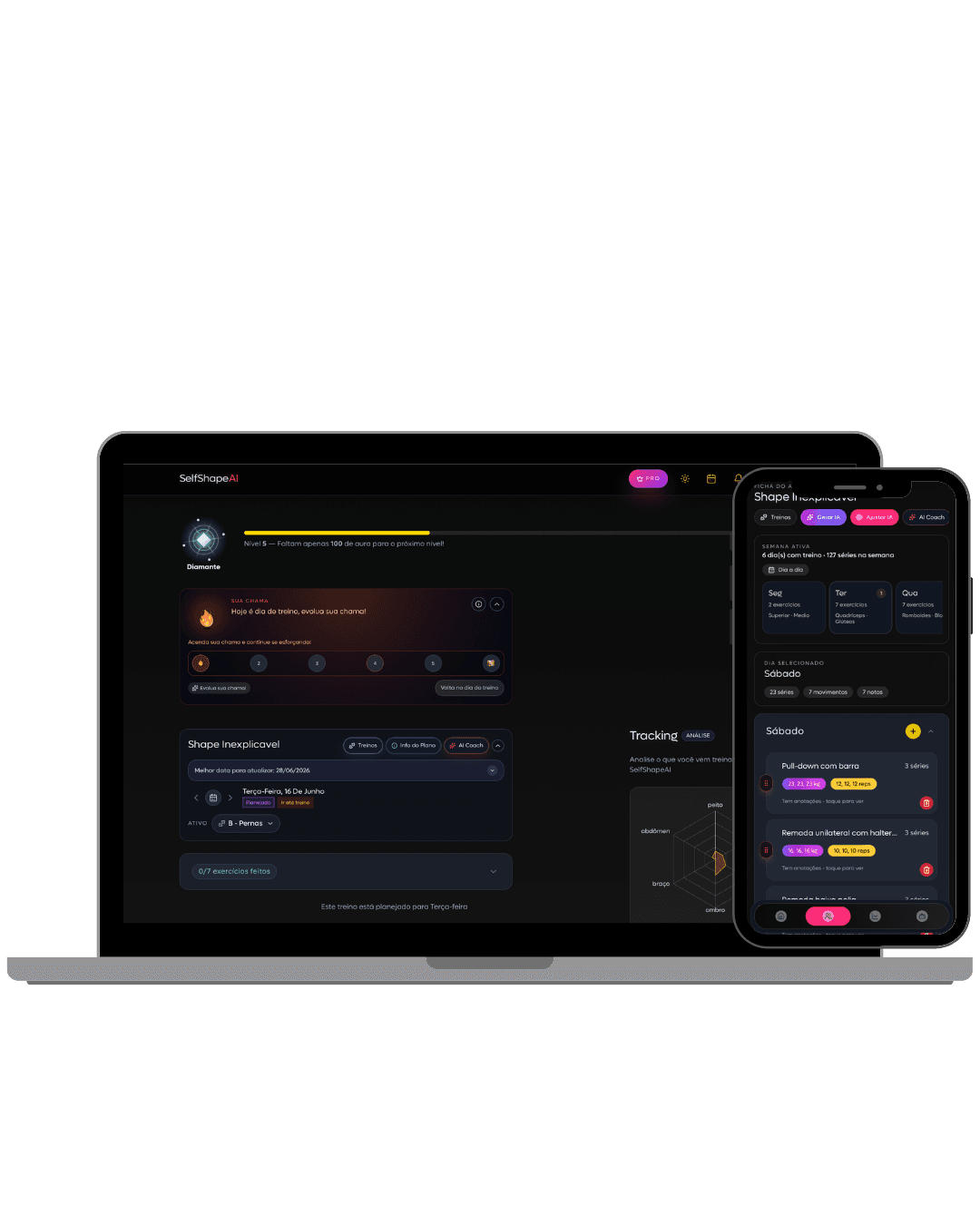
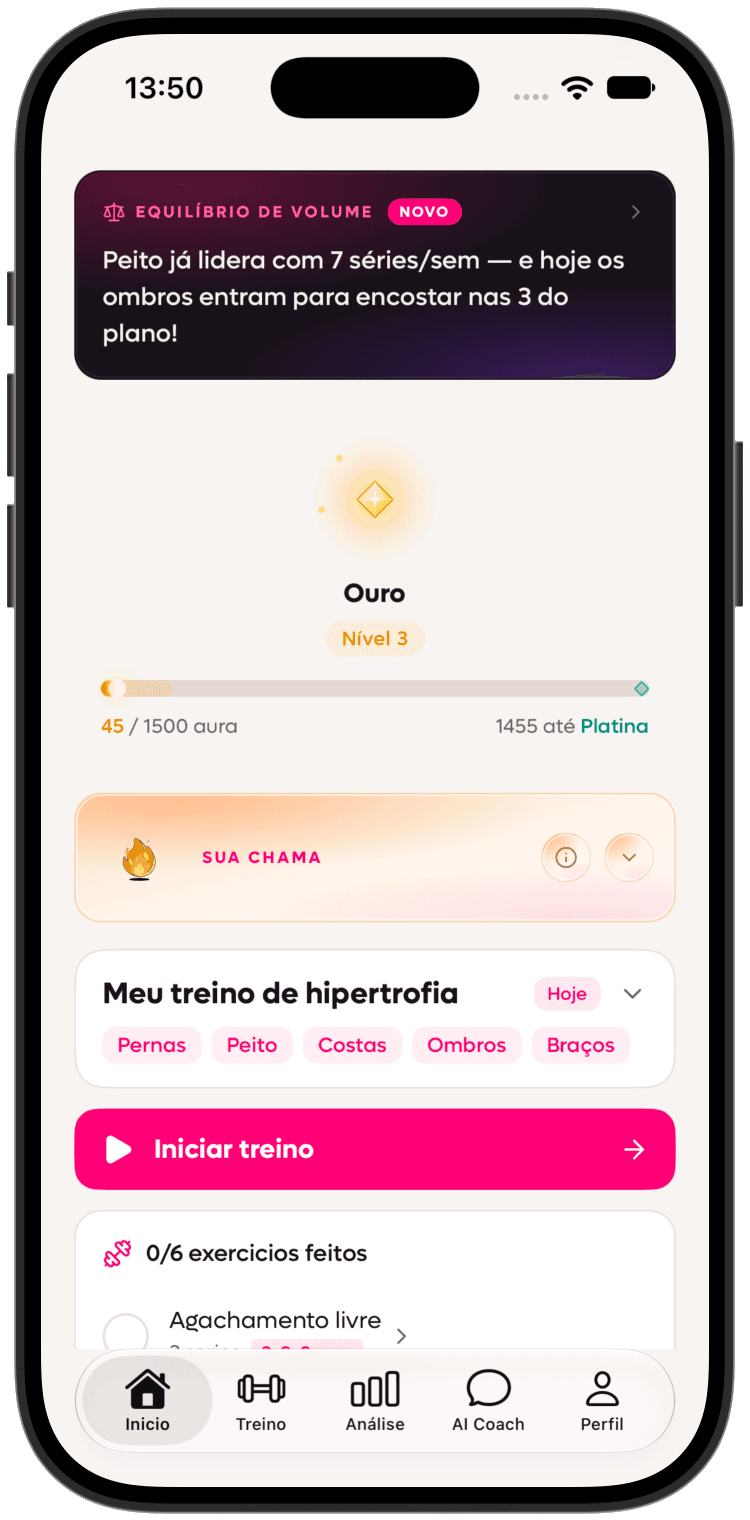
The greatest usefulness of an intelligent system here is not delivering nutritional terror or an infinite list of rules. It is helping translate context into a simple decision. In SelfShapeAI, training, routine and user feedback can talk to more applicable suggestions, without turning food into a demand that is impossible to sustain.
That makes a difference because most people do not fail for lack of information. They fail from excess friction. When nutrition fits real life, training delivers better. When training delivers better, adherence rises. And when adherence rises, results stop depending on momentary motivation. To see how this logic connects with the product, go through the features, AI training, Pricing and our home page.
Frequently asked questions
- Is fat bad for someone who wants to lose weight or build muscle?Not by definition. What matters is the total dietary pattern, the quality of the choices and the context. Fat is not an automatic enemy for those who want to lean out or for those who want to grow.
- Can someone who trains eat whole eggs and nuts?Yes. In many contexts that makes a lot of sense within a balanced routine, especially for the satiety and the nutritional value of those foods.
- Is it better to cut fat before training?It depends on the timing and individual tolerance. A lot of fat very close to the session can sit heavy. At other times of the day, it can work very well. The point is context, not automatic prohibition.
- How do I fit food and training together more practically?The most efficient path is usually simplifying decisions and connecting nutrition with your real routine. If you want to understand how that talks to training organization, see Intelligent AI-powered training.
Good nutrition does not create villains. It creates structure.
Fat does not need to be treated as a threat for someone who trains. It needs to be understood with more maturity. When it enters the right context, it helps sustain satiety, recovery and consistency. The mistake is not eating fat. It is reducing the debate to fear or total permissiveness.
To organize training and routine with less noise and more real context, start your training plan.
Sources and references
- Source: Whittaker J, Wu K. Low-fat diets and testosterone in men: systematic review and meta-analysis of intervention studies. J Steroid Biochem Mol Biol, 2021. — Journal of Steroid Biochemistry and Molecular Biology (PubMed)
- Source: Thomas DT, Erdman KA, Burke LM. American College of Sports Medicine Joint Position Statement: Nutrition and Athletic Performance. Med Sci Sports Exerc, 2016. — ACSM (PubMed)
Reviewed by the SelfShapeAI research team using sports-nutrition guidelines and studies.
Take this method to the app

Create your plan with AI, log check-ins and use the AI Coach to adjust training with context.
Share
SelfShapeAI Team
SelfShapeAI technical and editorial team.
Keep learning

Recommended next article
From beginner to results: 4 steps to start training with method
See the 4 steps to leave random training behind, start at the gym with method and turn consistency into real results.
Continue →