Intelligent AI-powered training: the gym's future, or already its present?
Understand where AI already helps training, which data improves guidance and why method and human judgment remain essential.

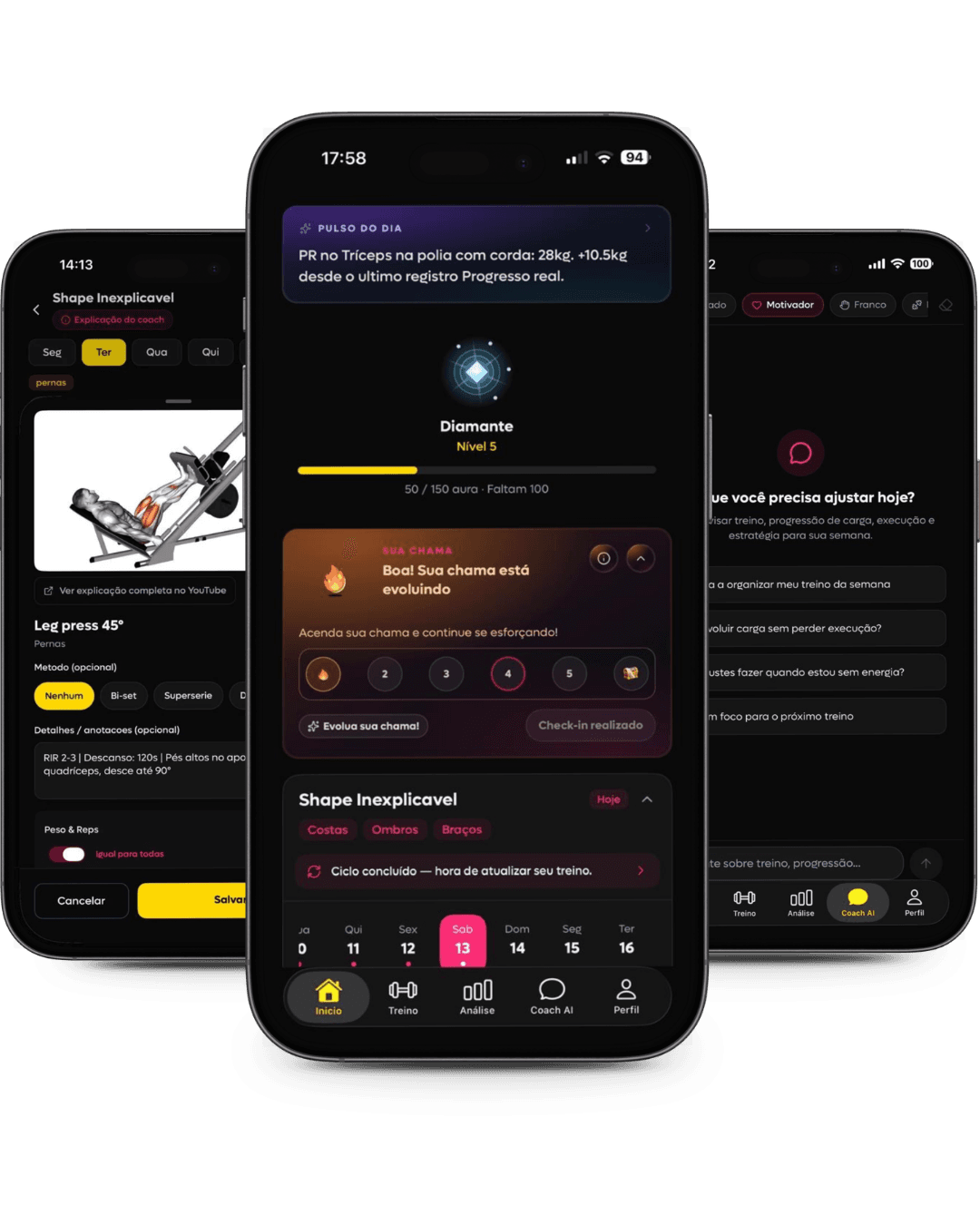
AI is already in the gym, but generated training is not automatically intelligent. A plan can appear in seconds and still be generic. Usefulness comes from starting with context, explaining the plan and learning from actual execution.
This matters both for beginners using From beginner to results and experienced lifters escaping impulsive decisions. AI reduces organizational work; it does not overturn strength-training principles.
Contents
- 1. The short answer: it is already here, provided there is a method
- 2. The problem behind SelfShapeAI
- 3. 1. Context before the plan
- 4. 2. An explained plan, not merely a generated one
- 5. 3. Execution becomes data
- 6. What AI Coach can and cannot do
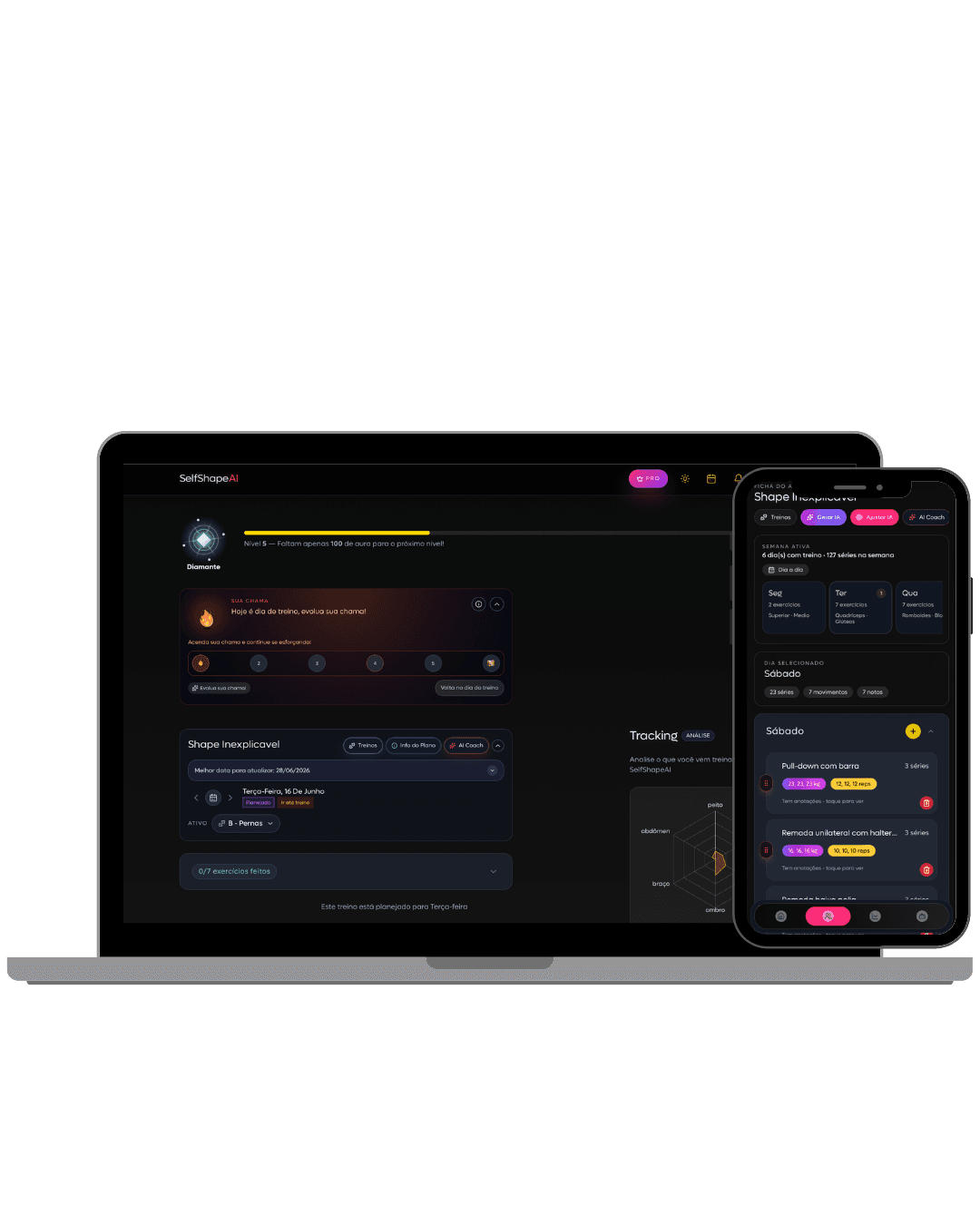
- 7. What SelfShapeAI offers today
- 8. Frequently asked questions
- 9. The useful future has begun, but still requires judgment
The short answer: it is already here, provided there is a method
The ACSM's 2026 update synthesized 137 reviews and found resistance training improves strength, muscle mass and physical function. Some variables matter more for specific goals: heavier loads favor maximal strength, while volume becomes important for hypertrophy. Useful AI organizes these relationships for a real person instead of inventing one rule for everyone.
| Stage | Input | Output |
|---|---|---|
| Context before the plan | Goal, level, frequency, equipment and routine | A structure that fits your week |
| An explained plan | Split, exercises, volume and focus | Clarity about what to do and why |
| Execution becomes data | Load, reps, RIR/RPE, notes and session completion | History for interpreting progress and discussing adjustments |
Turn understanding into a workout you can follow
SelfShapeAI uses your routine and goal to build an explained plan, log every session and guide the next adjustment.




Download for free. Annual: R$ 299,90/year, equivalent to about R$ 25/month; monthly: R$ 39,90/month. See how AI training works.
The problem behind SelfShapeAI
SelfShapeAI grew from a practical frustration: enjoying training but struggling to maintain a coherent system around work, other activities and changing routines. Isolated videos and copied plans offered ideas, not continuity. Goals, schedule, plan and history needed connecting without relying on memory.
That is why the product continues beyond initial generation. Restart with 13 tips for returning to training, or compare Full body or split to choose a structure. AI comes after those context questions, not before.
1. Context before the plan
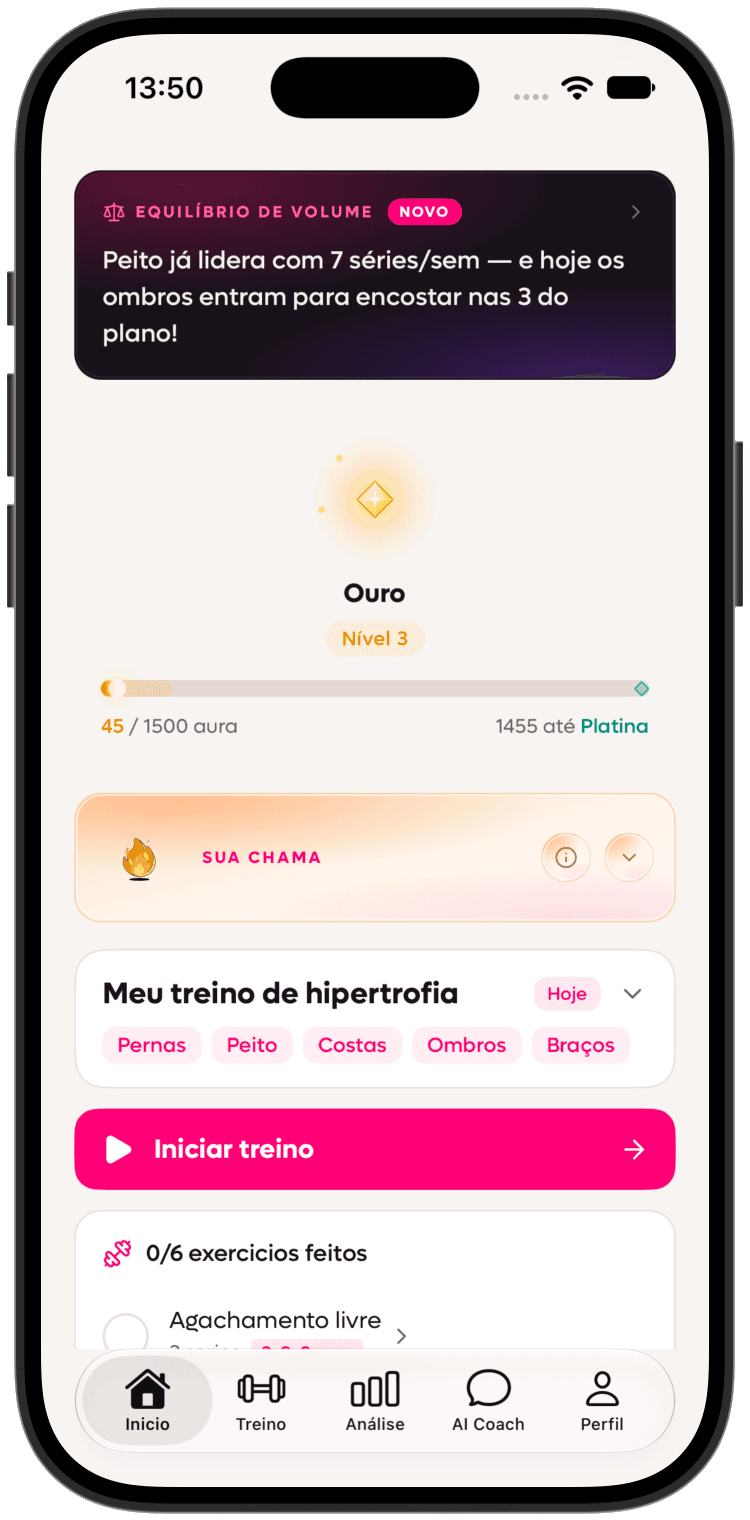
During onboarding, SelfShapeAI asks about goals, level, frequency, equipment and routine. These answers set boundaries for the AI plan. You can also build manually from scratch and use AI support while retaining control.
This avoids choosing a five-day split when only three real training windows exist. Organization depends on achievable frequency, as the Full-body guide and Upper/lower guide explain. Neither is automatically superior without context.
2. An explained plan, not merely a generated one
An unexplained plan leaves you executing without knowing what to observe. A useful plan clarifies split, muscle focus, exercises and dose. Explore the RPE and RIR guide, Warm-up sets and When to increase weight.
Explanation leaves room for judgment. If an exercise, equipment or weekly schedule changes, ask AI Coach about alternatives within the plan. Sharp, persistent or worsening pain requires professional assessment; changing app exercises does not investigate an injury.
3. Execution becomes data
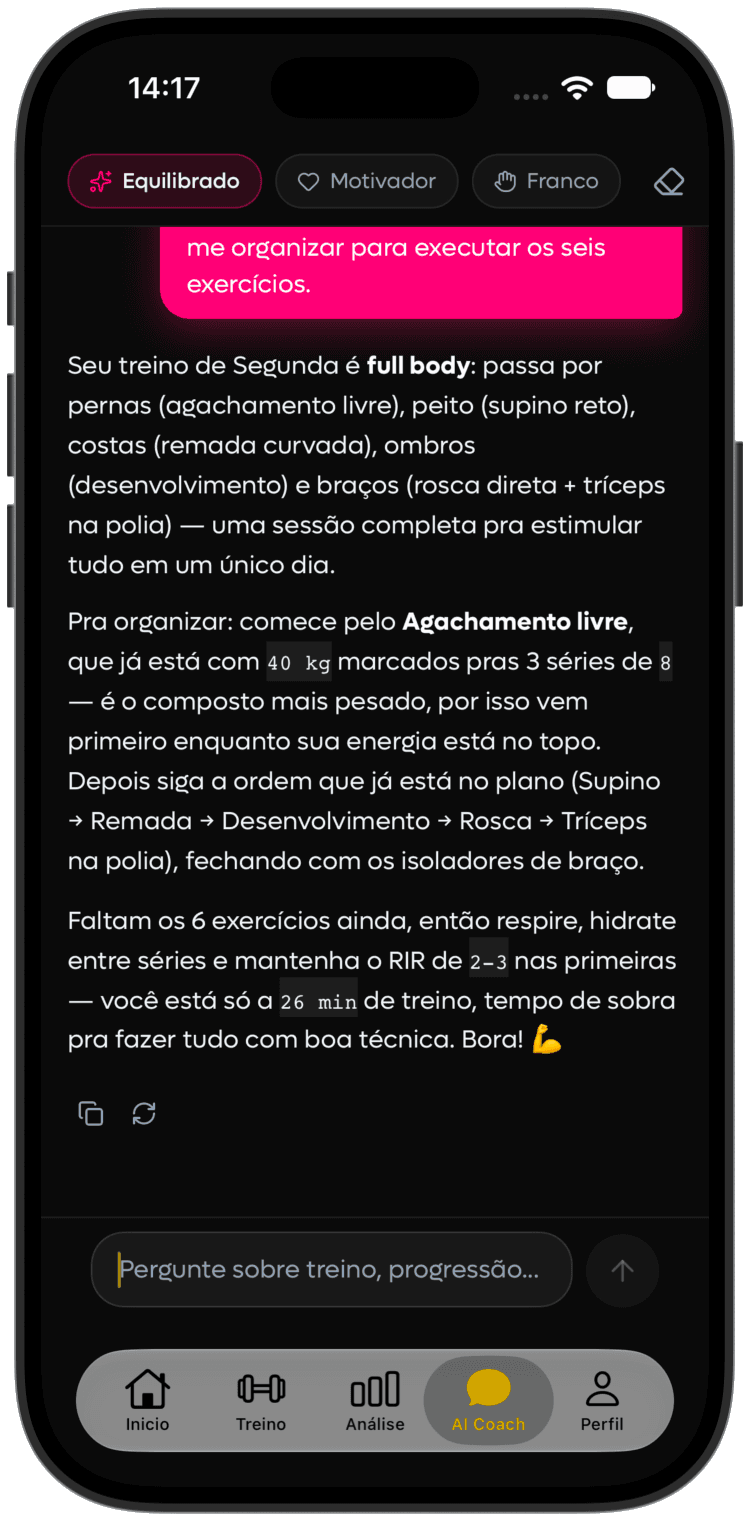
After training, load, reps, perceived effort and notes record what actually happened. History distinguishes a bad session from a trend and tracks exercise loads, PRs, volume, muscle groups and consistency without reconstructing everything from memory.
Logging does not mean adding weight every session. A study comparing load and rep progression found adaptations with both. Preserve technique and consider the full picture before increasing anything; Getting stronger with SelfShapeAI applies this to the product.
What AI Coach can and cannot do
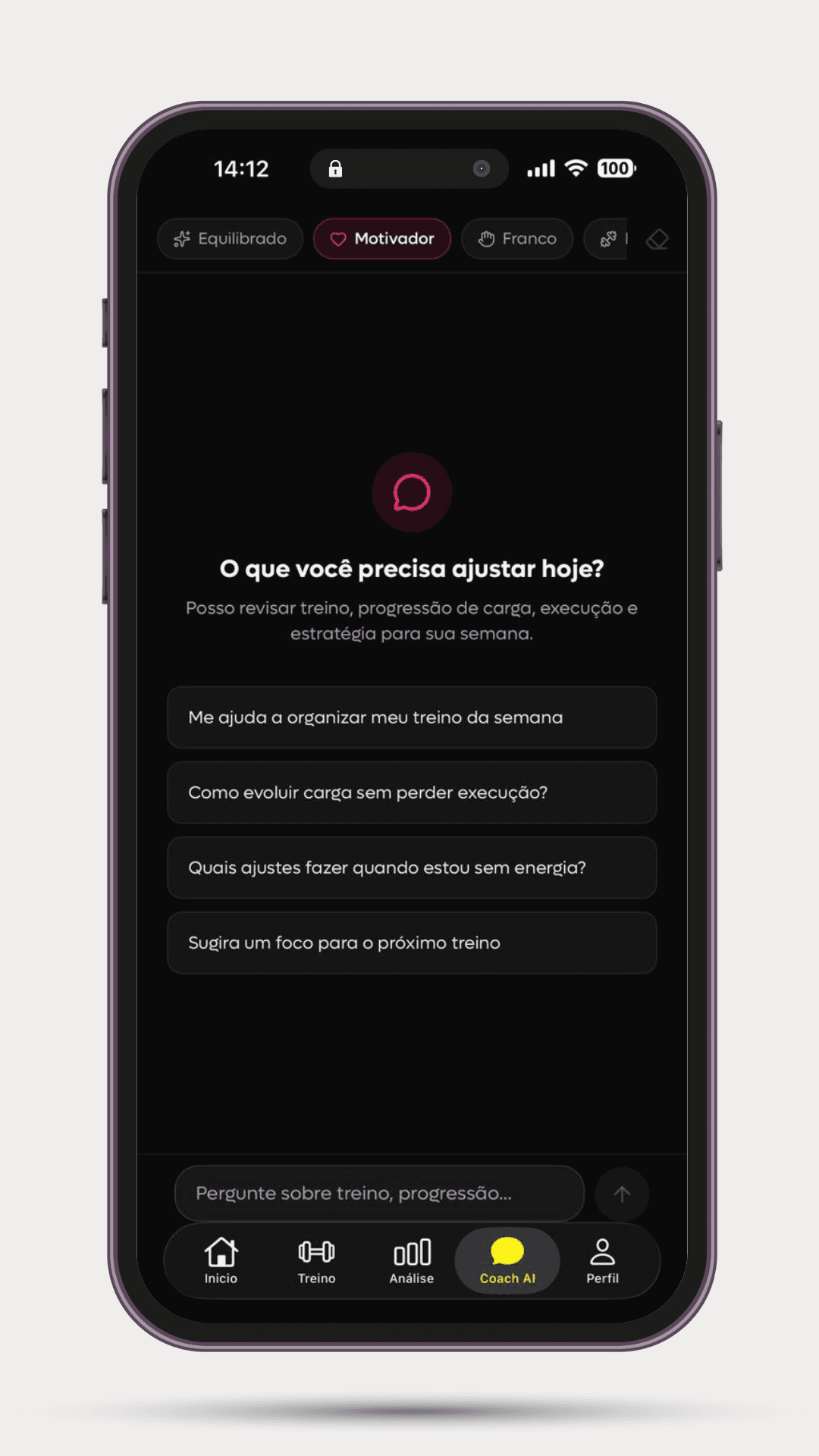
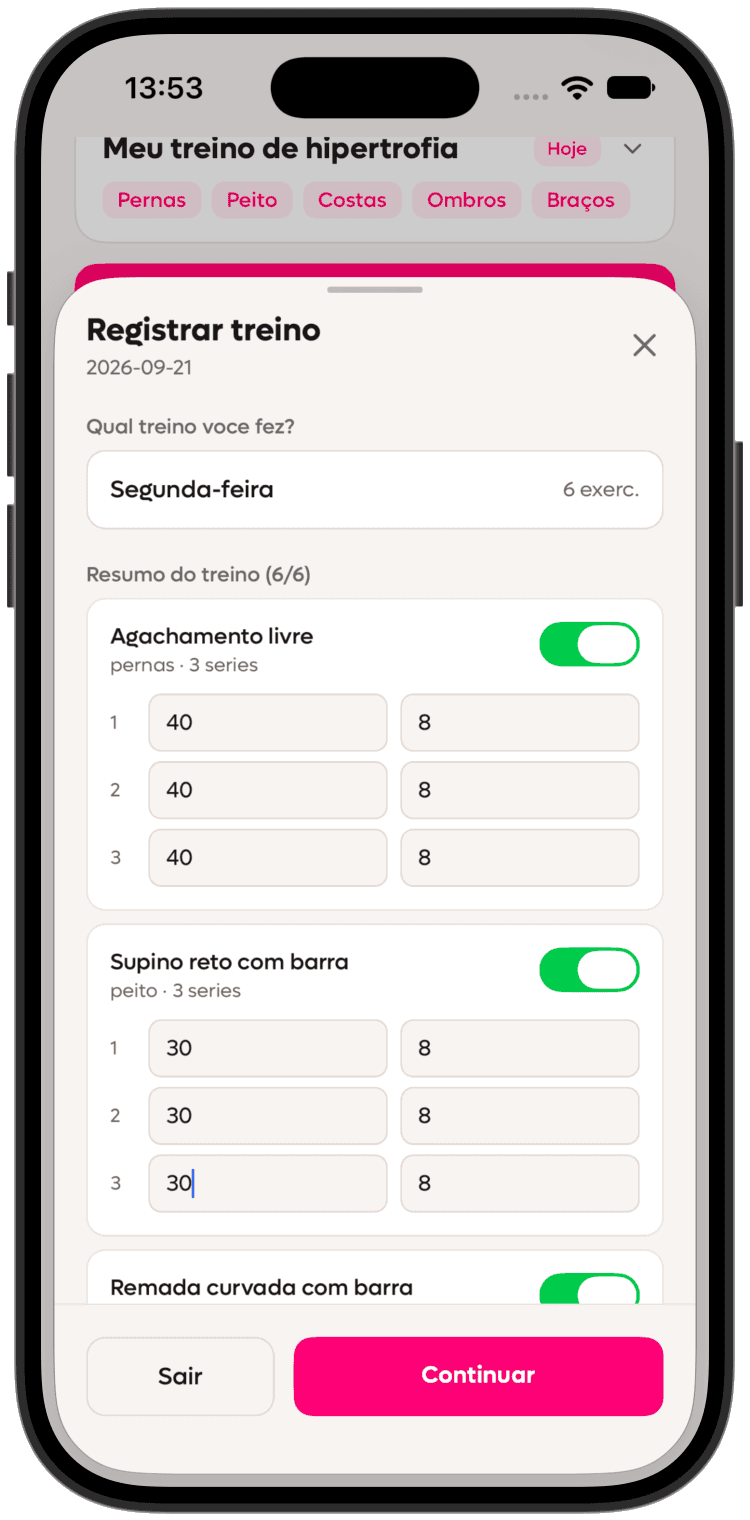
- Discuss execution, technique, substitutions and progression in active-plan context.
- Converse in five styles: Balanced, Motivating, Direct, Performance or Creative.
- Help interpret logs and organize decisions between sessions.
- It does not diagnose pain, injury or disease or replace doctors, physical therapists or in-person professionals when needed.
- It does not guarantee results or turn effort estimates into perfect measurements.
- Nutrition is not a product feature; nutrition blog posts are editorial content.
These boundaries make AI use more dependable. For hypertrophy, it can organize what to track while criteria still come from effort, recovery and dose. Explore How to build more muscle, How many sets and Training to failure.
What SelfShapeAI offers today
- Smart assessment covering goal, level, frequency, equipment and routine.
- AI-created Smart Training or a manually built plan from scratch.
- Session logs with load, reps, RIR/RPE and notes.
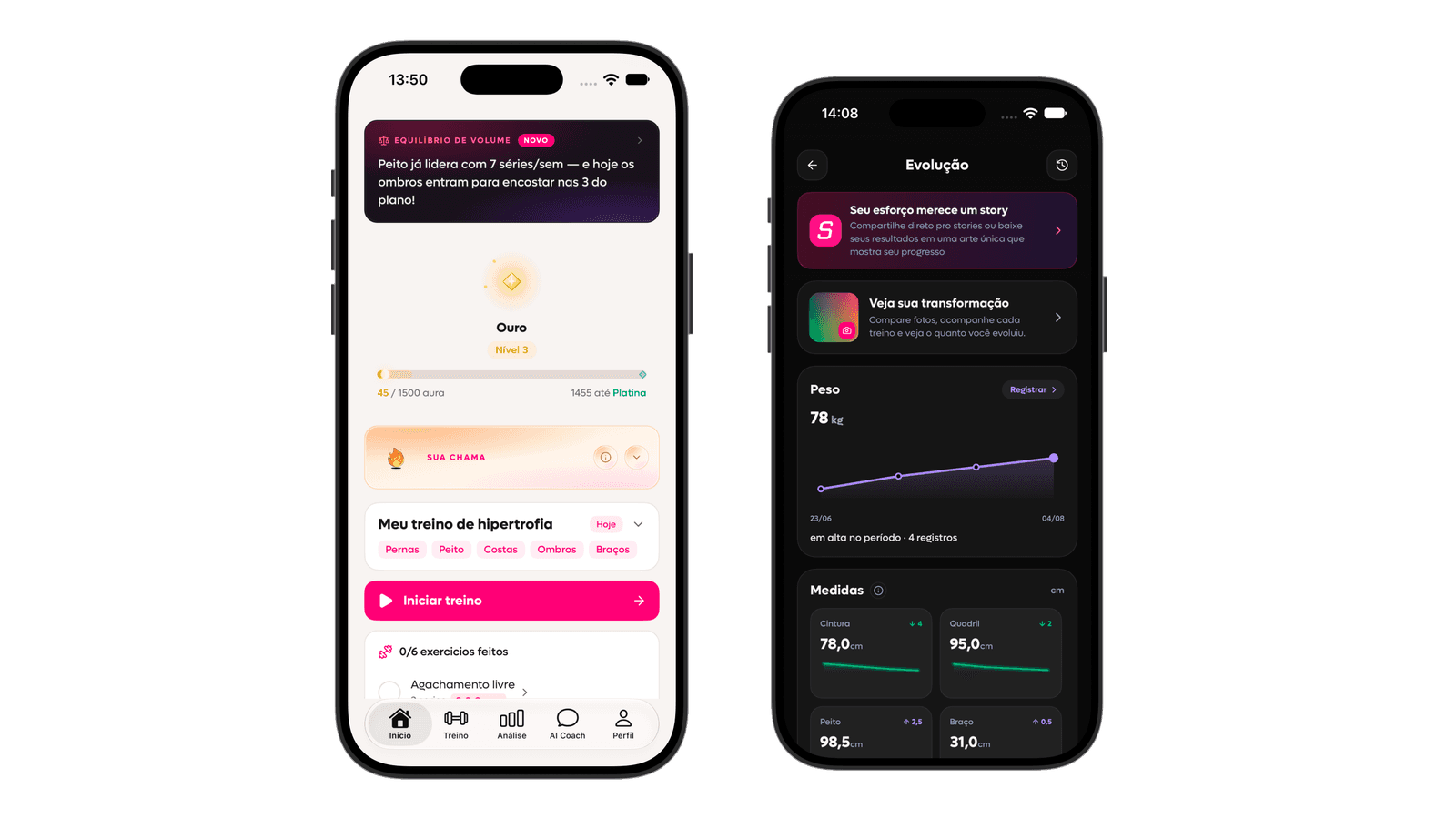
- Progress with volume, muscle groups, PRs, streaks, muscle map and exercise loads.
- Plan-contextual AI Coach available 24/7 with five personas.
- A plan library with active, archived and phase-specific versions.
- XP, levels and ranks that make consistency visible.
- iPhone and Android apps and a web dashboard connected to the same method.
Explore How to use SelfShapeAI, What is SelfShapeAI and the Best workout-tracking app comparison. Trainers can request a Personal account through the professional form on Personal, including CREF where applicable; it is not one-tap automatic registration.
Frequently asked questions
- Does AI-powered training really work?AI can clarify planning, logging and interpretation, but results still depend on execution, progression, recovery and adherence. Evaluate the method and actual features, not just the AI label.
- Does SelfShapeAI change workouts on its own?You retain plan control. Create with AI, build manually, edit exercises and discuss adjustments with AI Coach; do not assume invisible automatic changes.
- Does AI replace a personal trainer?No. It expands access to organization and contextual guidance. In-person supervision, detailed movement assessment and professional decisions retain their own value.
- Can AI assess training pain?Do not use it for diagnosis. Stop movements causing sharp, increasing or persistent pain and consult a qualified professional. AI Coach can discuss the plan once clinical context is clear.
The useful future has begun, but still requires judgment
Intelligent training is a process: context reduces initial mistakes, explanation improves execution and logging clarifies progress. AI is valuable when it strengthens that cycle and makes its limits as clear as its possibilities.
To try this method with planning, logging, progress and AI Coach in one flow, start your training plan.
Sources and references
- Source: Currier BS et al. ACSM Position Stand: Resistance Training Prescription for Muscle Function, Hypertrophy, and Physical Performance in Healthy Adults. Med Sci Sports Exerc, 2026. — ACSM / Medicine & Science in Sports & Exercise (PubMed)
- Source: Plotkin DL et al. Progressive overload without progressing load? The effects of load or repetition progression on muscular adaptations. PeerJ, 2022. — PeerJ (PubMed)
- Source: Zhu Y et al. Digital Behavior Change Intervention Designs for Habit Formation: Systematic Review. J Med Internet Res, 2024. — Journal of Medical Internet Research (PubMed)
Reviewed by the SelfShapeAI research team using strength-training and habit-formation evidence.
Take this method to the app

Create your plan with AI, log check-ins and use the AI Coach to adjust training with context.
Share
Euller Germano
SelfShapeAI technical and editorial team.
Keep learning
Recommended next article
Best workout tracking app in 2026: 7 options for lifting and cardio
Compare 7 workout apps in 2026 and see which works best for lifting, running, indoor cardio, mobility and a real routine.
Continue →