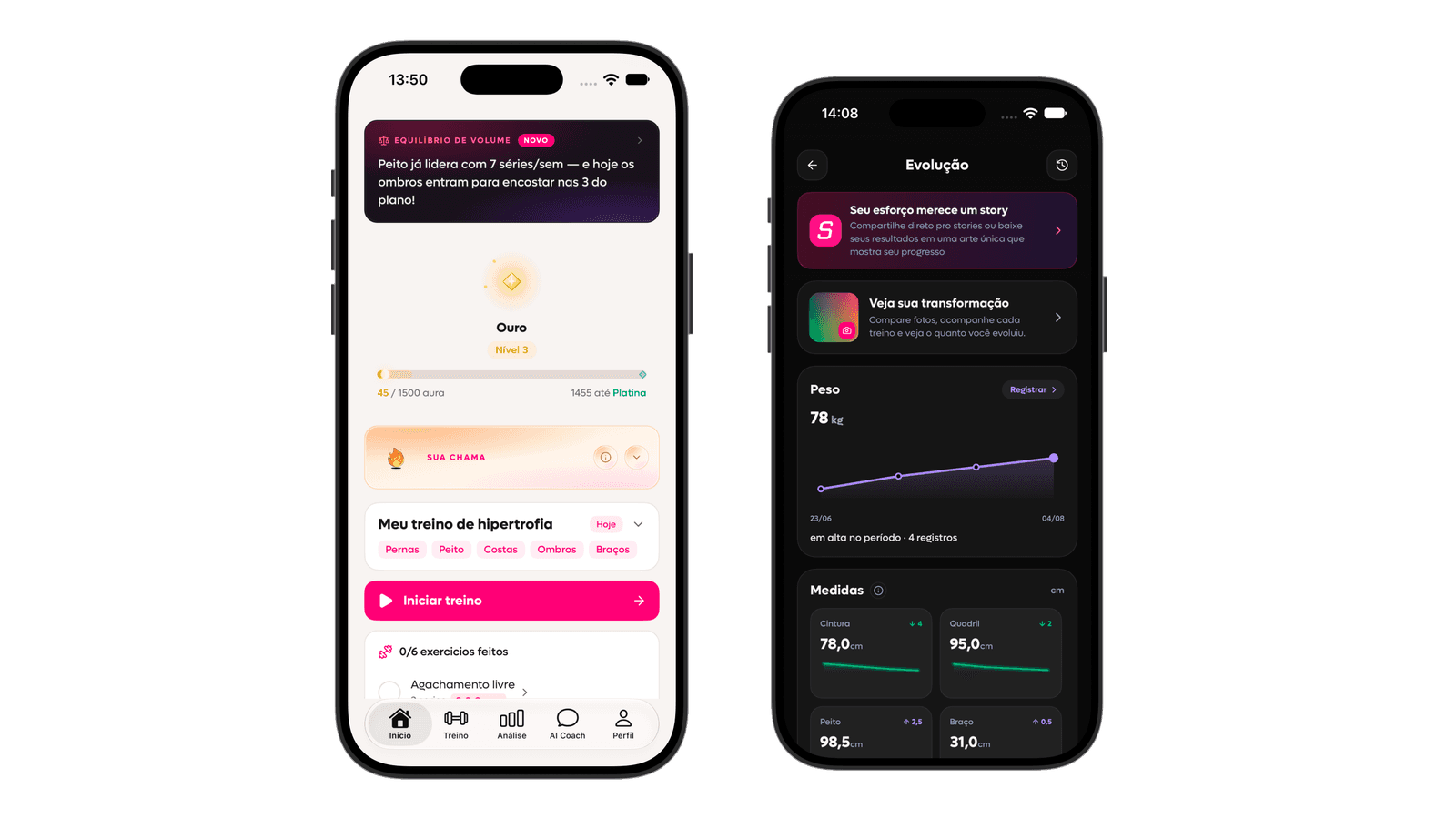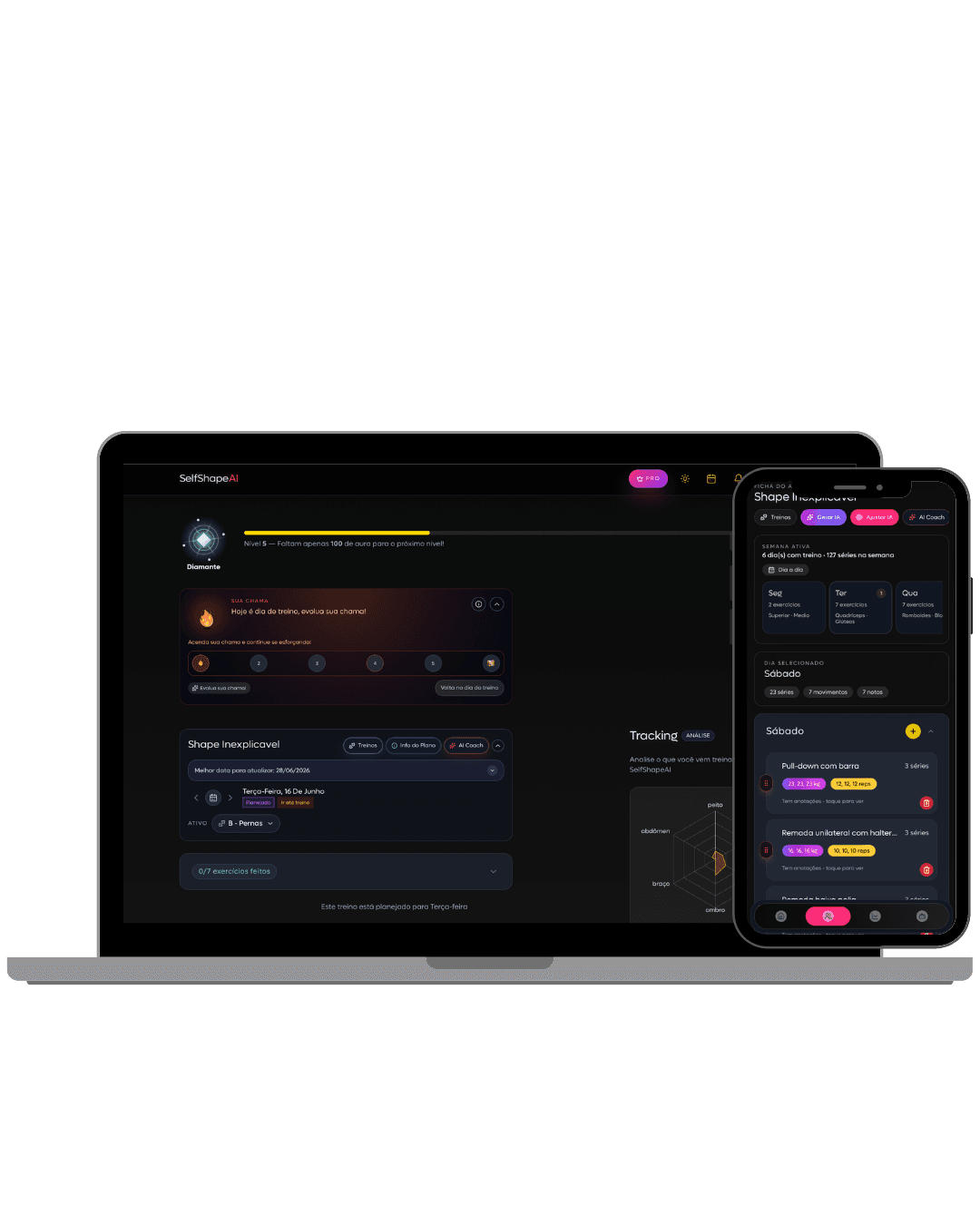
SelfShapeAI: the AI training app that builds, adjusts and explains your training with real context
Understand how SelfShapeAI turns goal, routine, check-ins, training analysis and the AI Coach into a much clearer everyday experience.

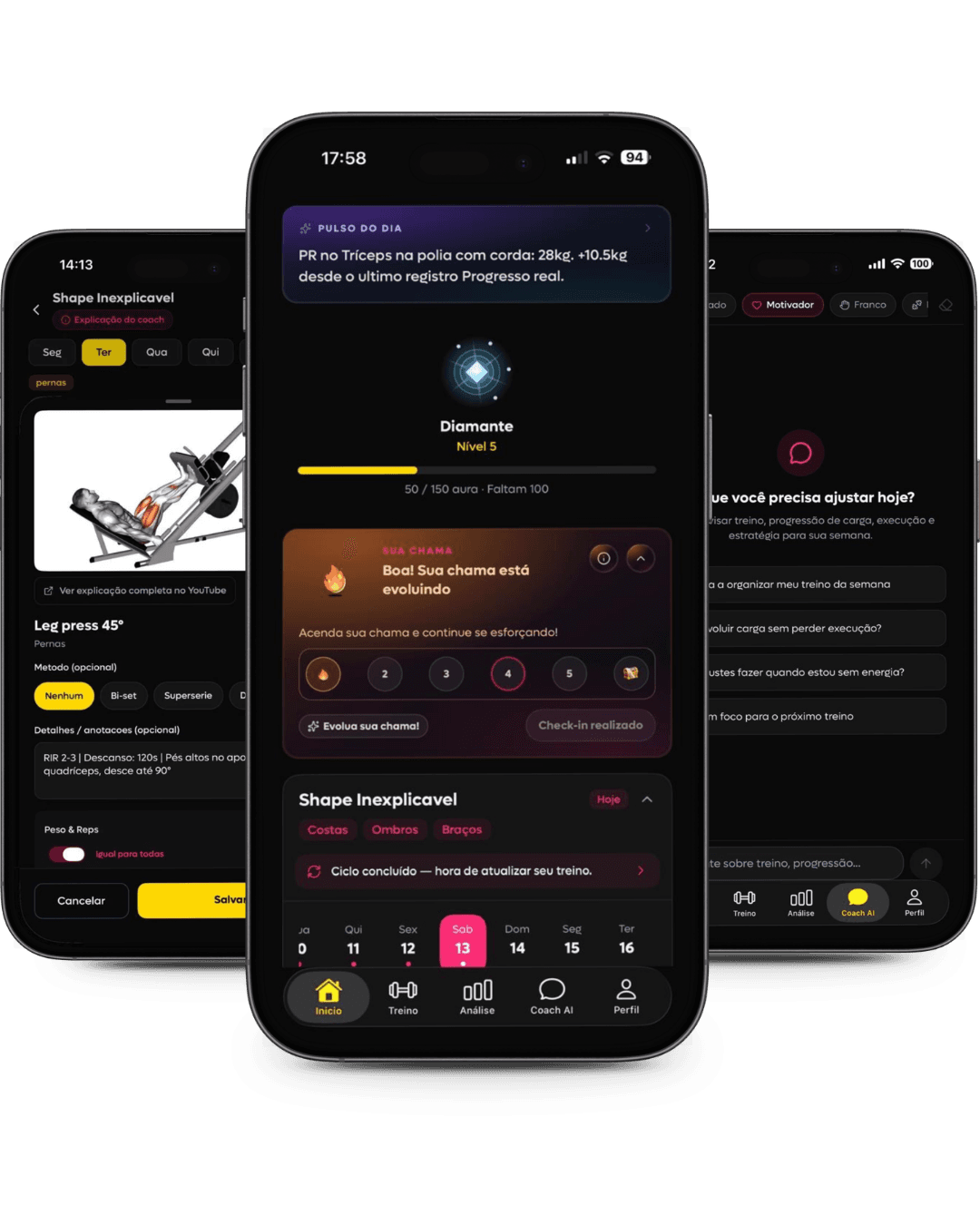
If many people still train by improvisation, it is not for lack of will. It is for lack of a system. What is missing is a place that organizes context, shows what to do, explains why it makes sense and tracks progress without leaving everything to memory or loose notes.
That is exactly where SelfShapeAI comes in. It was not created to be just another pretty training app or a digital pad for logging sets. The proposal is different: turning training into a process that is more intelligent, clearer and more connected to your real routine. If you want the deeper thesis behind it, continue later in Intelligent AI-powered training. If you want to see the product through a more direct page, the best path is AI training.
Contents
- 1. The short answer
- 2. SelfShapeAI starts with context, not the template
- 3. More than creating a workout: explaining, tracking and adjusting
- 4. How this shows up through the week
- 5. Practical example 1: your routine changed
- 6. Practical example 2: the workout needs to change, not be thrown away
- 7. Check-ins and logging only make sense when they become decisions
- 8. Training analysis, progress and the historical view
- 9. Plan library, streaks and the feeling of continuity
- 10. Not just for the lifter. It also makes sense for the personal trainer.
- 11. Who SelfShapeAI makes the most sense for
- 12. Frequently asked questions
The short answer
- SelfShapeAI is an AI training app made for anyone who wants to leave autopilot training and enter a journey with more method.
- It helps you build a plan aligned with your goal, routine, availability and real context.
- The AI Coach comes in to explain, guide and adjust the next step with more clarity instead of leaving you stuck with a static template.
- Check-ins, progress, training analysis, multiple plans and streaks are part of the same flow, not loose screens. To compare this proposal with other solutions, review Best workout tracking app in 2026 and then explore the features.
- If your focus is only storing exercises, many apps do that. If your focus is turning training into practical decisions, SelfShapeAI's proposal gets much stronger.
Turn understanding into a workout you can follow
SelfShapeAI uses your routine and goal to build an explained plan, log every session and guide the next adjustment.




Download for free. Annual: R$ 299,90/year, equivalent to about R$ 25/month; monthly: R$ 39,90/month. See how AI training works.
SelfShapeAI starts with context, not the template
One of the biggest mistakes when creating or choosing a training plan is starting from a ready-made structure without looking at real life. How many days can you actually train? Where do you train? What is your goal now? Is there any limitation? Are you starting out or do you have a base? In SelfShapeAI, the experience starts precisely with that context, with a survey and a guided journey that help the plan be born more coherent from the start.
For beginners, that removes a lot of friction. Instead of landing at the gym full of doubt, you can enter with a clearer direction and a plan more aligned with your moment. If that is your case, connect this reading with From beginner to results and the AI training proposal.
More than creating a workout: explaining, tracking and adjusting
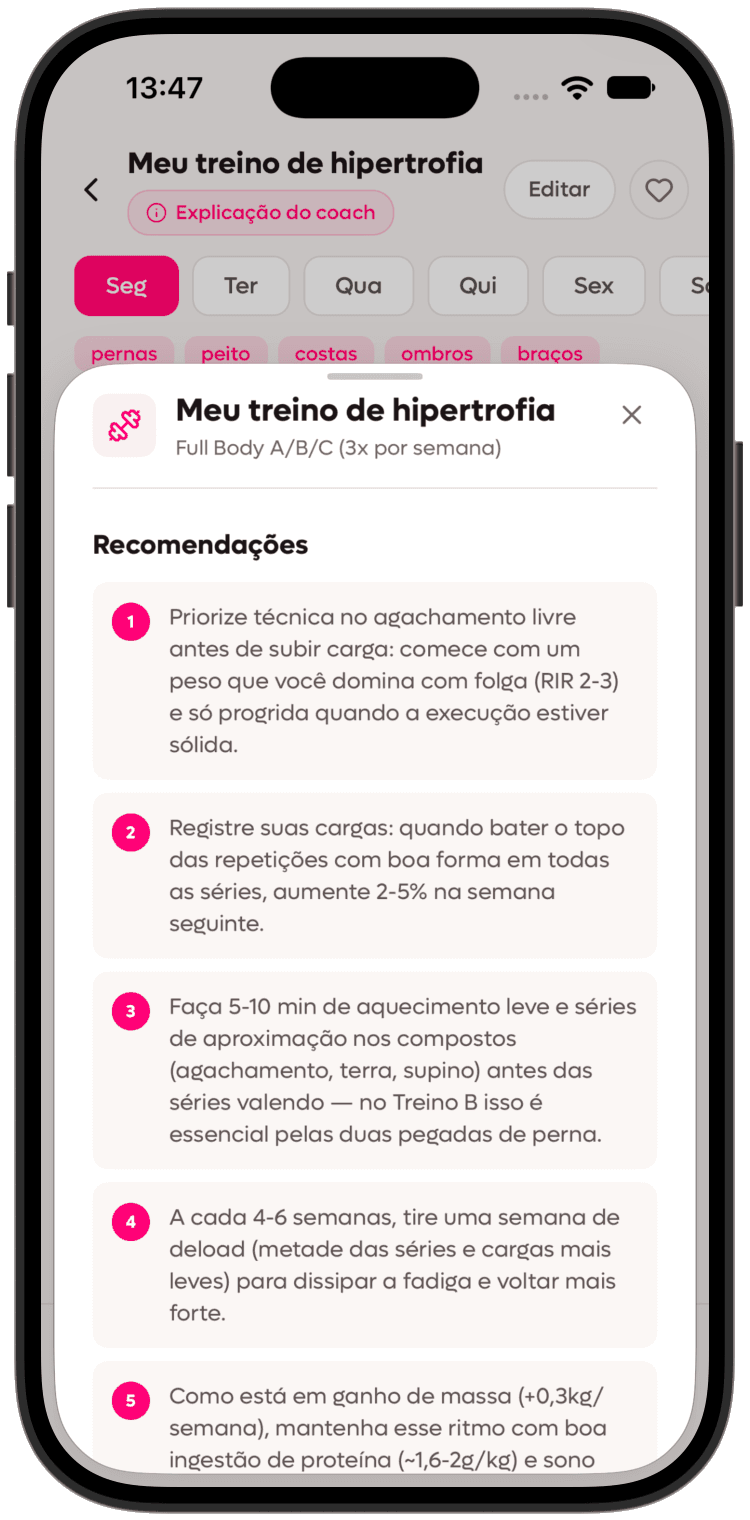
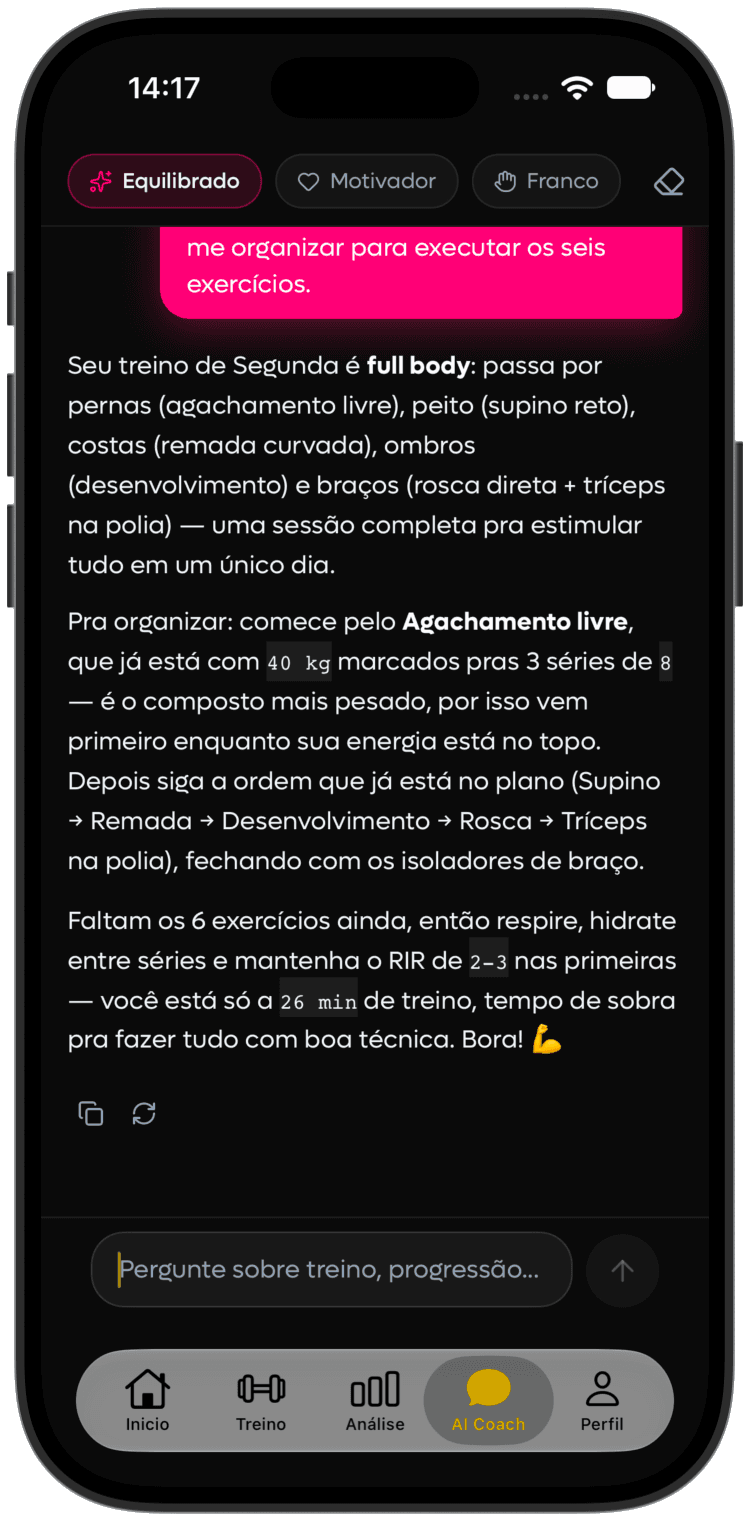
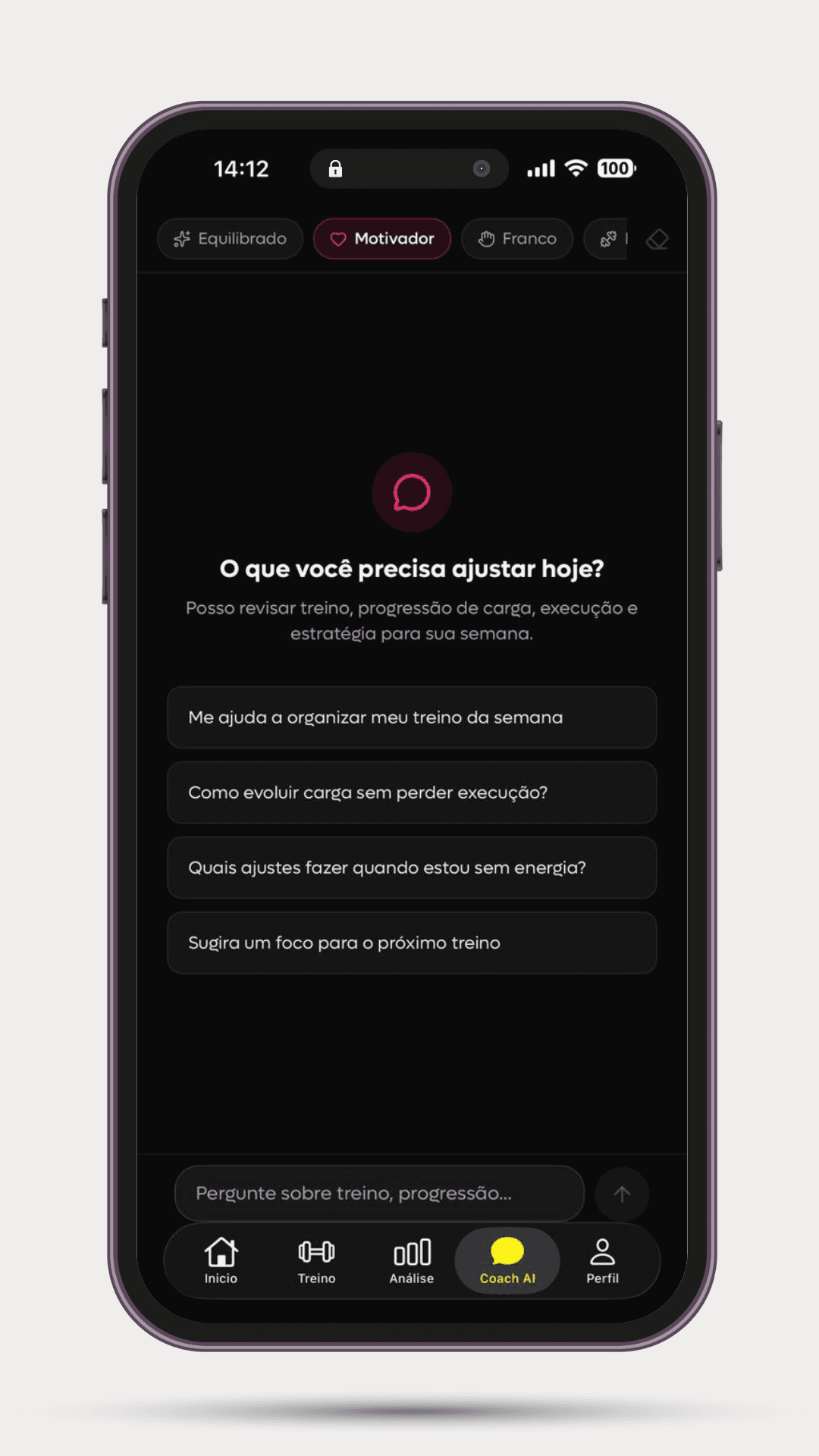
Generating an initial template is not the hardest problem. The hard problem is keeping that plan useful when the week changes, when an exercise does not fit, when the gym is packed, when energy drops or when the body responds differently than expected. That is where the AI Coach comes in as real support. It helps interpret context, explain the plan and guide the next step with more clarity. To understand that logic better, cross this text with the practical RPE and RIR guide and Simple progression: when to add weight.
- You realize the week got tight and need to reorganize training without losing coherence.
- An exercise started to bother you and you want a better alternative without dismantling the whole plan.
- You want to understand why that split was built that way and whether it still makes sense for your current frequency.
- You need to adapt the session to another context, like a different gym, home training or travel.
That is the difference between decorative AI and useful AI. Instead of answering in the abstract, SelfShapeAI works on top of your active plan, your recent history and what is happening now. The system also makes more sense when you want to keep different phases organized inside the plan library, instead of starting from zero every time. This complements what we explain in Intelligent AI-powered training and the overall picture of the features.
How this shows up through the week
- You receive a plan aligned with your moment and your routine.
- You follow the day's workout with more clarity and less improvisation.
- You log check-ins and feedback that gain practical use.
- You talk with the AI Coach when you need to understand or adjust something.
- You come back the next week with more context about what happened, not just loose memory.
It sounds simple, but it changes the quality of decisions a lot. Instead of choosing everything on impulse, you start training with a line of reasoning that continues from one session to the next. For anyone living the cycle of stopping, returning and restarting from zero, that continuity is exactly what keeps the process alive.
Practical example 1: your routine changed
Imagine someone who planned four sessions for the week but realized on Tuesday they will only manage two. In many common solutions, that becomes chaos: either the person ignores the plan or tries to catch up without criteria. In SelfShapeAI's proposal, the plan does not have to stay frozen. You reorganize the week more intelligently, respecting the frequency you can actually sustain. That becomes even clearer when you cross this theme with Full body vs. split training.
Practical example 2: the workout needs to change, not be thrown away
Another classic situation: the knee acted up, a specific exercise stopped making sense or the gym you are at that day has less equipment. Many people waste too much time improvising or simply train badly for lack of direction. In SelfShapeAI, the conversation with the AI Coach was designed precisely to reduce that friction. The idea is turning doubt into useful action: understanding the exercise, reviewing context and finding a coherent adaptation. If your focus is more on hypertrophy, connect this point with How to build more muscle, How many sets to build muscle and Warm-up sets: how to do them and when to use them.
Check-ins and logging only make sense when they become decisions
Logging training for the sake of logging was never enough. The value shows up when that record helps you notice patterns, consistency, progress and bottlenecks. That is why check-ins and session tracking do not enter as bureaucracy. They enter to feed a better reading of the process: what is moving forward, where frequency dropped and which exercise is actually progressing. That reading is what takes training out of the field of sensation and into a more strategic one. It connects directly with Simple progression: when to add weight and the effort ruler explained in the practical RPE and RIR guide.
Training analysis, progress and the historical view
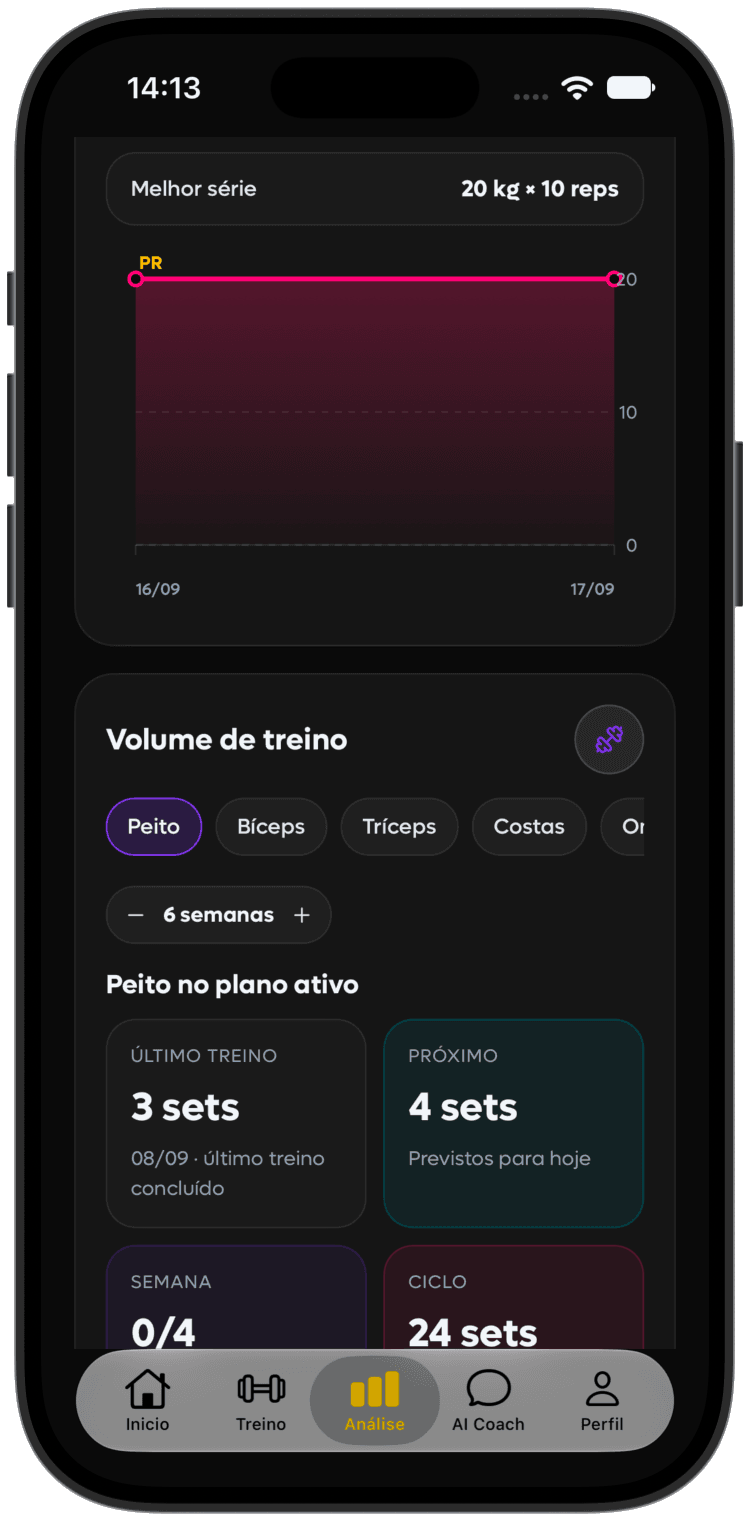
Another important differentiator of SelfShapeAI is that the experience does not end with the day's workout. There is also a training-analysis layer designed to help you see progress with more context. In practice, that includes frequency, muscle groups, load progress, AI insights generated on top of your real data and a weekly set-count feature to compare what the plan prescribed with what you actually executed.
- training frequency across the weeks
- load progress per exercise
- most-worked muscle groups
- weekly set count, comparing planned and executed sets
- consistency and plan-adherence signals
- insights that help you understand whether you are actually progressing or just repeating sessions
That kind of reading matters because results rarely come from one heroic workout. They come from good weeks stacked with more intelligence. When you see how many sets per week were planned and how many actually left the paper, the reading of your consistency becomes much more objective. If you want to see better how organization and execution connect, also review Supersets: how to use them and when they make sense.
Plan library, streaks and the feeling of continuity
SelfShapeAI was also designed not to treat everyone as someone stuck with a single eternal plan. The plan library opens space for different phases of the journey, while streaks and visible progress reinforce consistency without turning training into an empty game. This is not there to infantilize the experience. It is there to make progress perceptible. For anyone who already understood that results depend on good weeks stacked together, this layer closes well with the broader ecosystem of the SelfShapeAI blog.
Not just for the lifter. It also makes sense for the personal trainer.
An important part of SelfShapeAI's proposal is that it does not see only the lifter's side. The product was also built to work in the professional-client relationship, with separate dashboards and clearer tracking. That matters because the trainer's operational problem is real: when the professional needs to follow several clients at once, loose spreadsheets, memory and manual updates quickly become a bottleneck. A better system helps the professional see active plans, frequency, feedback and progress signals with far more organization. To see how that fits the commercial proposal, visit the features and then Pricing.
Who SelfShapeAI makes the most sense for
- For those who want to start with more clarity and less improvisation. A good companion here is From beginner to results.
- For those who already train but feel they lack method, historical view and faster adjustment.
- For those living a variable routine who need a system that follows real life.
- For those who want to use AI as concrete support, not as a fitness buzzword.
- For personal trainers who need to track their clients better without drowning in operations.
- For those who want to unite training, content and community in the same ecosystem. If that side makes sense, continue in SelfShapeAI community.
Frequently asked questions
- Is SelfShapeAI just an app for logging workouts?No. Logging exists, but it is only one part of the experience. The proposal is uniting plan, AI Coach, check-ins, analysis and consistency in the same flow.
- What changes compared to a static template?What changes is that the plan stops being a parked file. It starts talking to your context, your feedback and the evolution of your routine. To see that thesis applied in more depth, read Intelligent AI-powered training.
- Does SelfShapeAI make sense for beginners?It makes a lot of sense when the beginner wants less confusion and more direction. The best companion is From beginner to results.
- Does SelfShapeAI replace study and technique?No. It organizes, guides and reduces improvisation. Learning remains important. That is why the best use of the app happens when it walks alongside references like the practical RPE and RIR guide and Simple progression: when to add weight.
SelfShapeAI brings together what often gets scattered across workout plans, memory, questions, improvisation and disconnected logs into a clearer, more useful experience. Explore AI training, see the features, review Pricing and start your training plan when you are ready.
Take this method to the app

Create your plan with AI, log check-ins and use the AI Coach to adjust training with context.
Share
Euller Germano
SelfShapeAI technical and editorial team.
Keep learning
Recommended next article
Intelligent AI-powered training: the gym's future, or already its present?
See how context, explained plans, logging and AI Coach make AI useful without promises of diagnosis, perfect automation or guaranteed results.
Continue →