Get stronger with SelfShapeAI: track load, effort and real progress
Choose priorities, log comparable sets and use your app history to progress more deliberately.

Getting stronger means more than adding weight to the bar. It means producing more force in a defined task, with comparable technique and range, across enough weeks to see a trend. Without that comparison, a larger number may represent progress—or simply a different repetition.
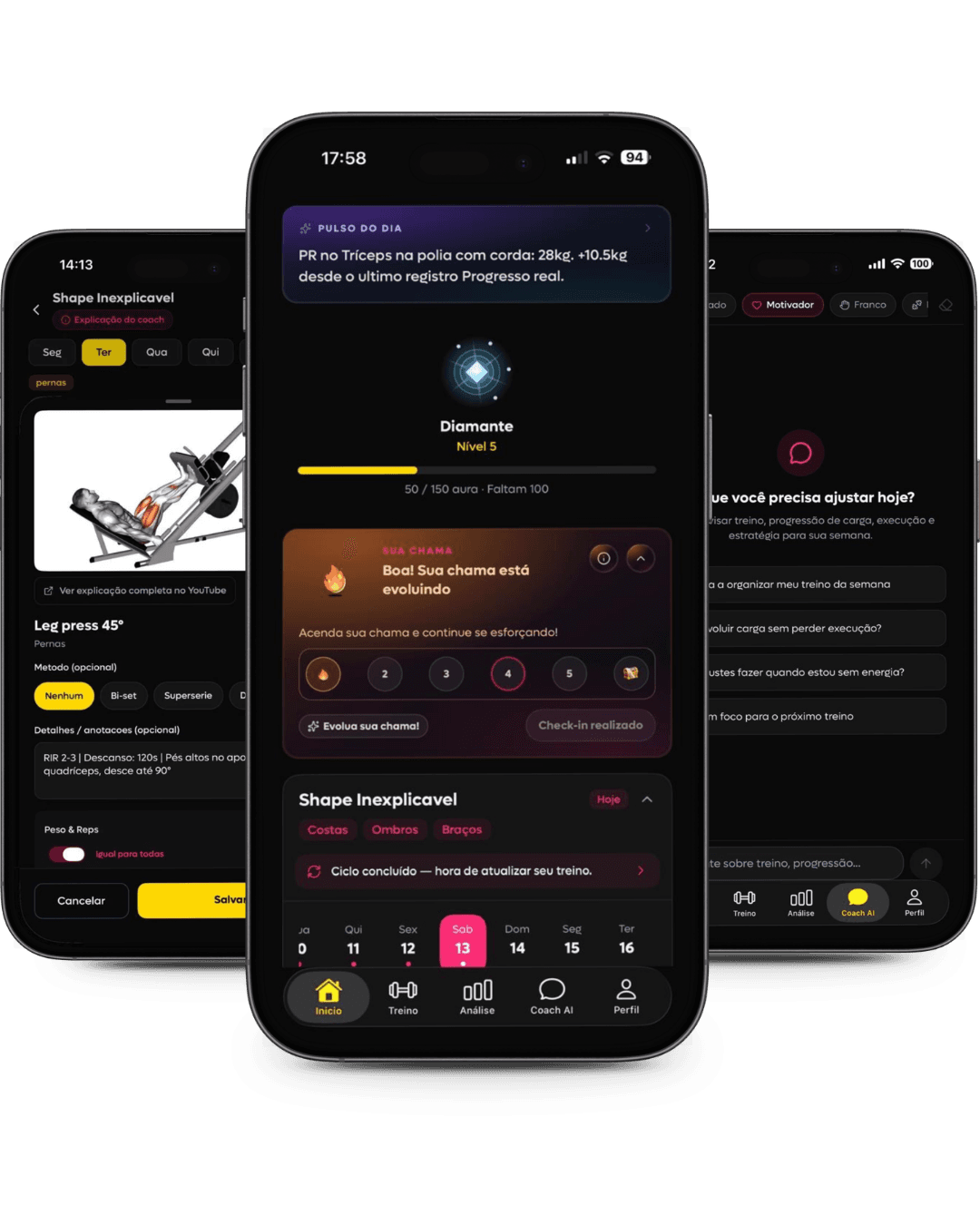
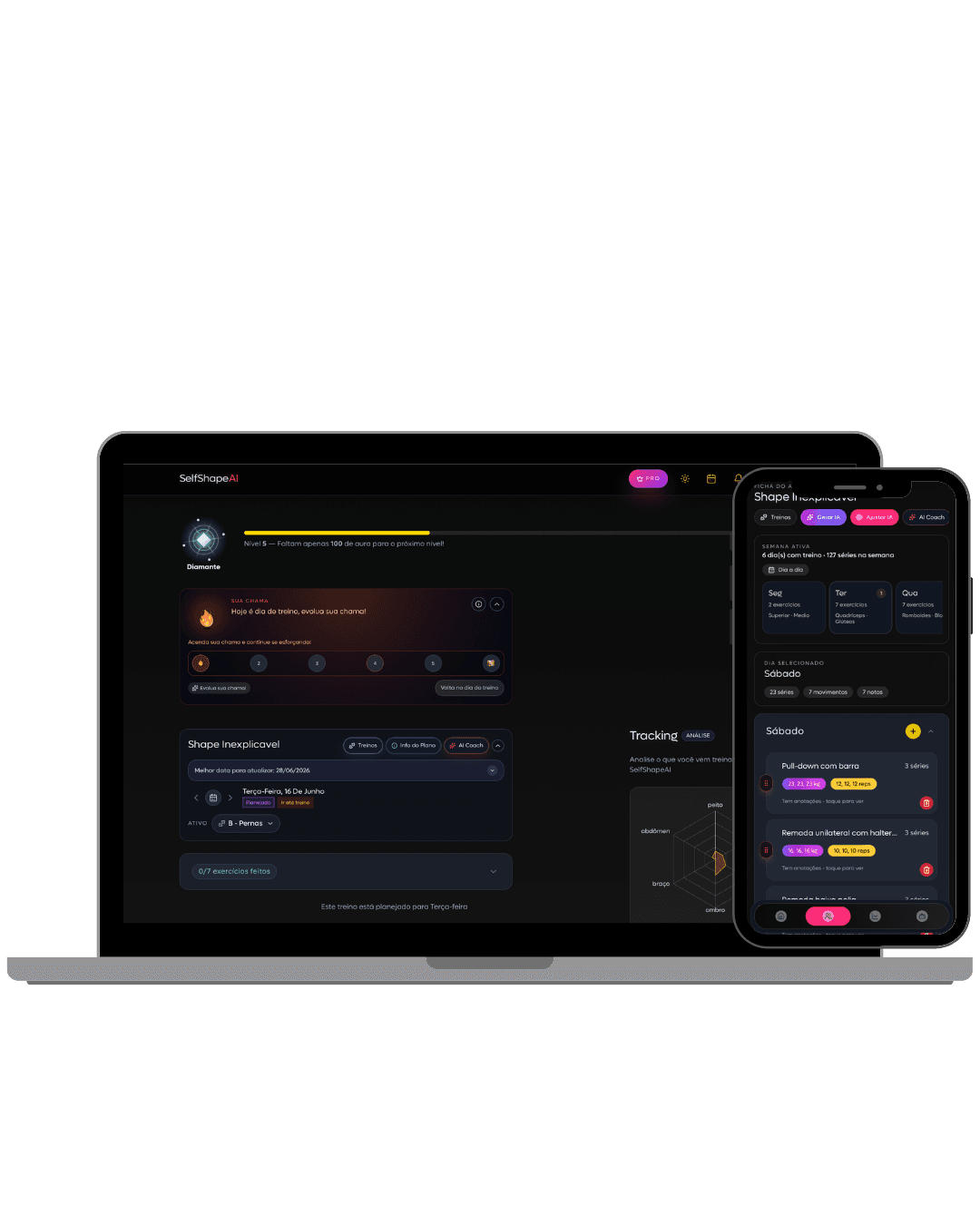
SelfShapeAI organizes this view: the plan provides direction, logging records what happened and progress shows exercise loads, PRs, volume and consistency. AI supports interpretation and discussion of adjustments, as explained in Intelligent AI workouts and What is SelfShapeAI.
Contents
- 1. The short answer: practice strength instead of constantly testing it
- 2. 1. Decide which movements you want to get stronger at
- 3. 2. Log comparable sets
- 4. 3. Progress through load or reps while preserving your standard
- 5. 4. Read trends, not just records
- 6. 5. Adjust one variable at a time
- 7. Where the AI Coach fits
- 8. Frequently asked questions
- 9. Strength becomes clearer when the process is comparable
The short answer: practice strength instead of constantly testing it
The ACSM's 2026 position stand concluded that heavier loads, particularly at or above 80% of 1RM, favor voluntary strength gains. This does not mean going all-out every set. Include sufficiently heavy practice with progression, rest and execution suited to the goal.
Different loads can support hypertrophy; improving a 1RM test places greater importance on heavy-load specificity. Strength and muscle size are related but distinct outcomes. How to build more muscle explores the other side.
Turn understanding into a workout you can follow
SelfShapeAI uses your routine and goal to build an explained plan, log every session and guide the next adjustment.




Download for free. Annual: R$ 299,90/year, equivalent to about R$ 25/month; monthly: R$ 39,90/month. See how AI training works.
1. Decide which movements you want to get stronger at
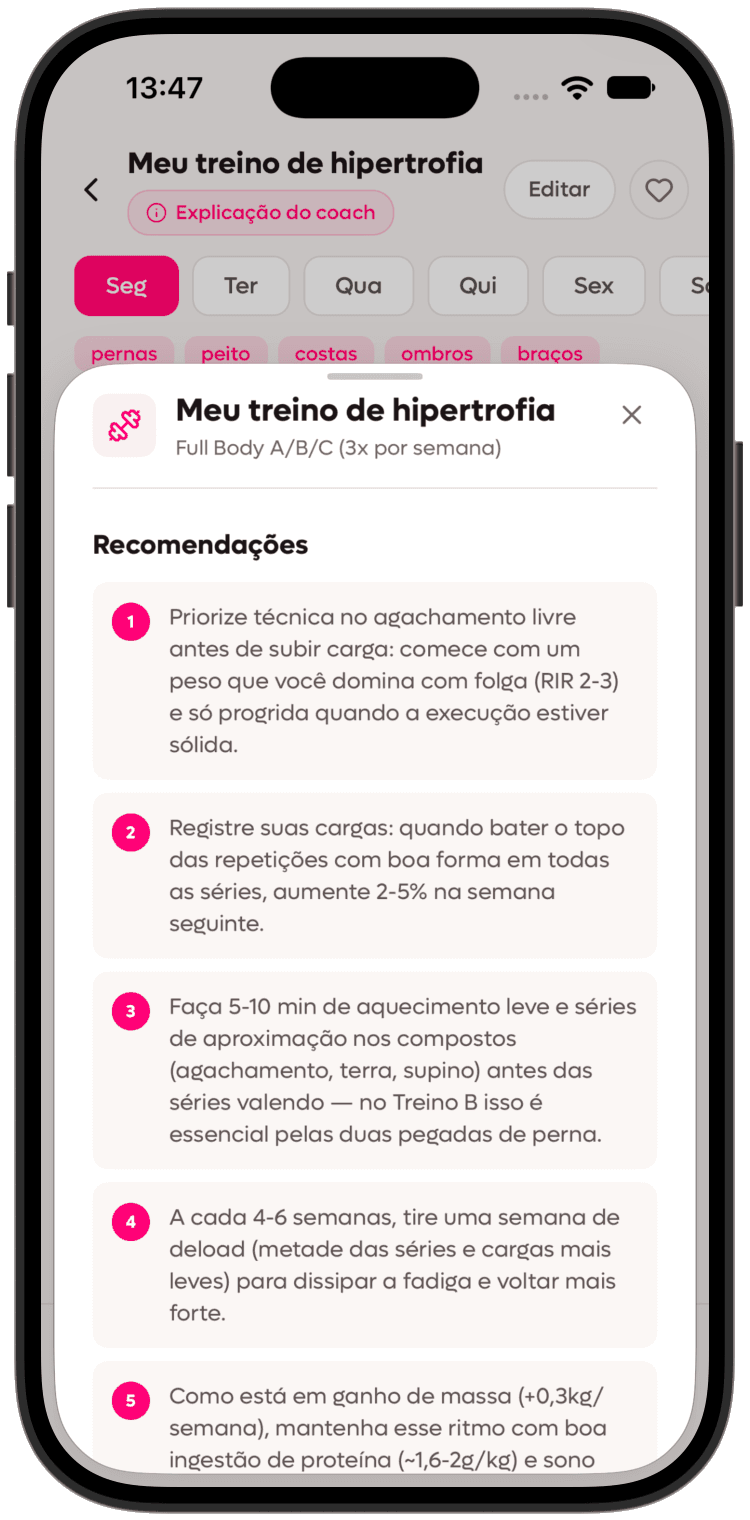
Choose a few priority exercises and maintain comparable conditions throughout a training block. Switching from barbell bench press to a machine every week may provide stimulus but makes specific progress harder to interpret. Free weights and machines can both build strength, with the largest gains in the practiced testing modality. See Machines or free weights for hypertrophy.
Place priorities early, when fatigue is lower. An exercise-order meta-analysis found greater strength gains in exercises performed first. Accessories can then complete volume without compromising priority quality. 5x5 training illustrates a popular structure, but it is neither mandatory nor universal.
2. Log comparable sets
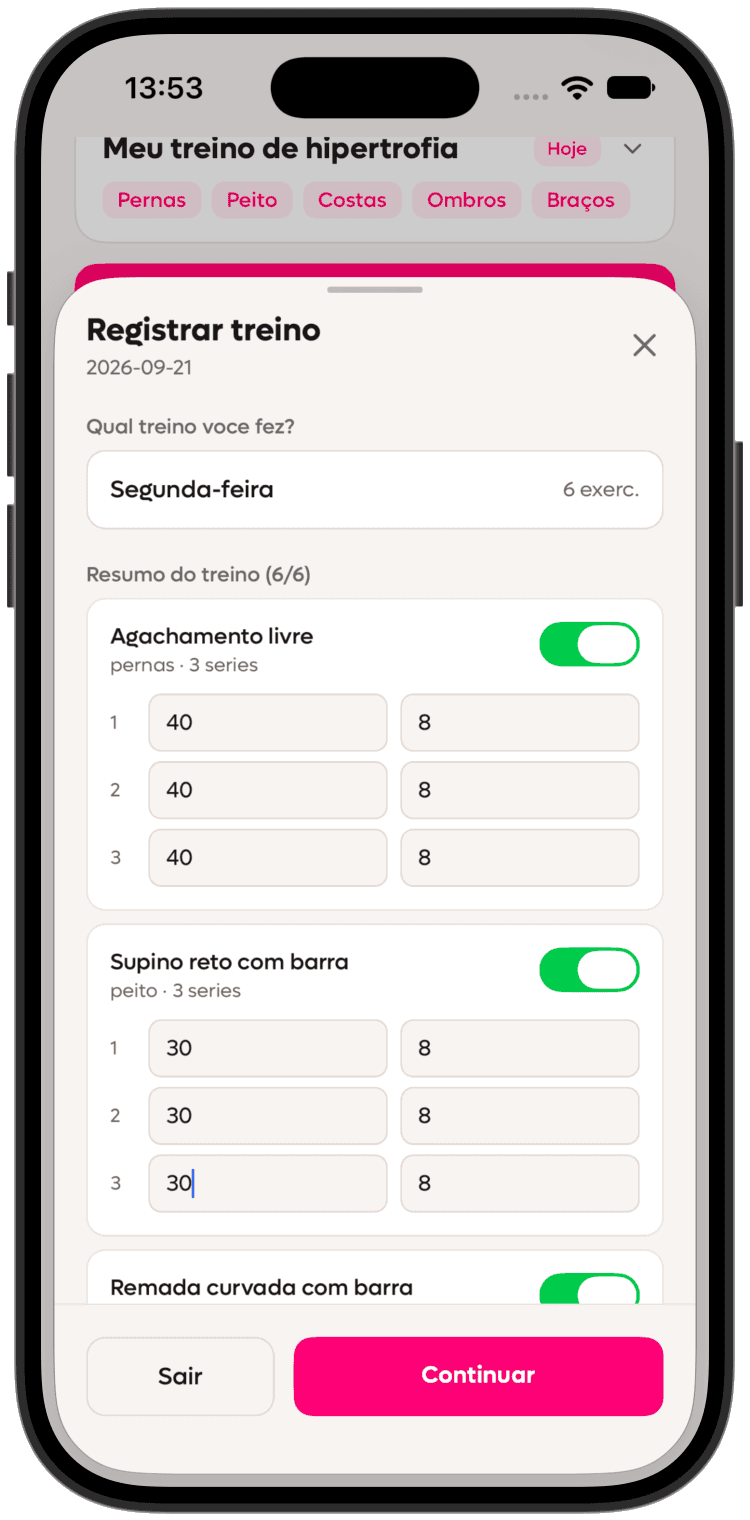
Record exercise, load and reps, then add RIR/RPE and notes to explain easier sets, changed range or unusual circumstances. Eight reps at 70 kg with two reps in reserve differ from the same load taken to the limit with deteriorating technique.
SelfShapeAI session logs combine load, reps, perceived effort and observations. Calibrate effort with the Practical RPE and RIR guide. Prepare heavy movements without unnecessary fatigue using Warm-up sets.
3. Progress through load or reps while preserving your standard
A trial in trained lifters compared increasing load while keeping reps constant with increasing reps while keeping load constant. Both strategies produced adaptations. This supports double progression: work within a range, consolidate reps at the desired effort margin, then make a small load increase.
When to increase weight explains the decision step by step. Do not reward a number achieved through shorter range, assistance or major technique changes. Repeating the load for one more rep at the same RIR may be the week's clearest progress.
| History signal | Possible interpretation | Next step |
|---|---|---|
| More reps, same weight and similar effort | Capacity increased | Consider keeping the load or increasing it slightly |
| Same weight, higher RIR and stable technique | The set became relatively easier | Progress within the planned range |
| A drop in one isolated session | Normal variation or difficult circumstances | Record the cause and avoid changing everything |
| Repeated decline with high fatigue | Recovery or training dose may be unsuitable | Review rest, volume and frequency |
| Sharp or persistent pain | Not a progression problem | Stop and seek professional assessment |
4. Read trends, not just records
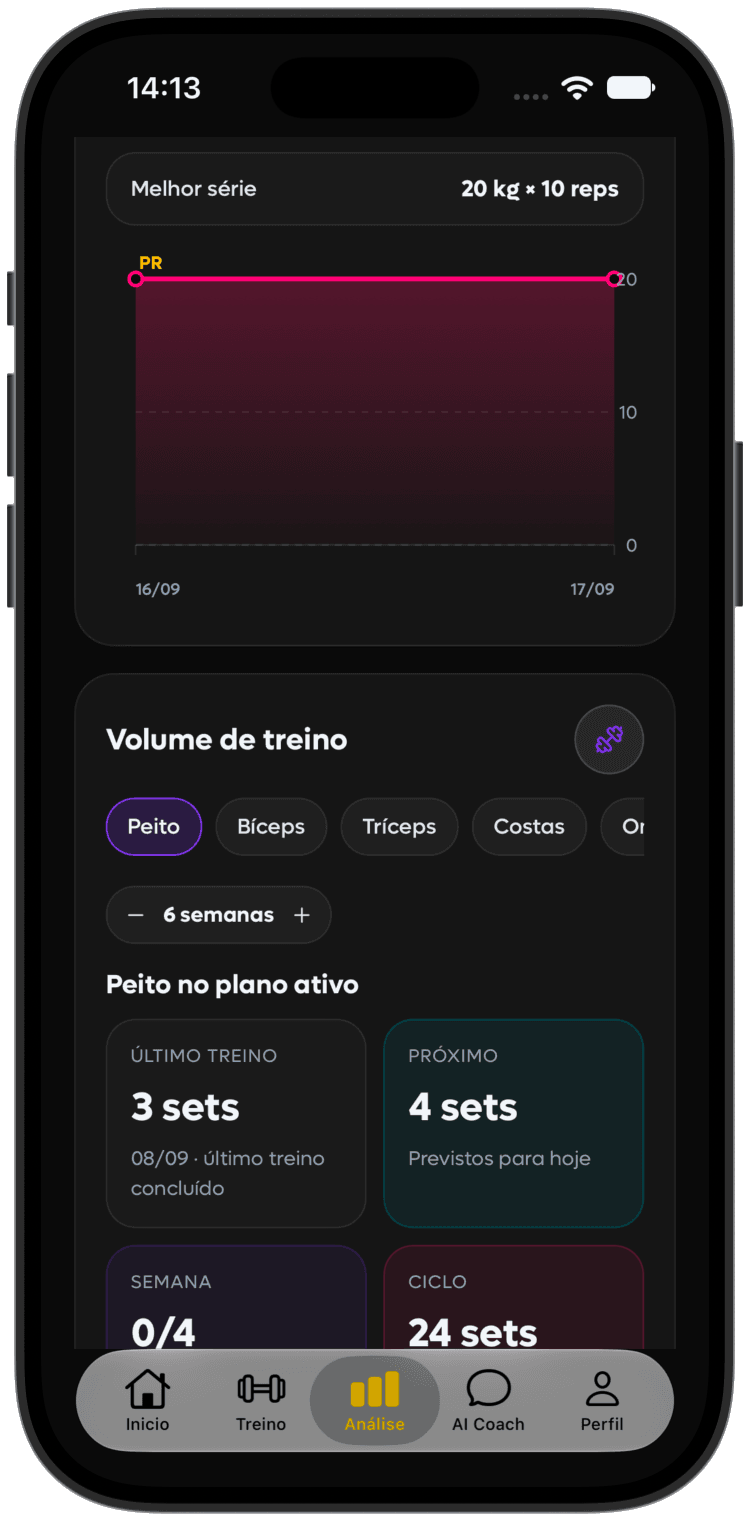
PRs are useful but need not happen weekly. Sleep, stress, rest intervals, exercise order and fatigue affect daily performance. Compare several-week blocks and check whether loads or reps rise under similar conditions. See Rest between sets.
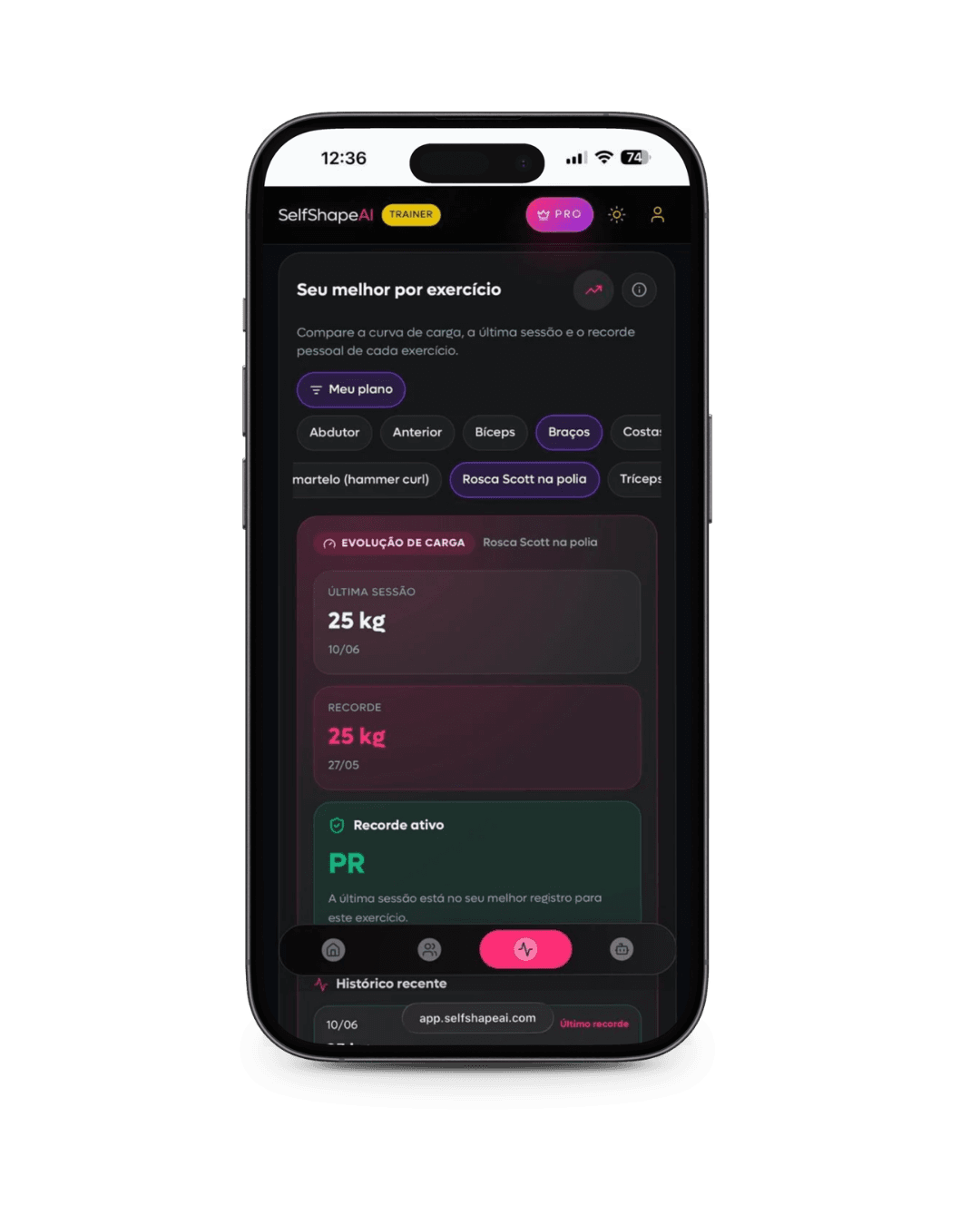
SelfShapeAI's progress area combines exercise loads, PRs, volume, muscle groups, streaks and a muscle map. Read them together. Volume indicates dose; it does not replace specific strength measures or need to rise simply because a chart allows it. How many sets explains why more is not automatically better.
5. Adjust one variable at a time
When strength stalls, changing exercises, split, volume and load together destroys your reference. Check adherence and context first. Then make the smallest change that tests your hypothesis: more rest, less fatigue, rep progression, adjusted load or a different exercise.
Failure is not required for strength and can add fatigue when used indiscriminately; see Training to muscular failure. For weekly scheduling, compare Full body or split. After a break, rebuild your training dose before chasing previous numbers, as explained in Returning to training.
Where the AI Coach fits
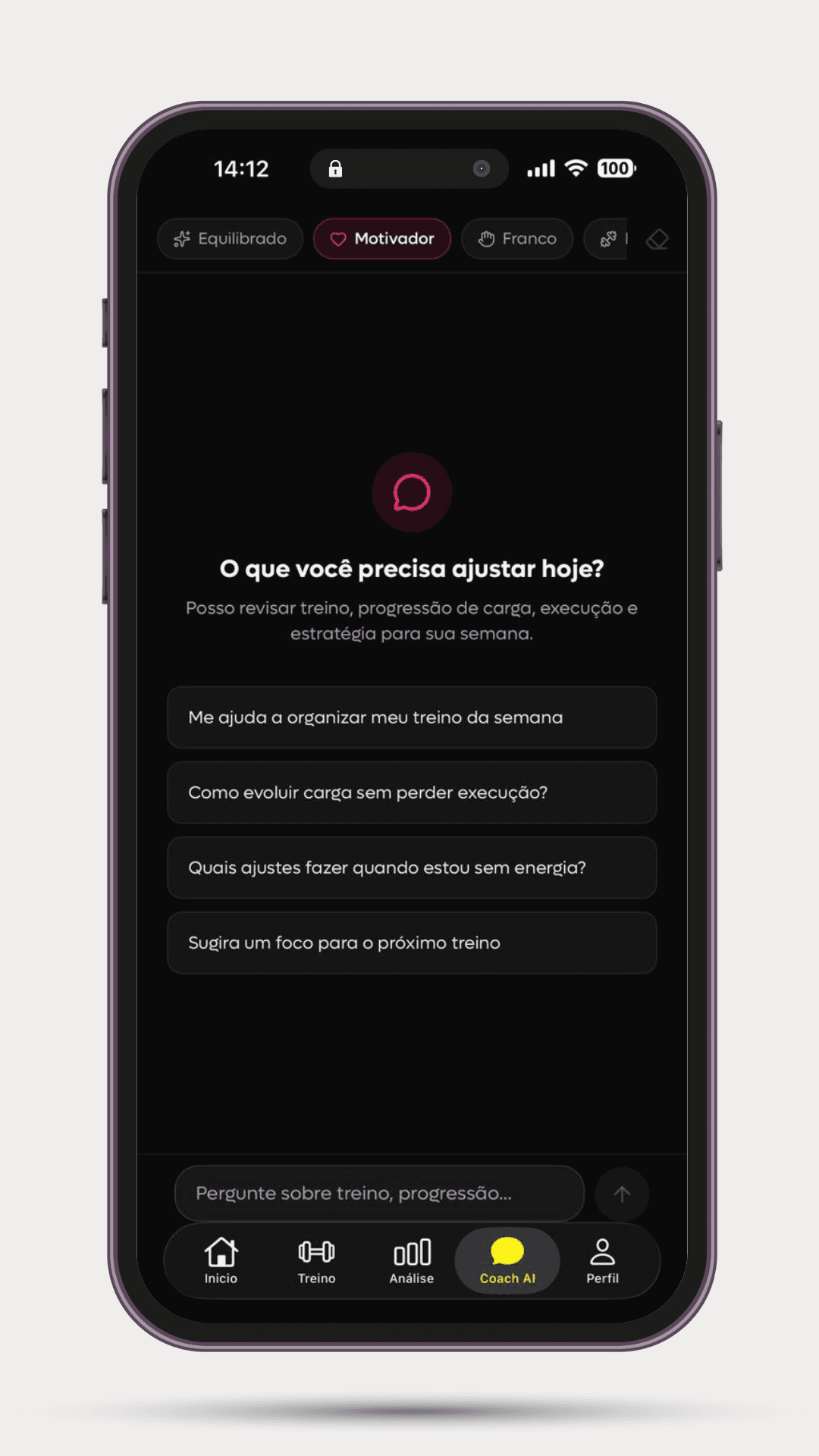
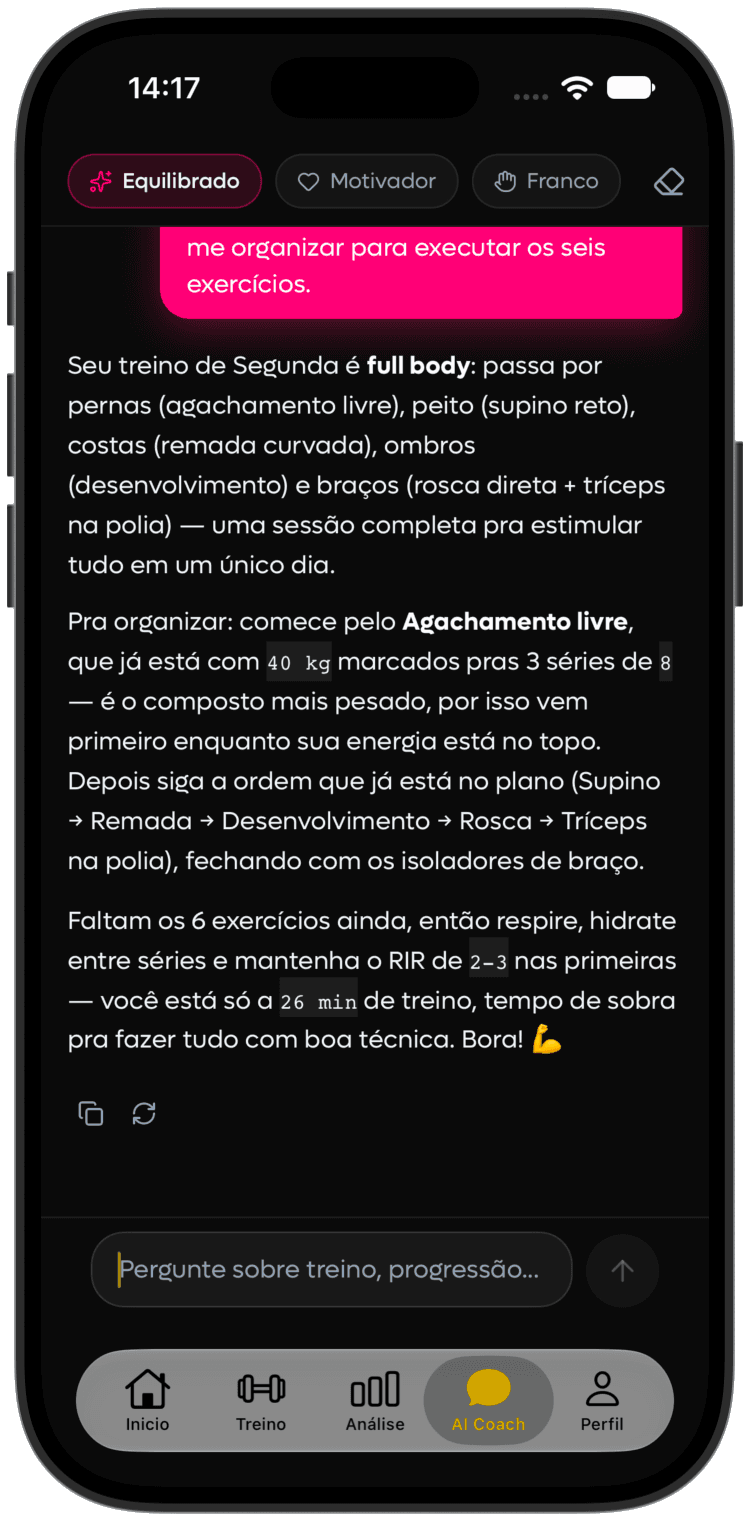
The AI Coach can discuss progression, technique, exercise substitutions and recovery using your active plan and recorded context. Use it to organize questions and compare options. Decisions remain yours; pain or suspected injury remains outside a training AI's role.
Explore How to use SelfShapeAI, the features and the Best workout-tracking app guide. Beginners can start with From beginner to results.
Frequently asked questions
- Must I increase weight every week to get stronger?No. The trend should rise over time, but a week may consolidate technique or reps. Progress when history, execution and effort margin support it.
- Which metric should I track in the app?Start with load and reps in the same exercise, add RIR/RPE and notes, and watch PR and exercise-load trends. No single metric tells the whole story.
- Do I need a 1RM test to measure strength?Not in every routine. Comparable submaximal sets already reveal progress without making every session a test. A 1RM test requires suitable technique, preparation and context.
- Does SelfShapeAI increase the load automatically?Do not assume invisible automatic progression. The app records and displays progress, and the AI Coach helps discuss adjustments; you retain control of the plan and execution.
Strength becomes clearer when the process is comparable
SelfShapeAI does not promise a shortcut to PRs. It connects context, plan, sessions and progress so you can see what you practiced, how you performed and which adjustment makes sense. That clarity reduces ego-driven decisions and supports heavy training when it serves your goal.
To track strength with your plan, logs and history in one place, start your training plan.
Sources and references
- Source: Currier BS et al. ACSM Position Stand: Resistance Training Prescription for Muscle Function, Hypertrophy, and Physical Performance in Healthy Adults. Med Sci Sports Exerc, 2026. — ACSM / Medicine & Science in Sports & Exercise (PubMed)
- Source: Lopez P et al. Resistance Training Load Effects on Muscle Hypertrophy and Strength Gain: Systematic Review and Network Meta-analysis. Med Sci Sports Exerc, 2021. — Medicine & Science in Sports & Exercise (PubMed)
- Source: Plotkin DL et al. Progressive overload without progressing load? The effects of load or repetition progression on muscular adaptations. PeerJ, 2022. — PeerJ (PubMed)
- Source: Nunes JP et al. What influence does resistance exercise order have on muscular strength gains and muscle hypertrophy? A systematic review and meta-analysis. Eur J Sport Sci, 2021. — European Journal of Sport Science (PubMed)
Reviewed by the SelfShapeAI research team using strength-training guidelines and studies.
Take this method to the app

Create your plan with AI, log check-ins and use the AI Coach to adjust training with context.
Share
Euller Germano
SelfShapeAI technical and editorial team.
Keep learning
Recommended next article
Best workout tracking app in 2026: 7 options for lifting and cardio
Compare 7 workout apps in 2026 and see which works best for lifting, running, indoor cardio, mobility and a real routine.
Continue →