Chest exercises for women: how to strengthen the chest at the gym or at home
Understand why adding chest training to your routine makes the workout more complete, which exercises actually make sense and how to organize it with more clarity.

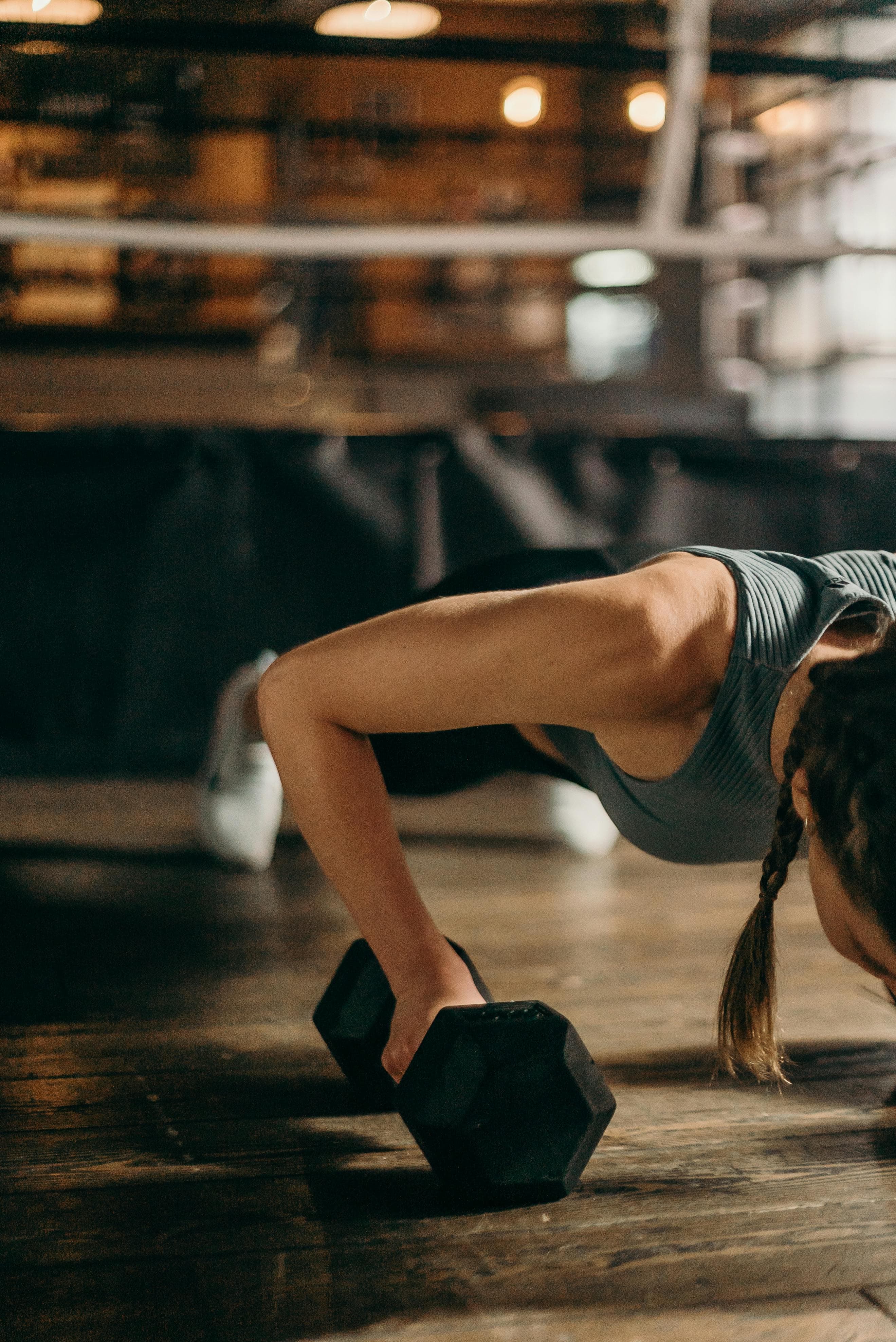
If you skip chest because you have heard it is unimportant for women, separate preference from physiology. The pectorals contribute to presses, push-ups and other pushing movements; training them can develop strength and muscle just as it does in other groups.
The bench press primarily trains the pectoralis major, triceps and anterior deltoid; it does not directly alter glandular or fatty breast tissue. Body-composition changes can affect measurements, but that differs from an exercise's local effect. Relative hypertrophy responses to resistance training are similar in women and men, and appearance depends on the full program and individual differences. To organize your week, compare Full body or split, Three-day training split and Upper/lower split.
Between legs, glutes, cardio and a busy routine, chest training can get squeezed out even when pushing strength matters. SelfShapeAI aims to make that decision deliberate and fit volume into your actual week. Explore Intelligent AI workouts, What is SelfShapeAI and How to use SelfShapeAI.
Contents
- 1. If you always left chest for last, it is worth reconsidering
- 2. What chest training actually does
- 3. How to fit chest into your routine without it becoming chaos
- 4. Chest exercises and when each option fits
- 5. 1. Flat dumbbell bench press
- 6. 2. Incline bench press
- 7. 3. Chest press or bench machine
- 8. 4. Dumbbell fly
- 9. 5. Cable crossover or pec deck
- 10. 6. Push-up
- 11. 7. Incline push-up or floor press
- 12. An example of a chest workout at the gym
- 13. An example of a chest workout at home
- 14. Mistakes that slow down your chest training
- 15. 1. Skipping chest because it seems less important
- 16. 2. Living only in light, loose exercises
- 17. 3. Letting shoulders and triceps steal everything
- 18. 4. Inflating volume because you think you need to compensate
- 19. 5. Not logging how the session actually went
- 20. How SelfShapeAI comes into this without complicating it
- 21. How to notice the workout is delivering results
- 22. Frequently asked questions
If you always left chest for last, it is worth reconsidering
Many women are told chest training is secondary or unnecessary. Including this muscle group is a matter of goals and preferences, not a rule based on sex. The pectorals contribute to presses, push-ups and pressing machines and can be trained within an upper-body session without a dedicated day.
If your goal includes pushing strength or chest development, omitting these movements leaves that priority without direct stimulus. You do not need a huge session: chest work can fit into push, upper or full-body training. Compare Push pull legs, Upper-body exercises and Four-day training split.
Turn understanding into a workout you can follow
SelfShapeAI uses your routine and goal to build an explained plan, log every session and guide the next adjustment.




Download for free. Annual: R$ 299,90/year, equivalent to about R$ 25/month; monthly: R$ 39,90/month. See how AI training works.
What chest training actually does
Chest training focuses primarily on the pectoralis major, with the anterior deltoid and triceps assisting in presses. These muscles also accumulate indirect sets from other exercises, so session volume must account for the rest of your upper-body training.
That is why a good workout here is not a synonym for a huge workout. It is a synonym for a coherent workout. Less random exercise, more good choices, better order, better effort distribution and more readable progression. This reasoning connects directly with How many sets to build muscle, the practical RPE and RIR guide and Simple progression: when to add weight.
How to fit chest into your routine without it becoming chaos
- A main pushing exercise.
- A second variation when volume and goals justify it.
- An optional isolation exercise for additional local work.
- Frequency based on weekly volume and recovery.
With three or four training days, chest can fit into push, upper or full-body sessions. No frequency is automatically better: when volume is matched, distributing it across more sessions does not guarantee additional hypertrophy. Your arrangement should support execution, recovery and consistency.
In other words: you do not need to turn chest into the longest workout of your week. Nor do you need to buy the idea that it only counts if it is too heavy. What counts is a good block, with exercises that make sense for your moment. If you want to see how this reasoning shows up in the product, the best entry point remains AI training and then the features.
Chest exercises and when each option fits
1. Flat dumbbell bench press
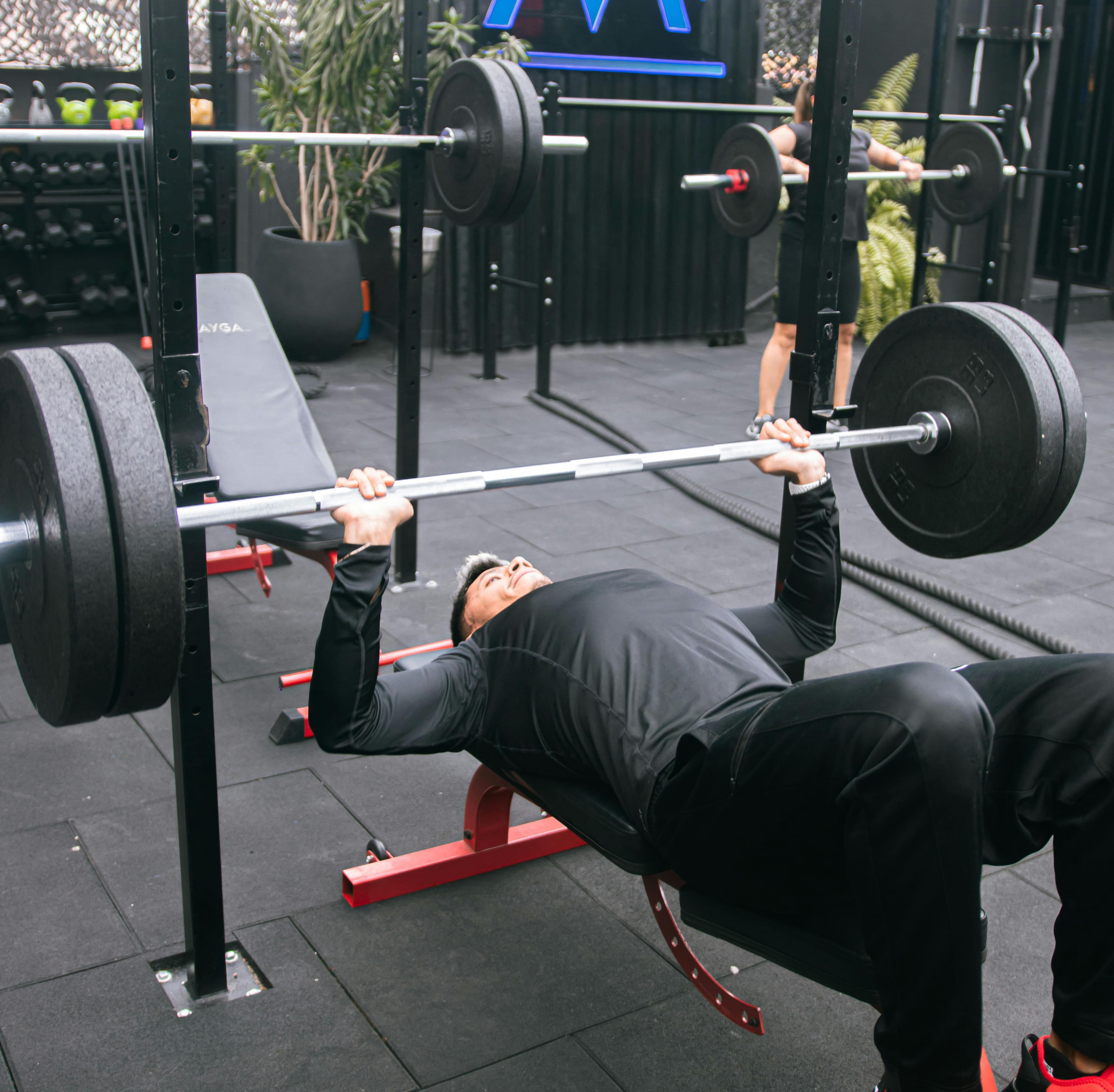
Dumbbells let you adjust each arm's path and may feel comfortable, but require stability and control. Choose a load that allows a comfortable range, stable torso and consistent reps. Barbells, machines and dumbbells are valid alternatives depending on experience and preference.
2. Incline bench press
Changing the incline alters excitation across chest regions and the anterior deltoid. This may support choosing an incline press when the clavicular region is a priority, but does not make it mandatory or prove greater regional growth by itself. Connect this to How to get stronger with SelfShapeAI.
3. Chest press or bench machine
Machines offer a more stable path and may make local effort easier; free weights require more stabilization and develop strength specific to that modality. Evidence does not consistently favor either for hypertrophy. Choose according to your goal, comfort and availability.
4. Dumbbell fly
For flyes, choose a load you can control through a comfortable range with slightly bent elbows. They can come before or after a press depending on priority; pre-fatiguing the chest may reduce performance in subsequent presses.
5. Cable crossover or pec deck
Cable crossovers and the pec deck train horizontal adduction with different stability demands from a press. Cables let you adjust height and path; machines reduce stabilization decisions. Neither removes shoulder involvement. Adjust range and load for comfortable, controlled movement.
6. Push-up
Push-ups train the chest, triceps and anterior deltoid while requiring torso stabilization. Elevating the hands makes them easier; range, reps, load and variations can increase the challenge, making them useful at different levels.
7. Incline push-up or floor press
If the workout has to happen at home, these two options save a lot. The incline push-up lets you adjust the difficulty with the support. The floor press with dumbbells also works super well to keep a pushing pattern without depending on a bench or machine. If your routine swings between gym and home, this connects a lot with Best workout tracking app in 2026.
An example of a chest workout at the gym
If you want a simple, functional block without excess, a chest session inside a push or upper might look like this:
- Flat dumbbell bench press.
- Incline press or chest press as a second variation, if needed.
- Flyes, cable crossovers or pec deck as an optional addition.
- Lateral raise or triceps, depending on the day's structure.
This is an example, not a prescription with defined sets and effort. In push sessions, chest shares work with shoulders and triceps; in upper sessions, with back and arms; in full-body training, it may receive fewer sets per session. Count weekly volume before choosing how many exercises to use. Compare Push pull legs, Upper/lower split and Full body or split.
An example of a chest workout at home
For home, you do not need to try to copy the whole gym. You need to keep good pushing patterns with what you have available. A simple example would be:
- Incline push-up.
- Floor press with dumbbells.
- Standard push-ups, knee push-ups or another appropriate progression.
- Optional floor flyes with a controlled range.
- Some shoulder or triceps complement if the session calls for it.
This can already work very well in busy weeks, when the gym does not fit or when you just need a practical alternative to not disappear from training. If you are trying to get back to a more consistent routine, connect this with From beginner to results.
Mistakes that slow down your chest training
1. Skipping chest because it seems less important
If pushing strength or chest hypertrophy is a goal, removing all direct work leaves it without enough training. If neither is a goal, chest can be a lower priority without making that choice universally wrong.
2. Living only in light, loose exercises
Chest training needs appropriate effort and some form of progression. Presses, machines and push-ups can all provide this; the problem is switching variations before you have time to learn, measure and adjust.
3. Letting shoulders and triceps steal everything
This usually happens when the load is above what you control, when execution is rushed or when the workout was built without logic. Warm-up, exercise order and volume adjustment make a big difference here. If you want to go deeper on this base, review Warm-up sets: how to do them and when to use them.
4. Inflating volume because you think you need to compensate
If the workout is too long, the problem is usually not chest. It is badly distributed volume. And that weighs even more when the workout already shares space with shoulders and triceps. This point connects well with How many sets to build muscle and Supersets: how to use them and when they make sense.
5. Not logging how the session actually went
Without a record, everything becomes a loose feeling. Then it gets hard to know whether you are actually progressing, whether execution improved or whether the workout just seemed good that day.
How SelfShapeAI comes into this without complicating it
The first help comes even before the gym. SelfShapeAI uses your context, your frequency and your goal to create or adjust the workout in a more realistic way. This matters because chest does not need to come in as a random block. It can appear in a push, an upper or a full body with much more coherence for your week. If you want to understand this start more calmly, the best companion remains How to use SelfShapeAI.
Then comes the explanation of the plan. This part is strong because many people follow a template on autopilot. When the app shows the workout's logic, it becomes easier to understand whether that block is there to build a base of strength, complement volume, serve as a home adaptation or balance a broader upper day.
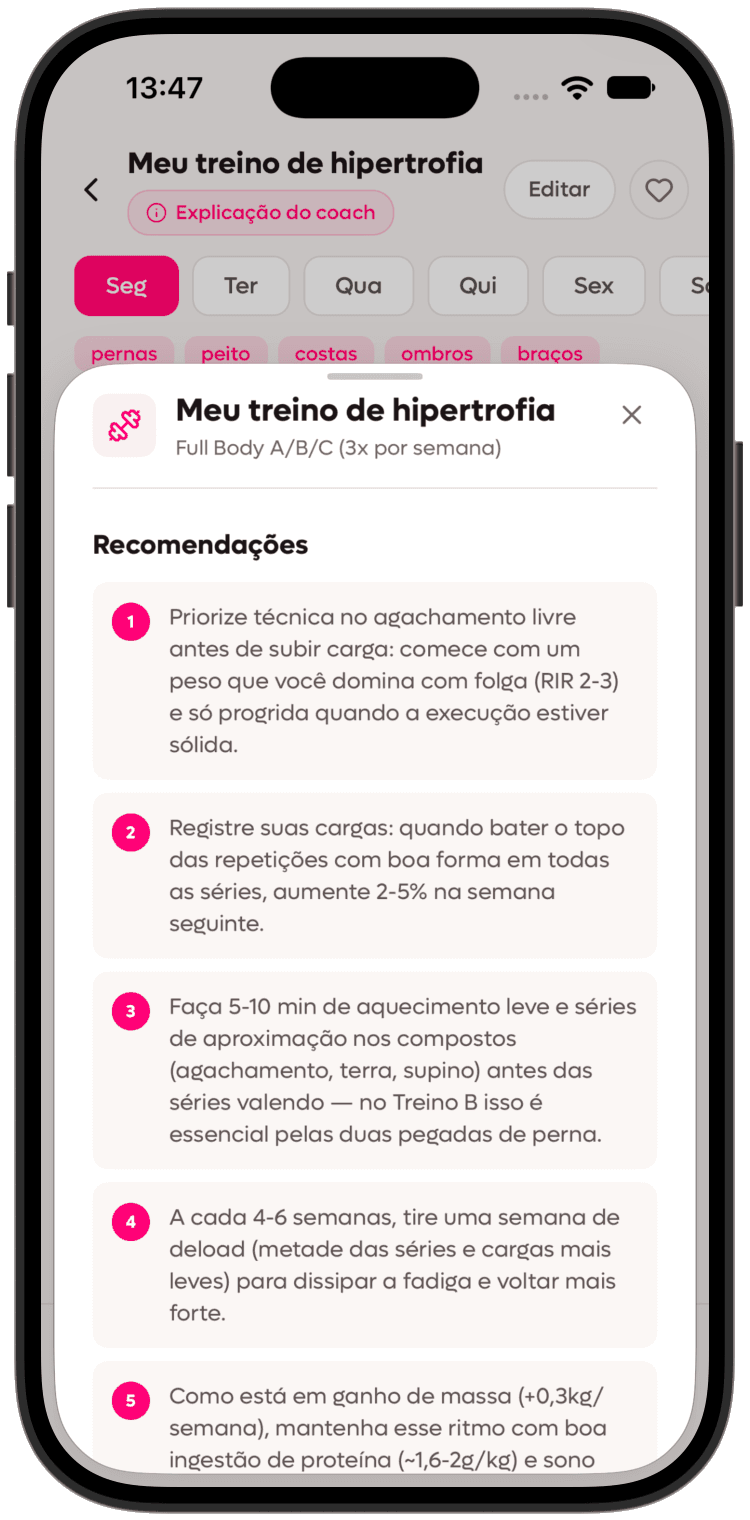
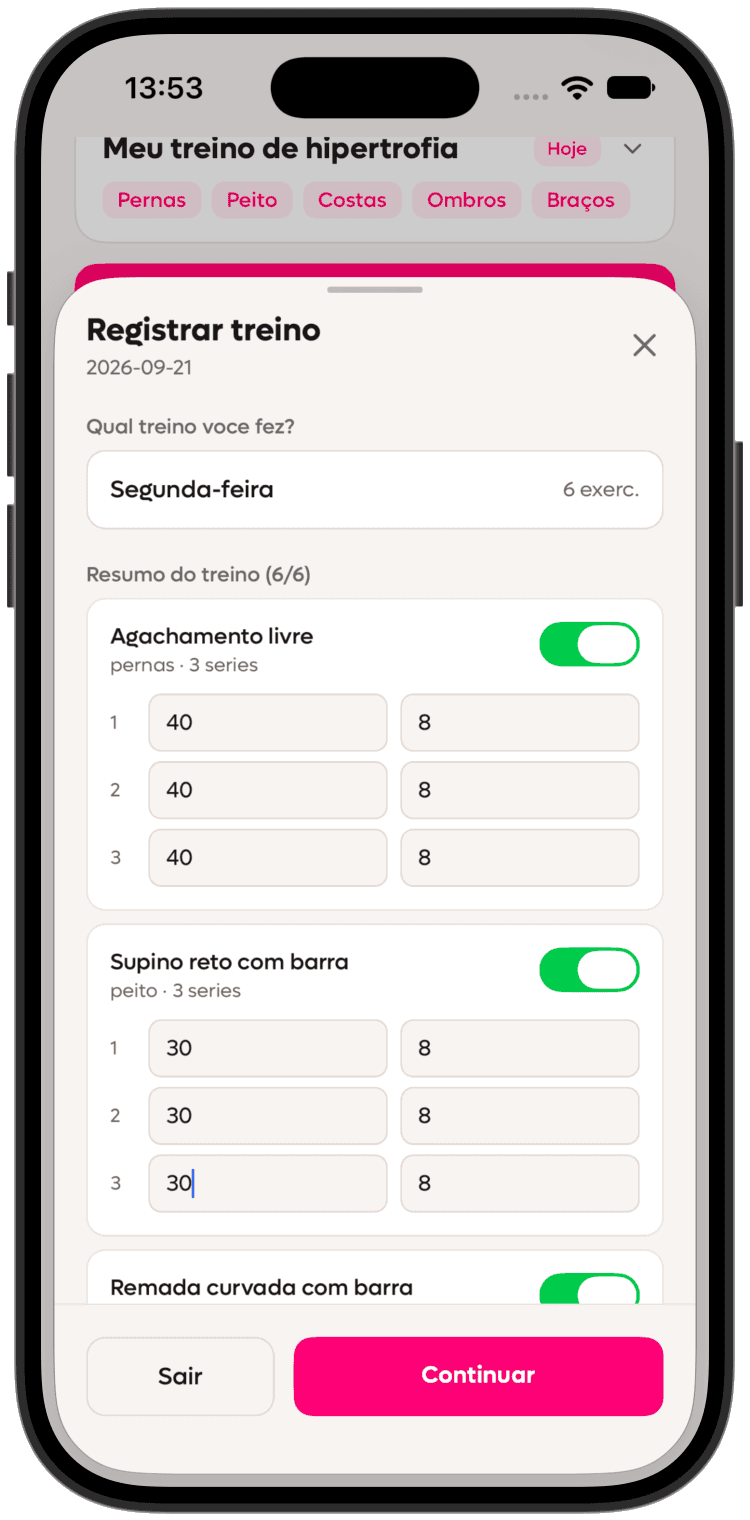
In the real routine, check-ins and adjustments do the rest of the work. You can log that you felt more shoulder than chest, that the load was too high, that the gym was packed or that you needed to train at home. That takes the workout out of the field of vague feeling and makes the reading much more honest.
And when a practical doubt comes up, the AI Coach steps in well to adapt an exercise, swap a variation or reorganize the session without dismantling everything. This connects directly with Intelligent AI-powered training and the broader proposal of AI training.
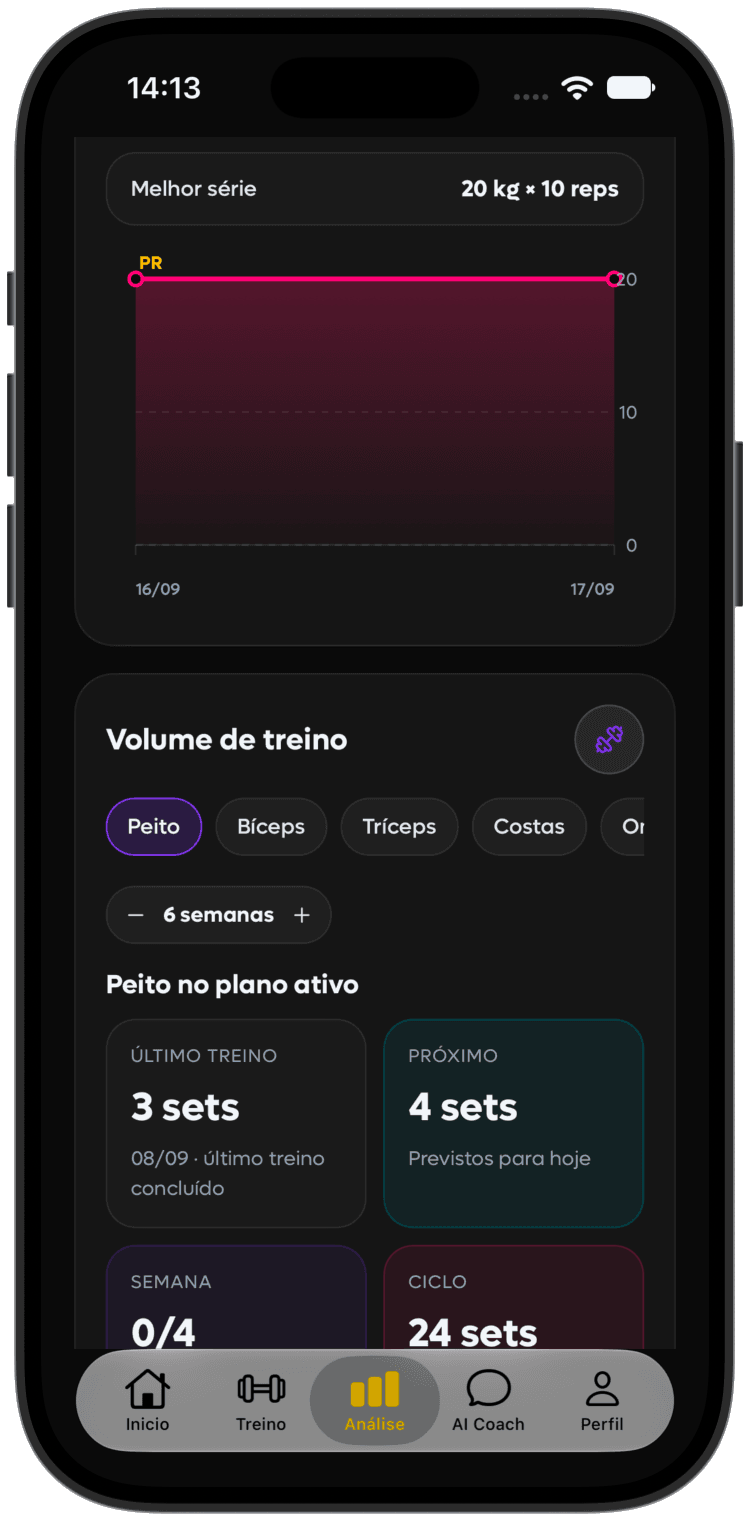
Another strong point is the analysis. In SelfShapeAI, you can see frequency, the most-worked muscle groups, load progress, top weight per session and planned versus executed sets. In a chest workout, this answers very useful questions: is the chest showing up enough? Did the planned volume turn into execution? Are the bench press or the push-up actually improving? If you like this more objective reading, continue later in How to get stronger with SelfShapeAI.
Finally, the plan library solves a real problem for anyone living a variable routine. You can keep a gym version and a leaner one for home, or a push structure and an upper structure, without losing organization. To see this broader side of the product, open the features, Pricing and What is SelfShapeAI.
How to notice the workout is delivering results
- You control pushing movements better.
- You can do more good reps with the same load.
- You raise load or difficulty with more confidence.
- You feel more coherence between technique, effort and recovery.
- You keep real frequency for the chest across the weeks.
- You see that planned sets are actually turning into executed training.
Not all progress shows up in the mirror first. Sometimes it shows up in control, confidence, execution and consistency. That is exactly the reading that separates intelligent training from training on autopilot. When you cross check-ins, top weight per session and executed sets, the decision about the next step improves a lot. Sometimes it is worth raising the load. Sometimes it is worth keeping the load and polishing execution. Sometimes it is worth reorganizing the week. This kind of reading connects very well with Simple progression: when to add weight, the practical RPE and RIR guide and the overview of AI training.
Frequently asked questions
- Does training chest change breast size?The exercise trains the pectoral muscle beneath the breast, not glandular or fatty tissue directly. Body-composition changes may affect measurements, but this is not a localized bench-press effect.
- If I bench press, will I get a masculine look?One exercise does not define your appearance. The bench press develops strength and can grow the trained muscle depending on dose, time and individual response. Women have similar relative hypertrophy potential to men. See How to get stronger with SelfShapeAI.
- How many times a week is it worth training chest?There is no mandatory number. One or more exposures can work when volume, effort and recovery are appropriate. Compare Three-day training split and Four-day training split.
- Can I train chest at home and still get results?Yes, you can. Push-ups, incline push-ups, dumbbells and good adaptations can already deliver a very useful workout. The main point remains coherence, progression and consistency.
- What should I do if I feel more shoulder than chest?Review technique, load, exercise order, warm-up and even the session's design. In many cases, the problem is not lack of chest. It is a badly built workout or rushed execution. If the doubt persists, the AI Coach can help adjust the session and you can also review Warm-up sets: how to do them and when to use them.
- Does SelfShapeAI really help with such a specific workout?It helps precisely because this kind of workout seems simple but depends on context. The app helps build the right split, adapt an exercise, log the session and see whether the volume planned for the chest is turning into real execution. To start with a broader view, see What is SelfShapeAI and How to use SelfShapeAI.
Chest training can fit naturally into your routine without fear. It works best with suitable pushing movements, clear progression and real context. Explore AI training, see the features, compare Pricing and open SelfShapeAI when you are ready.
Sources and references
- Source: Cabral HV et al. Non-uniform excitation of the pectoralis major muscle during flat and inclined bench press exercises. Scand J Med Sci Sports, 2022. — Scandinavian Journal of Medicine & Science in Sports (PubMed)
- Source: Roberts BM, Nuckols G, Krieger JW. Sex Differences in Resistance Training: A Systematic Review and Meta-Analysis. J Strength Cond Res, 2020. — Journal of Strength and Conditioning Research (PubMed)
- Source: Haugen ME et al. Effect of free-weight vs. machine-based strength training on maximal strength, hypertrophy and jump performance: a systematic review and meta-analysis. BMC Sports Sci Med Rehabil, 2023. — BMC Sports Science, Medicine and Rehabilitation (PubMed)
- Source: Schoenfeld BJ, Grgic J, Krieger J. How many times per week should a muscle be trained to maximize muscle hypertrophy? A systematic review and meta-analysis. J Sports Sci, 2019. — Journal of Sports Sciences (PubMed)
- Source: Currier BS et al. American College of Sports Medicine Position Stand: Resistance Training Prescription for Muscle Function, Hypertrophy, and Physical Performance in Healthy Adults. Med Sci Sports Exerc, 2026. — ACSM (PubMed)
Reviewed by the SelfShapeAI research team using strength-training guidelines and studies.
Take this method to the app

Create your plan with AI, log check-ins and use the AI Coach to adjust training with context.
Share
SelfShapeAI Team
SelfShapeAI technical and editorial team.
Keep learning
Recommended next article
Lower chest workout: how to put more emphasis on the lower part of the pecs
See how to put more emphasis on the lower part of the pecs with better angles, coherent exercises, progression and practical support from SelfShapeAI.
Continue →