Lower chest workout: how to put more emphasis on the lower part of the pecs
Understand what actually puts more emphasis on the lower portion of the pecs, which exercises make the most sense and how to organize it without scrambling the rest of your chest workout.

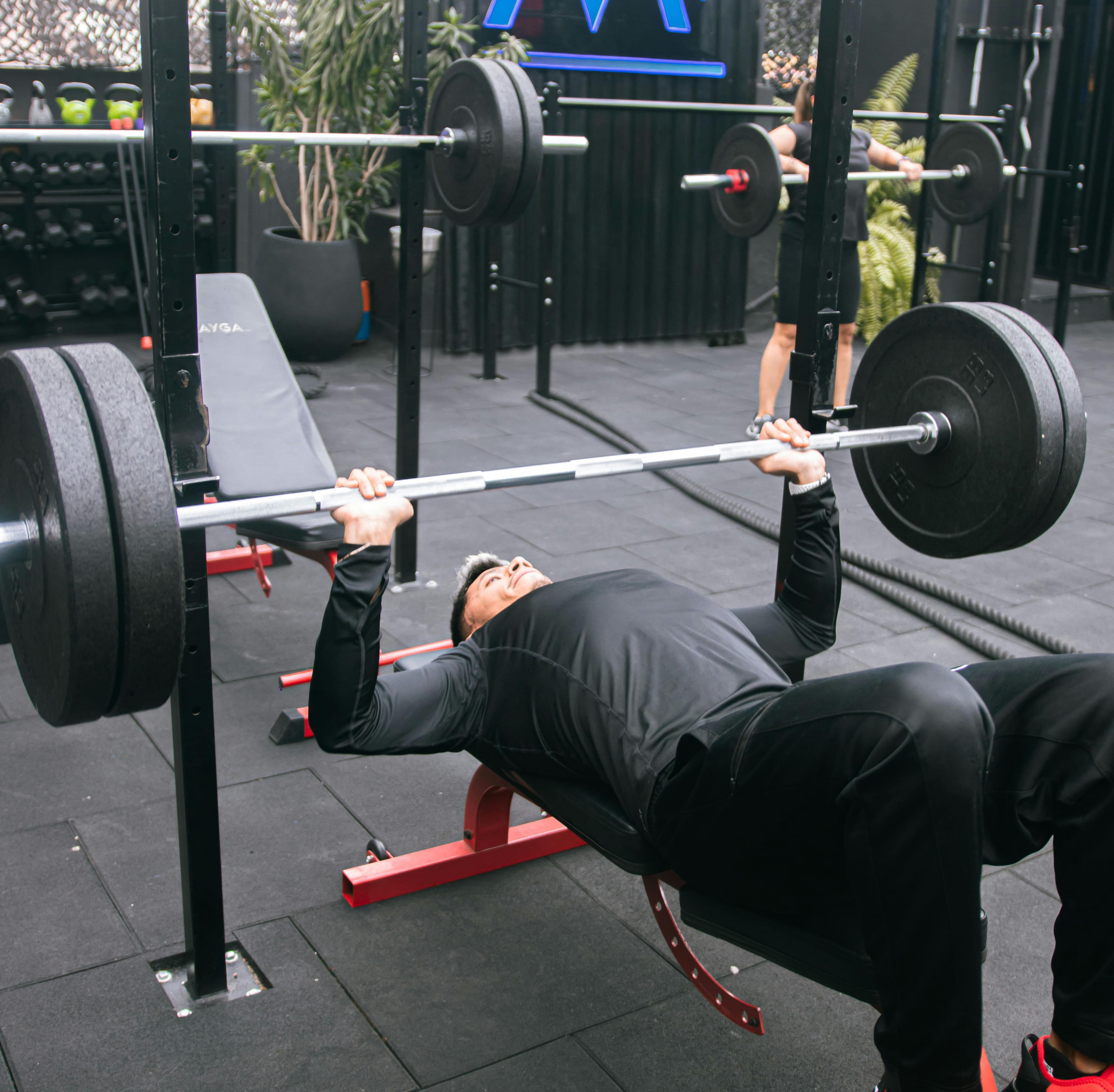
If there is one part of the chest many people struggle to develop, it is the base of the pecs. The training happens, the bench press goes up, the pump comes, but the lower part still seems to lag. Most of the time, this is not lack of effort. It is lack of direction.
It is also worth adjusting an expectation right away: you will not separate the lower chest as if it were an isolated muscle. The pecs work as a whole. What you can do is increase the emphasis on the lower portion with a better angle, a better path and a better-built chest session. If you are still deciding how this block fits the week, cross this text with Full body vs. split training, Push/pull/legs, Upper/lower split and Upper body exercises.
In SelfShapeAI, this kind of adjustment gets more useful because the workout is not born as a generic list of chest exercises. It is born from your real frequency, your goal and what makes sense to prioritize now. From there, it becomes much easier to build a chest block that actually has logic. To understand this proposal better, also open Intelligent AI-powered training, What is SelfShapeAI and How to use SelfShapeAI.
Contents
- 1. What lower chest really is
- 2. What really increases emphasis on the lower part of the pecs
- 3. Exercises that actually make sense
- 4. 1. Decline bench press
- 5. 2. Chest-focused dips
- 6. 3. High-to-low crossover
- 7. 4. Chest press or decline/converging machine
- 8. 5. Home options: band anchored high and push-up as a complement
- 9. How to build a lower-chest block in practice
- 10. The mistakes that most stall this development
- 11. 1. Training chest as if every angle were the same
- 12. 2. Trying to isolate lower chest and forgetting the rest of the pecs
- 13. 3. Letting shoulders and triceps steal the movement
- 14. 4. Doing the right exercise without progression
- 15. 5. Inflating volume because the focus became chest
- 16. Where SelfShapeAI comes into this
- 17. How to know if this focus is working
- 18. Frequently asked questions
What lower chest really is
“Lower chest” is gym shorthand for the lower region of the large sternocostal portion of pectoralis major. Anatomy usually divides it into clavicular and sternocostal heads, so there is no completely independent lower head to isolate.
The chest contributes to pushing and shoulder adduction, with regional distribution changing by angle and path. EMG studies show greater sternocostal excitation in flat pressing than high inclines, but acute EMG does not guarantee superior regional hypertrophy. Use it to guide choices without claiming certainty absent from long-term studies.
- Chest training without considering angles and priorities may not address this specific goal.
- There is also no magic exercise that shapes the base of the chest in isolation.
- What exists is a better combination of angle, path, execution and weekly volume.
If you want to improve the reading of this kind of adjustment within the week, review How many sets to build muscle, How to build more muscle and the practical RPE and RIR guide.
Turn understanding into a workout you can follow
SelfShapeAI uses your routine and goal to build an explained plan, log every session and guide the next adjustment.




Download for free. Annual: R$ 299,90/year, equivalent to about R$ 25/month; monthly: R$ 39,90/month. See how AI training works.
What really increases emphasis on the lower part of the pecs
Here is the point that changes the game: it is not about inventing a lower chest. It is about increasing its participation.
- A comfortable flat or slightly declined press that you can progress.
- High-to-low cable or band paths as an adduction variation.
- Dips when strength, equipment and tolerance allow controlled execution.
- Stable range suited to the joint, without pursuing depth at any cost.
- Load or repetition progression with comparable effort and technique.
There is also an important nuance: just because an exercise gives more emphasis to the lower part of the pecs does not mean the rest of the chest workout stops counting. The whole pectoralis major still needs a good base of presses, machines and coherent weekly volume. The lower-chest block comes in to refine, not to replace everything. If you like looking at this as session structure, also visit Chest exercises for women and How to get stronger with SelfShapeAI.
Exercises that actually make sense
1. Decline bench press
A decline bench or equivalent machine offers a different pressing path from incline work. It may be comfortable and support overload, but should not be sold as proven superior to flat pressing for the lower region: acute studies show substantial sternocostal involvement in flat presses, and direct longitudinal comparisons are lacking.
- Lower with control.
- Keep the scapulae stable.
- Do not let the movement become a push-push with no range.
- Push up with the intention to adduct and press, not just to lift the bar off the spot.
Decline pressing is optional. If flat pressing progresses well and decline does not fit, there is no reason to force it. See getting stronger with SelfShapeAI and when to increase load.
2. Chest-focused dips
Dips train chest, triceps and front deltoids with substantial demands relative to bodyweight strength. Torso lean and path may change sensation and effort distribution, but do not isolate the lower chest.
- Trunk leaned a bit more forward.
- A descent with a range you control well.
- Elbows following the movement without locking everything into the triceps.
- A firm ascent, without losing the position.
If depth, bodyweight or shoulder tolerance prevents controlled reps, use assistance, reduce range or choose another press. Persistent discomfort is not proof it works and warrants professional assessment.
3. High-to-low crossover
High-to-low cable flyes allow downward adduction and simple load adjustment. They can be practical isolation work after presses, but localized sensation does not prove greater regional growth.
- Set the pulley high.
- Take a step forward.
- Keep the trunk stable.
- Guide your hands in an arc down and forward.
- Hold the contraction for a moment.
This is usually a great place to refine feel and execution after a heavier press. If you like using this as a smart finisher, also review Supersets: how to use them and when they make sense.
4. Chest press or decline/converging machine
A machine is not a lower version of training. In fact, it can be the best choice when you want stability, more proximity to failure and less technical noise.
- More external stability.
- A more predictable path.
- Less spending on stabilization.
- Easier load and repetition comparisons between sessions.
If dips are not tolerated or the decline bench does not fit, a machine can be an alternative. Recurrent pain needs more than an equipment swap: reduce demands and seek professional assessment.
5. Home options: band anchored high and push-up as a complement
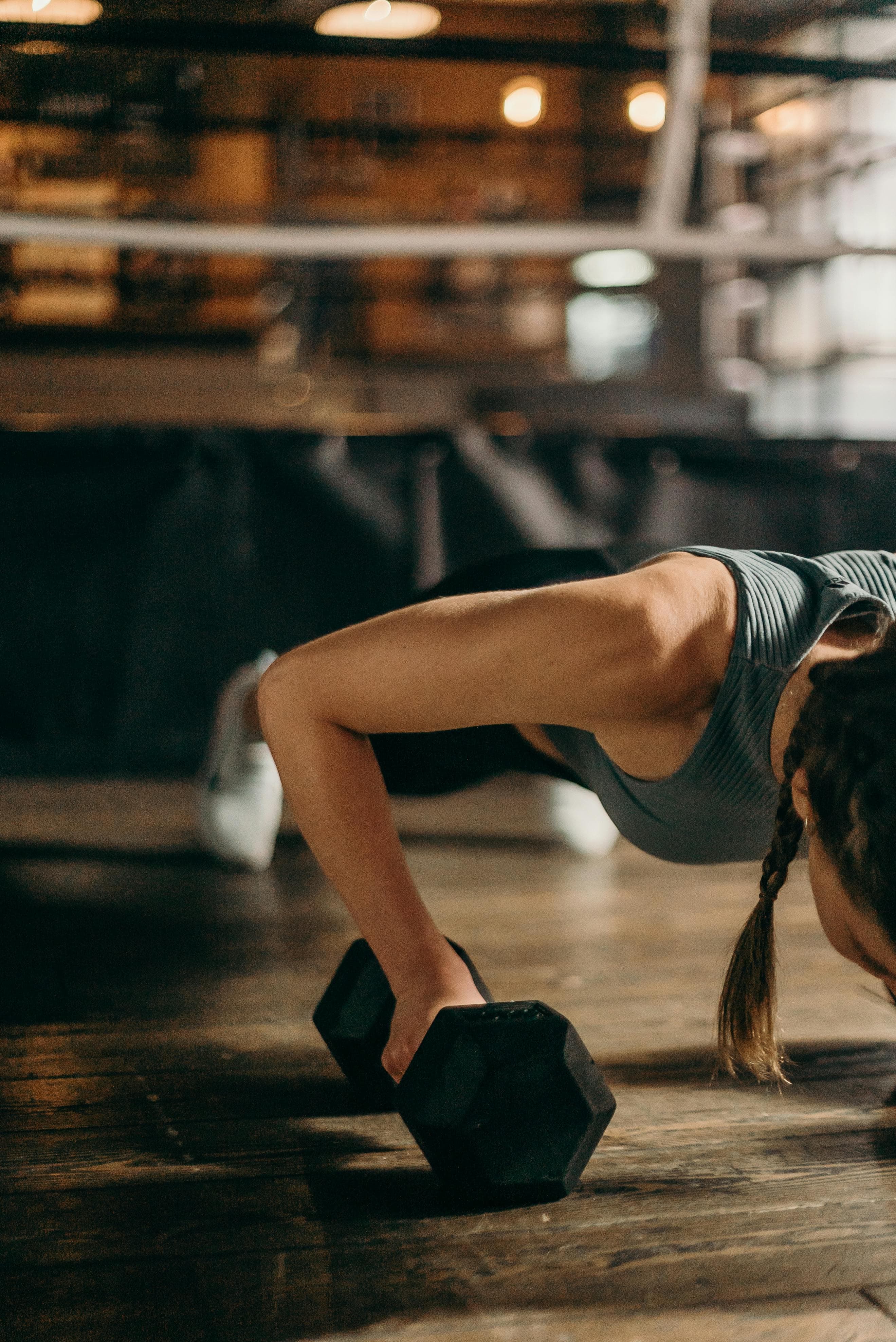
Here it is worth being honest. At home, the lower-chest emphasis is a bit more limited if you do not have a decline bench, dip bars or some good support. Even so, you can still work intelligently.
- Crossover with a band anchored above the shoulder line.
- Press with a band on a high-to-low path.
- Dips or support bars, if you have them.
- Standard push-up as a general chest complement.
The important point here is not to sell any push-up as a magic lower-chest exercise. Push-ups help a lot with the chest as a whole, but to really prioritize the lower portion, path and equipment make a difference. If your routine mixes gym and home, this connects a lot with Best workout tracking app in 2026.
How to build a lower-chest block in practice
If your workout already has chest and you want to give more attention to the base of the pecs, a simple, functional block might look like this:
- Flat or slightly declined press: two to three working sets.
- Assisted dips or converging machine: two to three optional sets.
- High-to-low cable fly: two to three sets.
- Push-up or band: a home alternative, not a compulsory finisher.
- A stronger press.
- A second density exercise.
- An isolation move with a good path.
- A simple finisher.
Choose two or three blocks, not all of them, and do not add this example to an already crowded chest workout. Chest shares resources with shoulders and triceps on push days, and back and arms on upper days. Compare full body versus splits, PPL and upper/lower.
The mistakes that most stall this development
1. Training chest as if every angle were the same
Doing only flat bench press and expecting all regions of the pecs to keep the same pace is a common mistake. Not because the flat is bad, but because it does not solve on its own everything many people want to develop.
2. Trying to isolate lower chest and forgetting the rest of the pecs
When someone gets obsessed with the lower part of the chest, they sometimes dismantle the whole rest of the session. But the base of the chest still needs a good overall workout. Lower chest is refinement, not replacement.
3. Letting shoulders and triceps steal the movement
This happens a lot in dips, presses and even the crossover. Load that is too heavy, rushed execution and little technical reading usually push the stimulus to other muscles. If you constantly feel more shoulder than chest, review Warm-up sets: how to do them and when to use them.
4. Doing the right exercise without progression
The angle may be great, but without progression the result stalls. At some point, you need to raise load, gain reps with the same load, improve execution or simply stack good weeks without scrambling technique.
5. Inflating volume because the focus became chest
This is another classic. Someone decides to specialize chest and turns the workout into a festival of presses, flyes and cables. The problem is not wanting emphasis. The problem is scrambling recovery and quality. If you want to calibrate this better, cross this section with How many sets to build muscle and How to build more muscle.
Where SelfShapeAI comes into this
This is where the topic leaves the field of exercise tips and becomes a process.
First, SelfShapeAI helps decide where this chest focus fits your routine. That makes a difference because lower chest should not be born as a block thrown into the workout. It needs to talk to your frequency, the week's split and the volume you can actually sustain.
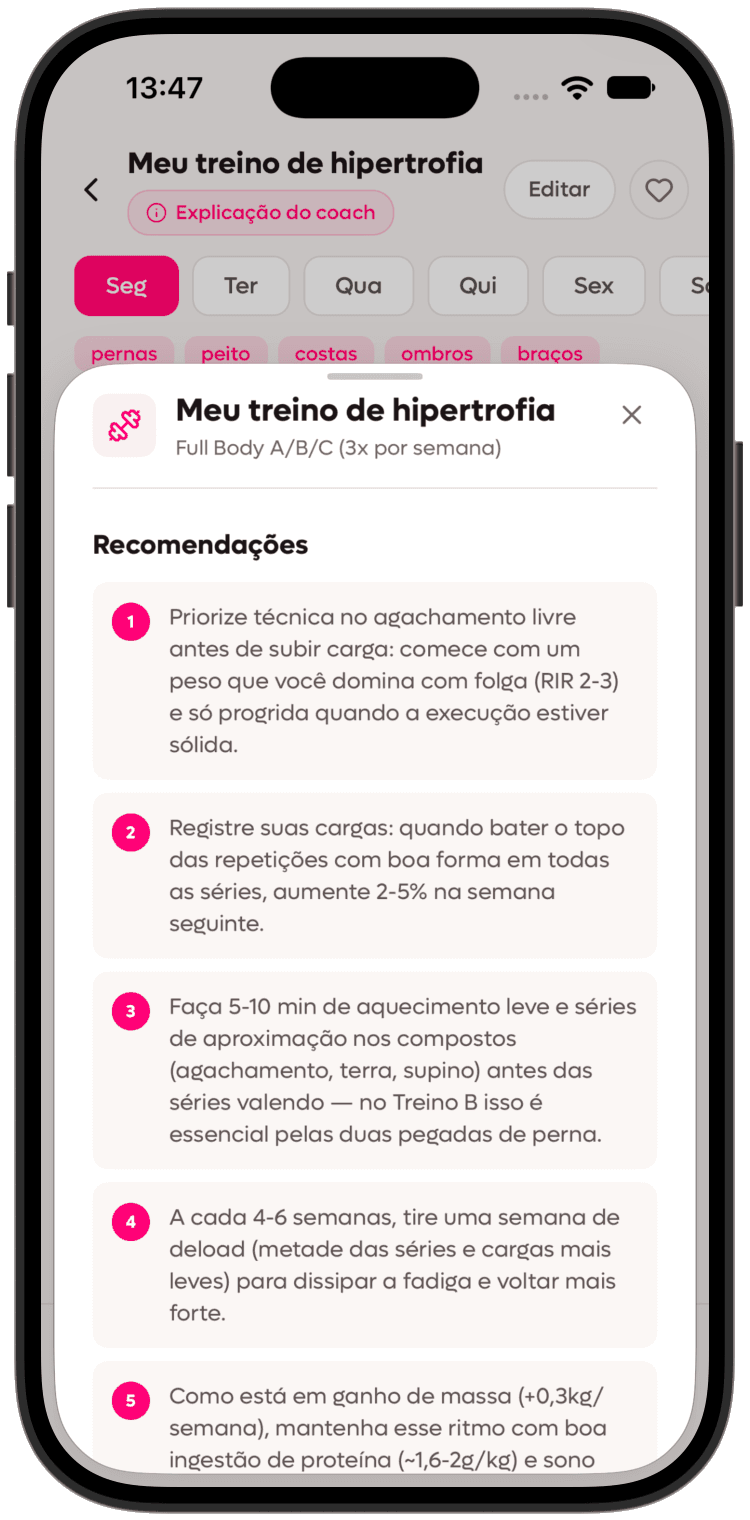
Then comes the explanation of the plan. This point is useful because many people follow the workout without understanding why the decline comes first, why the crossover ended up later or why the chest block is smaller than they imagined. When the logic is clear, execution improves. To see this part in more detail, open How to use SelfShapeAI and AI training.
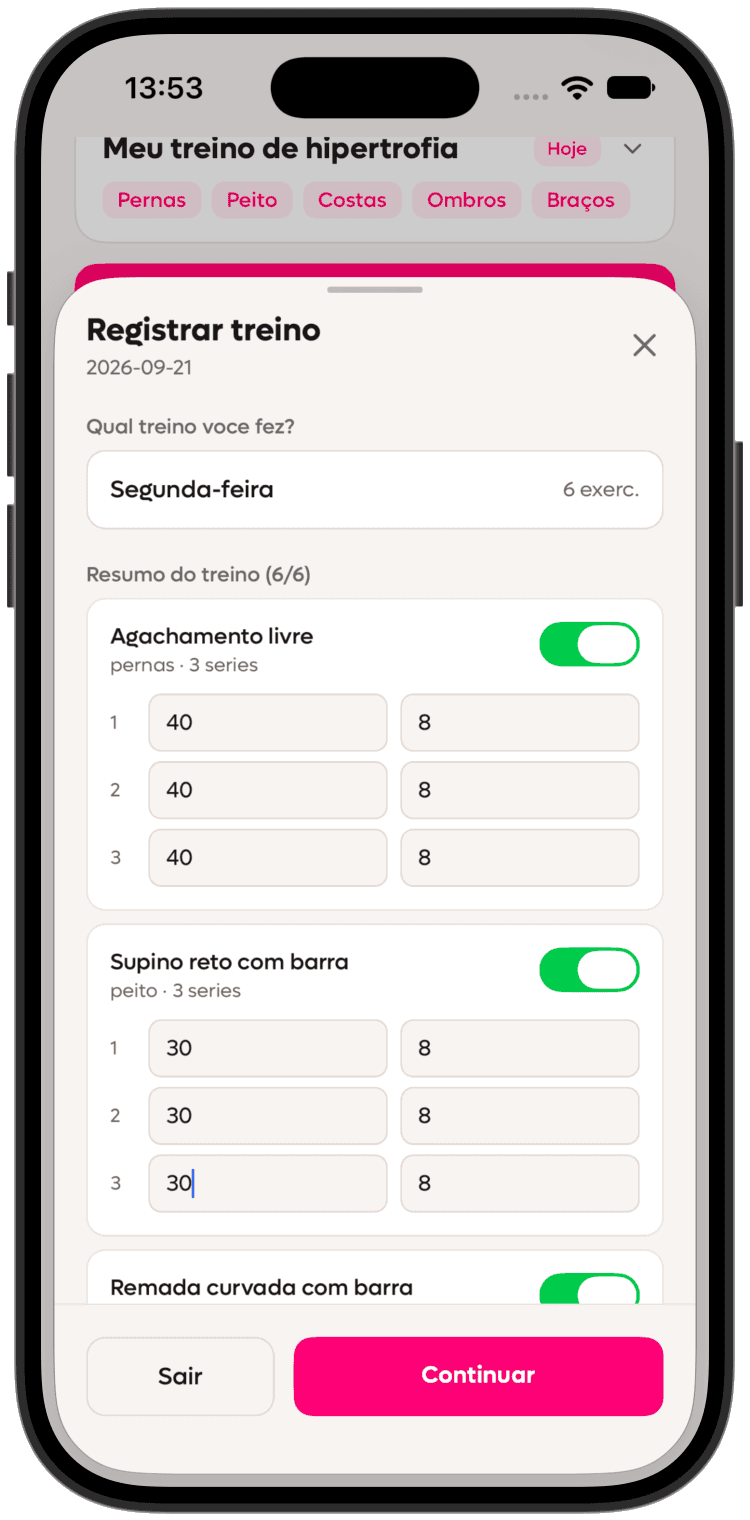
In the session itself, check-ins and notes help a lot. You can log things like feeling more shoulder than chest, the dip irritated the front of the shoulder, the crossover fit better or the decline load was too high. This kind of context keeps the workout from being stuck on a vague feeling. Instead of just thinking the lower chest does not respond, you start seeing what is actually happening.
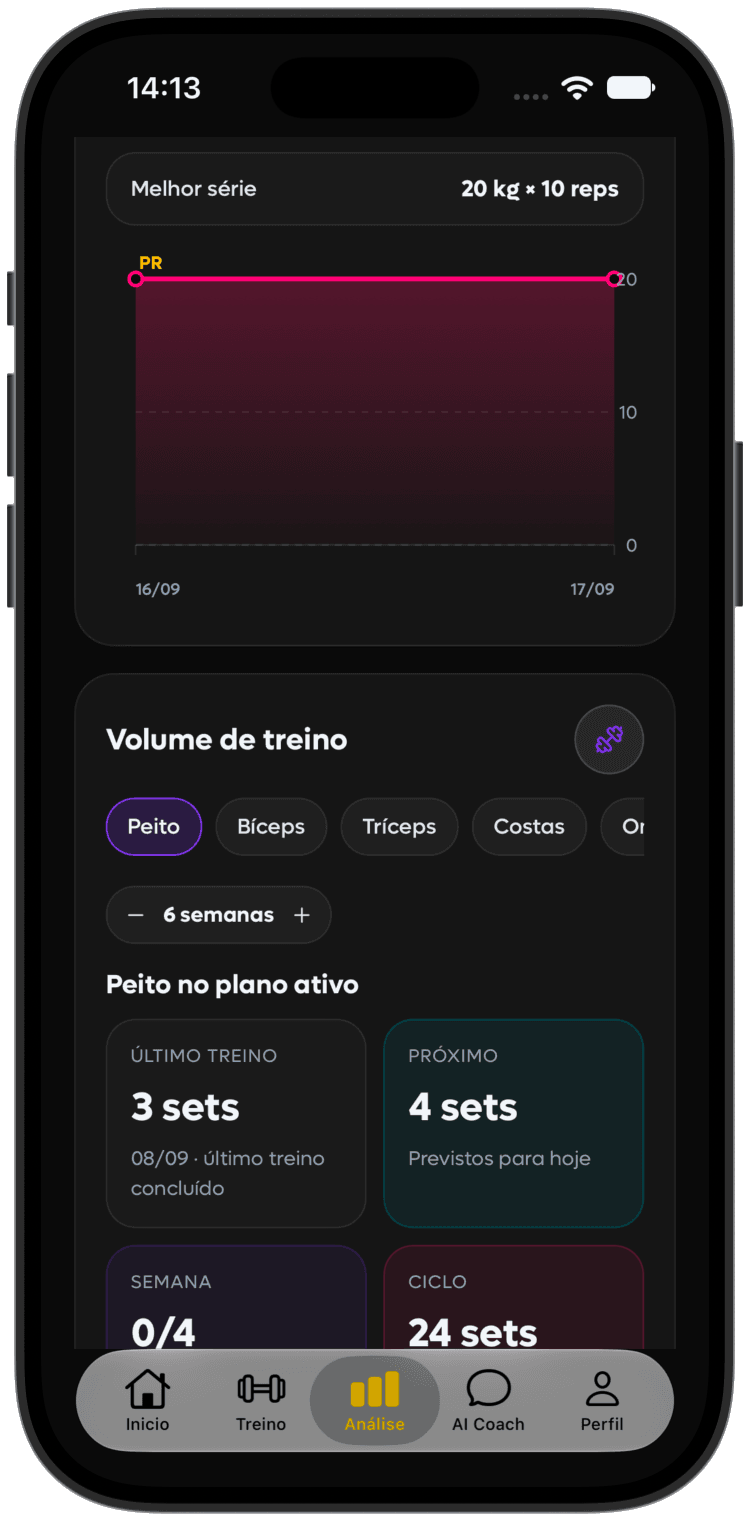
SelfShapeAI shows volume, muscle groups, records and load per exercise. Check whether your main press progresses and chest volume fits the week. See the 2026 workout-app guide and features.
AI Coach can discuss alternatives within the active plan when a decline bench is missing or dips do not fit. It does not diagnose pain; persistent or intense symptoms require a health professional. The plan library organizes general and specific phases. See AI training, what SelfShapeAI is and pricing.
How to know if this focus is working
- Execution remains comparable and painless over the weeks.
- Load or repetitions increase within the planned range.
- The block fits the week without persistent performance declines.
- Standardized measurements or photos show a trend over months, without attributing every change to one region.
- Chest sensation may guide adjustments, but is not used alone as proof of growth.
This kind of reading is worth more than switching exercises every week. If you only change the list but do not understand what is progressing, the session looks intelligent and stays vague at the same time.
Frequently asked questions
- Can you really isolate the lower chest?Not the way many people imagine. What you can do is increase the emphasis on the lower portion of the pecs with a better angle, a better path and better execution.
- Is the decline bench press mandatory?No. It is a very useful option, but not mandatory. Dips, a decline machine and a high-to-low crossover can also fill this role very well, depending on your context.
- Do dips and the crossover do the same thing?No. Dips are compound movements involving chest, triceps and front deltoids; cable flyes provide more isolated adduction with straightforward gradual loading. Neither isolates the lower chest.
- Can you train the lower part of the chest at home?You can, but with more limitations. A band anchored high, support bars and push-ups as a complement help a lot. The important thing is being honest about what the equipment allows.
- How many times a week is it worth focusing on lower chest?One or two exposures distribute volume practically; this is not a lower-chest-specific rule. Frequency accommodates quality sets within recovery and routine.
- Does SelfShapeAI help with a more specific focus like this?It helps fit the block into the plan, record load, reps, effort and notes, and follow exercise progress without treating the focus as an isolated prescription.
Developing the lower chest means using angle, path, session order and weekly progression thoughtfully. Explore AI training, features, pricing and SelfShapeAI to put this into practice.
Sources and references
- Source: Cabral HV et al. Non-uniform excitation of the pectoralis major muscle during flat and inclined bench press exercises. Scand J Med Sci Sports, 2022. — Scandinavian Journal of Medicine & Science in Sports (PubMed)
- Source: Rodríguez-Ridao D et al. Effect of Five Bench Inclinations on the Electromyographic Activity of the Pectoralis Major, Anterior Deltoid, and Triceps Brachii during the Bench Press Exercise. Int J Environ Res Public Health, 2020. — IJERPH (PubMed)
- Source: Currier BS et al. American College of Sports Medicine Position Stand. Resistance Training Prescription for Muscle Function, Hypertrophy, and Physical Performance in Healthy Adults. Med Sci Sports Exerc, 2026. — ACSM (PubMed)
Reviewed by the SelfShapeAI research team using strength-training guidelines and studies.
Take this method to the app

Create your plan with AI, log check-ins and use the AI Coach to adjust training with context.
Share
SelfShapeAI Team
SelfShapeAI technical and editorial team.
Keep learning
Recommended next article
Chest exercises for women: how to strengthen the chest at the gym or at home
Understand how to add chest training to your routine with exercises that make sense, adaptations for the gym or home and practical support from SelfShapeAI.
Continue →